Imagine putting in $30 and receiving a $45 “dividend” on that outlay every year thereafter. That’s essentially what happens when you make certain energy-saving upgrades in your home that reduce ongoing costs.
And there’s no better moment than now to tackle these projects, as inflation has squeezed many household budgets. Making your home more energy-efficient can help hold down utility bills and give your family some financial relief.
Follow the suggestions below — particularly if you handle the work yourself — and you could significantly reduce your electric and gas bills. View these energy-efficient upgrades as investments: they can deliver impressive annual returns and aren’t taxed like ordinary investment income.
The Rising Price of Electricity and Natural Gas
If you’re responsible for powering your household, you know how quickly expenses can climb.
Average U.S. electricity rates increased from roughly 15 cents to about 16 cents per kilowatt-hour (kWh) over the past year, according to the Energy Information Administration. While a single cent may not seem like much, the typical American home consumes nearly 900 kWh monthly.
That translates to an average electric bill that’s about $9 higher than a year ago — roughly $144 per month — though your bill will vary by region and whether you rely on alternatives like gas or solar.
Electricity isn’t the only utility rising. Natural gas prices surged to a 13-year peak a couple of years back due to a mix of weather, inflation and supply constraints.
9 Energy-Saving Home Projects That Can Cut Your Bills
- Insulate your hot water tank
- Install a smart programmable thermostat
- Swap out light bulbs
- Insulate hot water pipes
- Upgrade ceiling fans
- Replace an old refrigerator
- Add attic insulation
- Seal gaps and leaks
- Change the toilet flapper
While inflation and severe weather are beyond your control, you can actively cut gas and electricity costs by investing in your home’s energy performance.
And these don’t have to be major renovations like new windows or a roof replacement. Small, low-cost upgrades can boost efficiency and deliver tangible savings.
Below are nine practical ways to lower your household energy costs.
1. Insulate the Hot Water Tank
A jacket for your water heater costs about $30 to $40 and can be installed in roughly an hour.
It’s a quick payback: the Department of Energy says insulating a hot water tank reduces energy use by 7% to 16% annually.
That means, assuming the average water-heating cost is $438 per year, you’d pocket an extra $30 to $70 annually.
If you can spend more up front, think about swapping a conventional electric water heater for a heat pump water heater.
Heat pumps don’t create heat directly; they operate like a refrigerator in reverse, transferring heat into the unit rather than expelling it.
A household of four could trim over $550 per year from electric bills versus a standard electric water heater, per DOE estimates. The DOE suggests a family of four would recover the initial cost in just under three years. Across a 13-year service life, projected savings reach about $5,610.
Energy Star provides a tool to determine whether a heat pump water heater makes sense for your home.

2. Put in a Smart Programmable Thermostat
You don’t require the same level of heating or cooling when you’re asleep, and you need even less while you’re away (unless you have pets at home). But you also don’t want to crawl out of bed into a freezing house or return to a sweltering home.
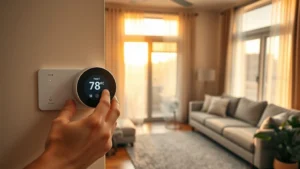
A smart thermostat addresses that by automatically adjusting temperature settings for you.
It can start warming the house shortly before you wake in winter and start cooling it just before you arrive home on a hot summer evening. You use heating and cooling only when necessary.
An Energy Star-rated programmable thermostat can save about $50 annually on heating and cooling. Many models start around $80, are simple to install yourself, and can recoup their cost in under two years.
3. Replace Light Bulbs
Another smart move? Updating your lighting.
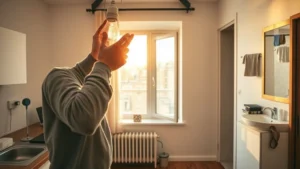
LED bulbs are roughly 90% more efficient than incandescent bulbs and can last up to 20 years (around 100,000 hours).
LEDs used to carry a high price per bulb, but now you can purchase a four-pack for under $10.
Switching out incandescents for LEDs throughout your home can cut energy expenses by about $225 per year, according to Energy Star.
4. Insulate Hot Water Pipes
Uninsulated pipes lose heat, which forces you to crank up the water heater to maintain hot showers at distant fixtures.
Fix it with simple pipe insulation: foam tubing with a split along its length that you cut to size and slip over the pipes.
This DIY task takes around three hours in a small home and costs about $10 to $15, per the Department of Energy, saving roughly 3% to 4% on water heating each year.
5. Upgrade Ceiling Fans
Ceiling fans can lower your heating and cooling expenses.
In summer, run blades counterclockwise to create a cooling breeze and reduce air-conditioning use. In winter, set them clockwise to circulate warm air down into the room and ease heating demands.
Replacing old fans with Energy Star-certified models can yield even greater savings; they’re about 60% more efficient than older versions, according to the DOE. Don’t forget to use efficient bulbs in fan fixtures as well.

6. Purchase a New Refrigerator
If your fridge still works well, there’s usually no need to replace it solely for efficiency. But if it’s older than 15 years, swapping it out can be a worthwhile energy-saving upgrade.
To estimate five-year energy savings, input your current refrigerator’s details into the Energy Star Flip My Fridge tool.
7. Add Attic Insulation
If your heater or AC runs frequently, upgrading attic insulation could deliver substantial savings.
Boosting attic insulation from R-11 to R-49 is a weekend DIY project for many homeowners and may cost about $750, according to HouseLogic (professional installation roughly doubles that price).
You could save around $600 a year on heating and cooling, depending on climate and your heating system — and it can also increase your home’s resale appeal.
8. Seal Air Leaks
Inspect for cracks around door frames, windows and penetrations for pipes and cables. These gaps let heat escape in winter and cool air leak out in summer, increasing your HVAC costs.
Using about $20 to $25 in caulk and adhesive weatherstripping can seal these areas throughout your home, Homewyse estimates. This is ideal as a DIY task — hiring pros could add $275 to $590 in labor depending on home size.
Sealing leaks can reduce heating and cooling costs by 10% to 20% on average, potentially saving hundreds from just an afternoon’s work and about $30 in materials.
9. Replace the Toilet Flapper
If your toilet runs when not in use, the flapper likely leaks.
It’s not just irritating — a faulty flapper can waste about 180 gallons of water each week.
A replacement flapper costs under $5 and can save roughly $25 per year on water bills.
Other Ways to Trim Household Expenses
Making energy-conscious home improvements is an effective long-term strategy to save money, especially if you’re willing to do the labor yourself.
If you discover you have a knack for home repairs, consider learning more DIY skills so you can save even more the next time a faucet drips or a switch needs replacing.
Contributor Alex Carter writes on personal finance, home maintenance, and lifestyle topics for Savinly. His bylines have appeared on Debt.com, The Ladders, Glassdoor, WDW Magazine, Angi and auto and lifestyle outlets. Steve Gillman and Tiffany Wendeln Connors also assisted with this piece.