Tipping those who provide services — hairdressers, nail technicians, movers, bartenders — is a widespread practice. It also sparks a lot of passionate viewpoints.
Customers who are asked to leave a gratuity often resist because it feels like an obligatory extra payment. They argue that when tipping is expected, it loses meaning as a reward for a job well done. Conversely, many service workers — notably restaurant servers — rely on tips to earn a livable income.
Few financial topics provoke as much emotion as tipping. If you want evidence, ask your social media circle about tipping and prepare for many replies and perhaps a heated exchange.
Beyond questioning whether tipping is necessary, people also wonder how much to give for different services. This ultimate tipping primer aims to guide you.
How Tipping Became Common in the U.S.
Tipping in the United States is pervasive. We adopted tipping customs from European aristocracy in the 19th century, despite Europeans largely abandoning the practice over time.
Still, tipping became embedded here, particularly in the service sector. Restaurants and bars can charge lower menu prices because service employees often receive minimal base pay (with notable exceptions in some states).
Tipping practices differ by region. Use these guidelines to learn the typical tip for common services and how much extra to add for excellent service.
Grasping Tipping Norms
Gratuity habits shifted early in the pandemic. As eateries and other service businesses fought to survive, many customers tipped more generously to support workers. Generally, expect to tip 15–20% for decent to good service, and about 25% for exceptional service — a gradual increase over recent decades.
You can tip in cash, on a credit card, or sometimes via peer-to-peer apps like Venmo. Some establishments pool tips among staff — cooks, dishwashers and bussers in restaurants might share in tip pools. In other cases, tipped employees are expected to share part of their earnings with coworkers, such as bartenders tipping barbacks.
There are instances where employers withhold tips. If you worry about how tips are distributed but want to reward a hardworking server or mover, consider handing cash directly to the individual. If you’re unsure about a business’s tipping policies, ask the employee or a manager; you may get more candid answers from one or the other to guide your decision.
Tipping can also be a practical investment in future service. If you frequent a place, being known as a fair tipper often helps secure consistently good treatment. Or you might simply appreciate a business and want to offer a little extra.
Simple Tip Calculations
If mental math isn’t your favorite pastime, tipping needn’t be hard. Decide whether you’ll calculate the tip on the pre-tax or total bill, or on the original price if there’s a special discount.
Ten percent is easy: move the decimal one place to the left. For a $20 bill, a 10% tip equals $2. Twenty percent doubles that to $4. Fifteen percent is the 10% amount plus half of it — $2 + $1 = $3 on a $20 bill. Twenty percent is also convenient arithmetic, which is one reason many opt for it. Rounding up to the next dollar is a common, thoughtful touch.
The Complete Tipping Reference
From restaurant staff to tattoo artists, leaving a tip is often part of the experience. The guide below helps you decide how much to leave.
Hospitality
Most people know tipping is customary when dining out. Many servers earn far less than the federal minimum wage, sometimes only a couple of dollars an hour. Budget a few extra dollars when you go out. You typically don’t need to tip at fast-food establishments because employees earn regular wages. Be aware that many restaurants require servers and bartenders to tip out other staff, so the full amount you leave may be shared.
Bartender
Per drink: $1–$3 depending on complexity. If you prefer percentages, 20% of the drink’s price is standard. A simple beer merits a smaller tip than a multi-ingredient craft cocktail with elaborate garnish.
Restaurant
For sit-down dining, tip 15–25%. This category is often debated, and servers frequently depend on tips to supplement low hourly pay. Tip toward the higher end for high-touch service or when service exceeds expectations.
Takeout Pickup
This area shifted during the pandemic. Previously many left nothing for takeout, but as restaurants leaned on carryout, customers started tipping more. Because takeout involves much of the same preparation, consider leaving 5–10%.
Food Delivery Driver
If you order delivery through an app, tipping matters. Some drivers see tips in advance and select deliveries accordingly. Drivers often use tips to cover gas and vehicle wear. There may be a delivery fee on your order, but don’t assume it goes to the driver — ask if unsure. For small orders tip $2–$5; for larger orders, tip 10–20% of the total. Increase your tip when weather is poor.
Grocery delivery platforms often default to about 5% of the bill or a small minimum. You can adjust or opt out.
Pizza Delivery
Plan on $2–$3 per pie for a standard order; increase for larger or more complex deliveries. Alternatively, calculate about 15–18% of the bill.
Bathroom Attendant
For a basic towel or hand service, tip 50 cents to $1 if you lack small change. For repairs, assistance with clothing, or more involved help, $2–$3 is appropriate. There’s often a small dish near the sink for tips.
Personal Grooming and Care
Salon and spa visits are opportunities to relax and refresh. When you’re satisfied with the service, add a tip for those who assisted you. Many workers, especially in nail salons, rely heavily on tips to make a living and are responsible for renting their stations or paying commissions.
Hairdresser
Standard is 15–20% when you’re pleased with the outcome. If multiple staff members assist — shampooers, assistants — it’s polite to leave a couple of extra dollars for each.
Barber
Same as hairdressers: 15–20%. For a very inexpensive cut where 15–20% is less than $5, consider tipping $5, especially if the cut was quick and well done.
Nail Salon
Nail technicians typically receive 15–20% as a tip for manicures, pedicures, and other services.
Facialist
For a skillful, hour-long facial, 18–20% is an appropriate token of appreciation.
Tattoo Artist
Generally, people tip tattoo artists about 20%, though the amount can vary based on complexity and satisfaction.
Massage Therapists
Tipping norms for massage therapists depend on the setting. At a spa or hotel, a 20% tip is customary.
Riley Martin, a licensed massage therapist in Gulfport, Florida, notes that tipping “is fine. But in clinical environments it’s not expected. (Still) everyone appreciates it!”
Travel
Factor tips into your travel budget. Whether you’re at a luxury resort or camping in a national park, this travel tipping guide will help. If traveling abroad, check local customs. Always tip guides when appropriate!
Rideshare Drivers
Rideshares used to be cashless, but that’s changed. Tip drivers 10–20% based on trip quality, assistance with luggage, trip length, and vehicle cleanliness.
Taxi Drivers
Tip taxi drivers similarly to rideshare drivers: 10–20%.
Hotel Housekeeping
You can tip daily ($1–$5 left in the room) or leave a single tip at checkout equal to $1–$5 per night. Housekeepers are often rotated, so check with the front desk if you want to ensure your tip reaches a specific person. If your room required extra effort, consider leaving more. A brief thank-you note alongside the cash is thoughtful.
Shuttle Driver
Either $5 per trip or $1–$2 per bag is customary. Shuttle drivers often assist with loading and unloading luggage.
Valet Parking
Tip $2–$5 when your car is retrieved; increase the amount for frequent retrievals or outstanding service.
Bellhop
If they merely escort you to check-in, tip $1–$2. If they carry and deliver luggage to your room, tip $1–$2 per bag.
Room Service
Check whether a service charge or gratuity is included. If not, 15% is a reasonable tip.
Cruise Staff
Cruise lines often add automatic gratuities to bills. Like other service sectors, cruise staff depend on tips. Check your cruise package to see what’s included. Still, being generous, especially with your room steward, is customary; the general 15–20% guideline applies.
Tour Guides
For private tours, tip guides 10–15% of the tour cost per day and drivers 5–10%. For large group tours, a per-person tip of 4–5% is typical.
Other Services
Many additional services may prompt tipping. Below are guidelines for less common service interactions.
Movers
Your moving estimate probably won’t include gratuities, so set cash aside. Tipping isn’t mandatory, but movers perform strenuous work for relatively low pay, so not tipping can be surprising.
Consider the move’s scope: a local short move differs from a multi-state relocation. Different legs may involve separate crews, warranting multiple tips.
Some sources recommend $4–$12 per mover per hour or roughly 15% of the total charge. If items were handled with exceptional care, if workers labored in bad weather, or helped assemble furniture, tip toward the higher end. Providing food and drinks during a long day is also appreciated. For quick, simple moves, a lower tip is acceptable.
You can tip the crew leader to distribute, or give each mover cash directly. Moving is stressful, and a considerate tip often makes the process smoother.
Dog Groomer
A typical tip for groomers is 15–20%. For pet sitters or dog walkers, tipping isn’t required unless they go above and beyond. For last-minute help or special-care needs, 15–20% is a good incentive for future availability.
House Cleaner
Tip house cleaners 15–20% of the regular charge. Reliable, thorough cleaners are in demand — tipping helps retain them.
Car Wash
Basic washes with towel drying merit $2–$5. More comprehensive detailing deserves 10–20% of the package price. Many car wash staff earn low wages, so tips make a meaningful difference; some establishments collect tips centrally and distribute them at shift’s end.
Casino Staff
If you win at a casino, it’s customary to tip your dealer at least $5; tip more for larger wins. It’s also polite to tip the cashier anywhere from $5 for modest payouts to $100 for very large ones, acknowledging the extra work involved in verifying and processing larger sums.
Musicians, DJs, and Street Performers
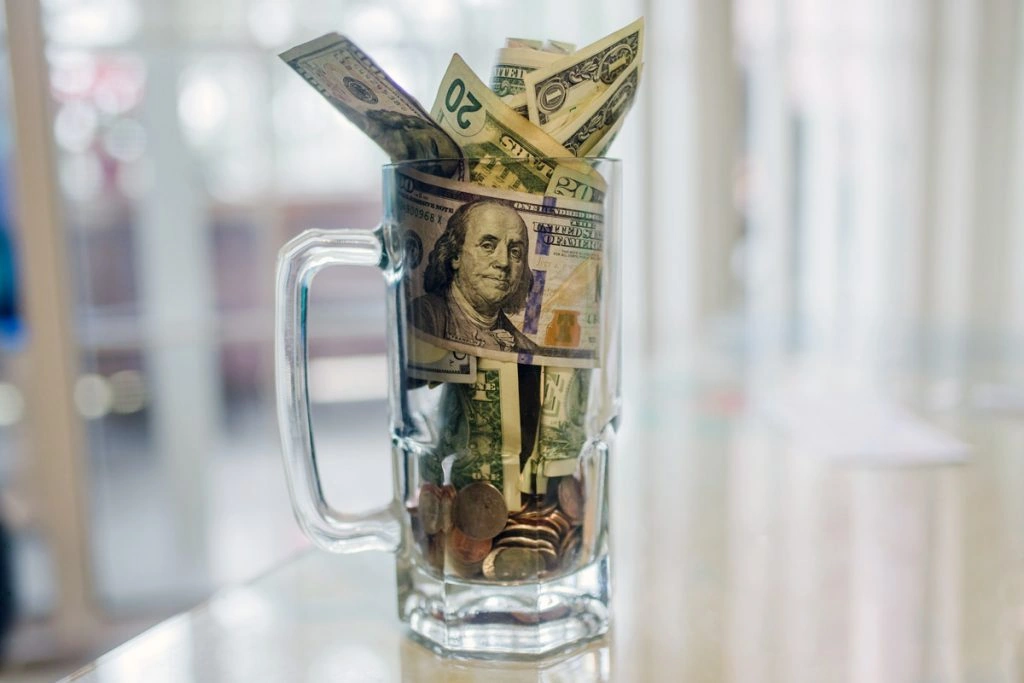
When you enjoy a performance, tipping is a kind gesture. Street performers often rely on open instrument cases or tip jars; $5 is a reasonable default, but smaller amounts are fine if that feels more appropriate. For a private or extended set, toss a bit more if you can.
Golf Caddie
Caddie services vary, but 15–20% of the recommended rate at the conclusion of your round is a safe guideline.
Gardener / Landscaper
Routine garden maintenance is typically billed, so tipping isn’t always expected. For one-off or particularly challenging projects, consider tipping 15–20% for exceptional work.
Recreational Instructors (skiing, surfing, shooting, diving)
For activities requiring instruction and safety oversight, it’s customary to tip.
Ski and snowboard instructors: 10–15% for private or group lessons.
Surf instructors: 10–15%; many also serve as lifeguards, so the tip supports multiple roles.
Shooting range safety officers: not always tipped, but where customary, 10–20% for helpful guidance is appropriate.
Dive instructors: 10–15% for safe, enjoyable experiences under the water.
Gas Station Attendants
Attendants are common in a few states and rare in others. Tipping isn’t standard, but if they pump your gas, clean your windshield, or provide notable help, a few dollars is a courteous gesture.
Babysitter or Nanny
Babysitters usually receive pay, but tipping 10–20% of the regular rate is appropriate for exceptional flexibility, managing multiple children, or holiday work.
The following contributors assisted with this piece: writer Claire Donovan covers lifestyle topics and previously operated a small café; freelancer Dennis Lynch also contributed to the reporting.