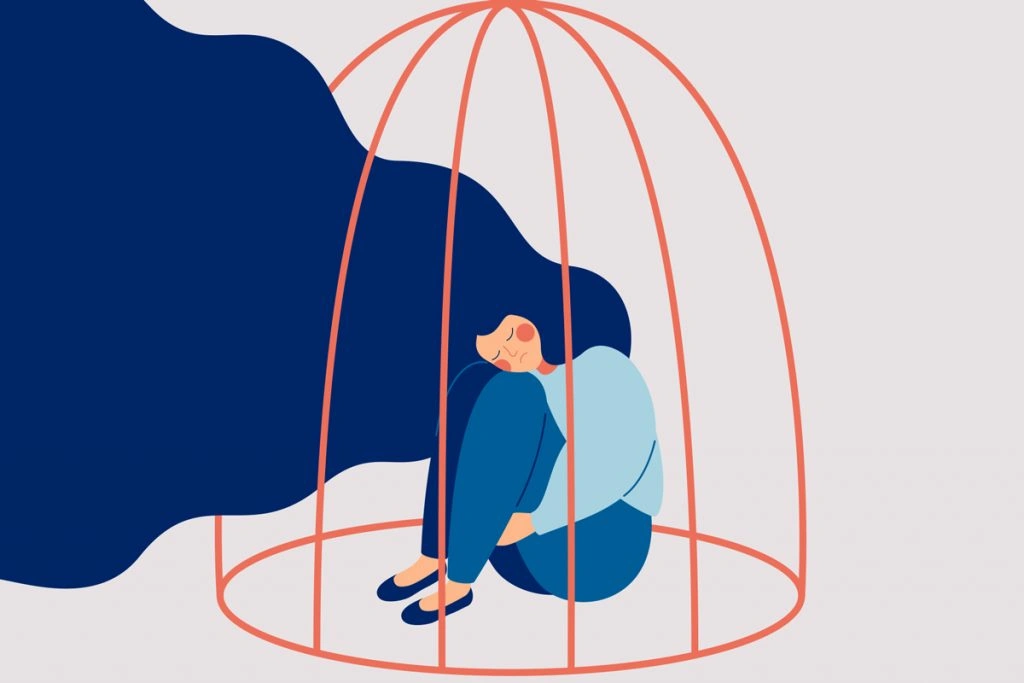
Note: This article contains no descriptions of physical or sexual violence.
While officials nationwide urge people to remain “safer at home” during the coronavirus crisis, we recognize that home isn’t a safe place for everyone.
Roughly 1 in 4 women and 1 in 9 men will endure severe intimate partner violence at some point, according to a Centers for Disease Control and Prevention report. Among those victims, between 94% and 99% suffer economic or financial abuse, per the National Coalition Against Domestic Violence (NCADV).
Below are some suggestions to help shield your financial wellbeing if you’re confined at home and facing domestic abuse during the pandemic. These are general tips — only you can determine what’s safe in your specific circumstances.
Trust your judgment, reach out to trained professionals near you, and take only the actions you know will not increase risk.
Secure Your Income
Here are practical steps you can take from home to protect the money you receive.
Open a Separate Bank Account
Create a new bank account that your abuser cannot access and, if feasible, doesn’t even know exists. You can often set this up remotely.
- Create a new email address that only you control.
- Arrange for a P.O. Boxor a virtual mailing address so your mail arrives securely. Virtual mailing services let you receive and view postal mail online; a P.O. Box is located at your post office. Both usually require a fee.
- Open an online bank account using your private email and mailing address. Most online banks provide a debit card (mailed to you and accessible via your online account), accept direct deposits, allow scheduled bill pay, transfers and mobile check deposits.
Change Direct Deposit Details
If you receive direct deposit for a paycheck, Social Security/SSI, or unemployment benefits, route some or all of it into your private bank account.
You can often update direct deposit for paychecks through your employer’s online portal or by contacting HR. For unemployment deposits, use your state unemployment website.
Redirect Stimulus Payments and Tax Refunds
If you’re awaiting your Economic Impact Payment (stimulus) or a tax refund, update deposit information via the IRS’s Get My Payment page. Check the payment status first; if it’s pending or already processed, you won’t be able to change deposit info.
To alter the bank routing or account number for a tax refund on a return you’ve already filed, call the IRS at 800-829-1040.
If you prefer part of your refund to be deposited into your original account, you can split your refund across your old and new accounts.
If You Can’t Work
When you lose the separation of leaving for work, abusers may try to disrupt your workday. Even without direct interference, being confined with an abuser can seriously affect your mental focus and productivity.
Confide in Someone Safe
If it feels safe, speak with your supervisor or a trusted colleague about your circumstances. Discuss strategies to reduce the impact on your productivity or how to maintain access to communication tools.
They might want to help you leave the situation — which comes from a good place — but be explicit about whether intervention would create extra danger right now.
Everfi compiled suggestions for managers to support employees who aren’t safe at home that can help frame this talk.
Request Time Away
If you’re able, consider asking for time off so you can focus on your safety without juggling work tasks. Check whether paid sick leave or family medical leave expansions at your workplace could provide relief.
If you don’t qualify, the grants and tip options below, or expanded unemployment benefits, may offer temporary help while you step away during the pandemic.
Seek Grants and Digital Tips
If you’ve lost access to your usual income, virtual tip jars can allow you to collect funds discreetly.
Leveler, COVID-19 TipJars and Tip Your Server enable you to list a name and PayPal or Venmo info for donations. Create PayPal or Venmo accounts with your secure email and link them to your new bank account to keep funds protected.
You can also apply for emergency aid from organizations that support workers in your field who’ve lost work:
- Here are six emergency grants for artists.
- Here are five grants for hospitality workers.
- Here are eight financial assistance programs for freelance writers.
Related:12 Steps to Protect Your Finances When Leaving an Abusive Relationship
Protect Your Online Communication and Activity

If you’re contacting loved ones or researching help on a shared device, take steps to conceal, protect or remove your browsing and communication history.
Use a Private Browsing Window
Most browsers keep a record of visited sites. Private browsing modes prevent that session’s history from being stored.
To enable private browsing:
- Chrome: Under File, choose “New incognito window.” On mobile, tap the three vertical dots and pick “New incognito tab.”
- Safari and Firefox: Under File, select “New private window.” On mobile, tap the window icon to open a new window, then choose “Private” from the bottom left.
- Microsoft Edge: In settings, pick “New InPrivate window,” or press CTRL+Shift+P.
Contact or Chat With a National Hotline
You can get confidential information from the National Domestic Violence Hotline:
- Phone: 800-799-SAFE (7233) / TTY: 800-787-3224.
- Chat securely online without downloading anything or creating an account.
- Text LOVEIS to 22522.
Communicate Privately With Family and Friends
These tools may let you talk with loved ones about your circumstances and safety without detection:
- Circle of 6: A free mobile app that lets you pick up to six emergency contacts. With one tap you can send them a text asking for a reply, a call at a moment that needs interrupting or for them to pick you up (including your GPS location).
- CoverMe: A free encrypted messaging app offering private texts and calls with no phone-bill record, self-destructing messages and an option to disguise the app as a news reader.
- Use non-messaging apps to communicate: Some games or other apps include chat features that an abuser may not monitor, giving you another route to connect with friends or family.
Related:Tips to Get Through the Coronavirus Crisis With Slow Internet
Work With a Victim Advocate
A trained advocate can help you locate local resources, provide information and guide you through complex decisions or the process of leaving an abusive relationship.
Advocates help build safety plans and flag potential risks you might overlook to protect you, your children and your finances.
To reach a local advocate, contact the National Domestic Violence Hotline (listed above) or your state coalition of the NCADV.
Free Online Mental Health Support

After an advocate, a mental health professional may be the most critical person to reach out to right now. Low-cost or free mental health services can help you manage the added emotional and psychological toll of being confined with an abuser.
Try these teletherapy and mental health resources:
- Talkspace is offering a free therapist-led public support Facebook group and Instagram live Q&As addressing coronavirus-related anxiety.
- Contact your local YWCA to see if support services or groups have moved online.
- Woebot is an automated chatbot that uses CBT techniques to help manage stress, anxiety and depression. It won’t replace tailored advice from a clinician, but it can offer direction and support.
Free online community support meetings include:
- Depression and Bipolar Support Alliance
- Anxiety and Depression Association of America
- Alcoholics Anonymous
- Al-Anon
If you’re in immediate crisis, use these suicide prevention resources:
- Call the National Suicide Prevention Lifeline at 800-273-8255.
- Find international suicide hotlines at befrienders.org (top of the homepage).
- Crisis Text Line: Text TALK to 741741 for free, anonymous, 24/7 crisis support in the U.S.
Use Free Local Services
Support for your physical, emotional and financial needs is often available locally. Consider these resources:
- College HUNKS moving service offers free moving assistance to people leaving abusive homes. Coordination is arranged through your local domestic violence shelter or police department.
- Locate state sexual assault and domestic violence resources via the federal Office on Women’s Health.
- Find a compiled list of coronavirus-era resources for pets, children, people with disabilities, LGBTQ individuals and more in this NCADV resource.
If you or someone you know needs assistance, contact theNational Domestic Violence Hotlinefor confidential help or a referral in your area: 800-799-SAFE (7233) / TTY: 800-787-3224.
In the U.K., the 24-hour domestic abuse helpline is +44 808 2000 247. A global list of resources and numbers is availablehere.
Jordan Hale (@jordanhale) has been reporting and editing since 2011, focusing on personal finance, careers and digital media.