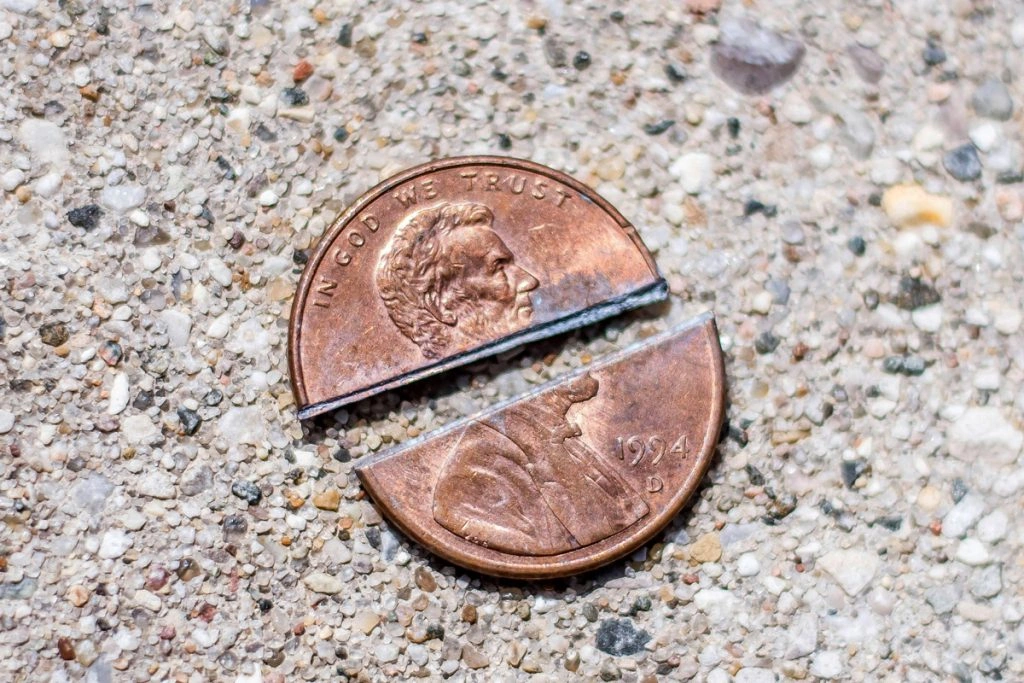
It appears the penny’s run has finally come to an end. After 232 years, the U.S. Mint struck the last penny on Nov. 12, 2025. The penny’s retirement prompts a few questions. Without it, what will you offer someone for their thoughts? What little talisman will people stoop to pick up for luck? And what will amusement park and boardwalk pressed-coin machines dispense next?
In all seriousness, President Donald Trump’s decision to halt production of the penny shouldn’t be a complete surprise. The coin cost more to make than its face value. Still, the loss lands emotionally for many Americans. A recent Savinly survey of U.S. adults, conducted the day after the final penny was produced, found that more than half of respondents felt sad or let down to see it go — a sign that this tiny piece of metal still holds meaningful sentimental value.
So what are the economic implications of retiring the penny, how did we arrive at this point, and how might it affect your finances?
Our Eulogy for the PennyWe gather today to remember a small but steadfast companion, one that jingled faithfully in our pockets, nested forgotten in couch crevices and glinted up from sidewalks like a copper note of luck.The U.S. Mint has declared: The penny is gone.And we are not fine.Sure, some will argue it’s overdue. Inflation has rendered the penny largely obsolete, a relic from an era when “one cent” meant something. But who among us hasn’t aged a bit? You don’t see anyone melting down their memories.The penny was more than money. It had personality. It was modesty in a world captivated by cards and paper. It was the little underdog of the economy, yet it still bore Abraham Lincoln’s likeness — a man familiar with perseverance.Oh, the slights you endured, dear penny. We waved you off at gas pumps. We grimaced when a cashier handed you back. We stuffed you into jars, spilled you in drive-thru trays, and left you to weather in the sun. And still, you remained—steady, shining, loyal. You were our copper conscience.You taught us to value tiny things. You taught children to count, taught charities that small contributions can add up, taught us to hope for luck if only we stooped to pick you up.And now, they tell us it’s “more efficient” without you. As if efficiency could replace a pang of nostalgia. As if rounding to the nearest nickel could stand in for the ritual of exact change.“A penny for your thoughts,” we used to say. What now? A Venmo ping for opinions? Or maybe a 1.5% cash-back deal if you concentrate extra hard? Try scooping up credit card points off the pavement and see if luck follows.Still, we like to think you’re merely retired. Maybe you’re sunning somewhere, lounging by water instead of sinking to the bottom of a fountain. Perhaps you’ll live on in idioms, sayings, and the faint copper scent of youth.Rest peacefully, penny. You were never worthless to us, merely underappreciated.— Savinly staff
Survey Snapshot: 57% of Americans report they’re sad to see the penny disappear — showing emotion still trumps practicality for many.
How Americans Feel About the Penny’s Exit
We polled Americans to gauge how people truly feel about losing the nation’s smallest (and most debated) coin. The results reveal a country split among nostalgia, apathy, and outright relief.
Public Sentiment
- 33.2% say they’re “very sad — it’s the end of an era.”
- 24% feel “a little disappointed.”
- Together, 57% express sadness or disappointment at the penny’s retirement.
- Only 16.2% are pleased or excited to see it go.
- 26.6% are indifferent — it makes no difference to them.
What People Plan to Do With Their Pennies
- 40.8% intend to keep them as keepsakes.
- 34.6% will cash them in for bills.
- 14.4% will store them in jars or containers.
- 4.2% plan to donate or give them away.
- Only 1.4% said they’ll discard them.
How Recently People Used Pennies
- 37.6% used a penny within the past week.
- 20.6% used one in the past month.
- 15.6% within the past year.
- 15.8% haven’t used one in over a year.
- 10.4%can’t even recall the last time they used a penny.
Penny Habits and Attitudes
- 47.6% typically save pennies in jars or piggy banks.
- 30.8%eventually spend them.
- 11.4% toss them in drawers, purses, or consoles.
- 9% put them in “take a penny, leave a penny” trays.
- Only 1.2%dispose of them immediately.
Have You Ever Thrown a Penny Away?
- 19.6% admit they’ve thrown pennies away many times.
- 11.2% have done it once.
- 11.4% thought about it but didn’t.
- 34.6% say they never toss them and keep or use them.
- 23.2% say “absolutely not — it feels wrong.”
Ease of Everyday Purchases Without the Penny
- 39.8% say it will make no difference in daily life.
- 26.4% believe it will make purchases easier.
- 33.8% expect it will make things a little or much harder.
Should Other Coins Go Too?
- 71.4% say “no — keep the rest.”
- 6.4% think the nickel should be next.
- 4.4% would retire the dime.
- 3% would retire the quarter.
- 4.4% say retire all coins.
- 10.4% are unsure.
Loose Change at Home
- 31.4% have $10–$50 in loose change.
- 30% have $1–$10.
- 13.6% have $50–$100.
- 13.6% have more than $100.
- 5.8% have less than $1.
- 5.2% have no idea.
When People Last Rolled or Cashed Coins
- 47.8% did it more than a year ago.
- 27.6% did it within the past year.
- 14.6% did it within the past month.
- 6.4% say they’ve never done it.
Impact on Spending from Rounding Prices
- 42% say rounding won’t affect them at all.
- 18% think they’ll spend more.
- 14.6% think they’ll spend less.
- 18.2% worry businesses will always round up.
- 7.2% are unsure.
What Americans Will Miss Most
- 43.2% say they’ll miss exact change with pennies.
- 17.6% will miss saving in coin jars.
- 10.6% will miss luck and superstition.
- 10.4% will miss the nostalgia.
- 9.8% say they’ll miss nothing — good riddance.
- 5% will miss collecting them.
- 3.4% say they’ll miss Lincoln’s portrait.
The Penny’s Beginnings
The penny’s concept is actually ancient. The idea of a widely accepted small coin traces back to the denier, struck by Pepin the Short, King of Francia and father of Charlemagne, around 755 AD. From there the notion spread to King Offa of Mercia, in what is now England, where the term penny was first, quite literally, coined.
A thousand years on, the British continued using the penny as their smallest denomination for centuries. Unlike tea, the penny did not get tossed aside during the American Revolution. The U.S. Mint began producing American pennies in 1793. After featuring Lady Liberty, eagles and Native Americans for much of the 19th century, the penny adopted Abraham Lincoln’s portrait in 1909. Aside from some changes in zinc and copper composition, the penny’s design has largely stayed the same to the present day.
Why the Penny Was Retired
What triggered the penny’s downfall? In short: money. (Yes, it’s ironic.)
According to the U.S. Mint, it cost 3.69 cents to produce each penny. Many of these coins don’t even re-enter circulation. The average number of times Americans used cash each month fell by 50% from 2016 to 2023. Ending penny production is expected to save taxpayers roughly $56 million annually.
The United States isn’t the first to eliminate its lowest-value coin. Canada ceased penny production in 2012. Australia stopped minting pennies in 1991, and New Zealand followed suit in 1988.
So there’s your argument in brief: pennies cost more to manufacture than they contribute economically, and economists largely agree they can be phased out with minimal harm.
What Comes Next?
Most Americans probably won’t notice much difference right away and will continue to own pennies. They remain legal tender and can still be used for transactions.
Pennies won’t disappear overnight. As circulation slows, many pennies are expected to be returned to the Treasury to be melted down, similar to what Canada did. With approximately 250 billion pennies currently in circulation, the decline will be gradual for this humble coin.
Without pennies, cash totals may be rounded to the nearest five-cent increment, which could end up costing consumers or businesses a bit more or less. Some retailers have already begun rounding cash transactions due to penny shortages. Card payments will be billed as usual. Over time, taxpayers and the government should save millions annually.
There’s also chatter about eliminating the nickel: the cost shortfall per nickel is even larger, with the U.S. Mint estimating it takes 13.8 cents to produce each nickel. Some warn that phasing out the penny could increase demand for the nickel as the smallest coin, potentially raising costs further.
Coin collectors need not worry: dimes and quarters still cost less to make than their value, so they aren’t slated for elimination.
That small copper gleam that once suggested luck may fade from sidewalks, but the potential savings for taxpayers could be substantial.
What to Do With Your Pennies
If you’re sitting on a pile of pennies, how should you handle them? Helping businesses facing change shortages by spending them can be useful. You can also convert them to bills using several avenues:
- Take them to your bank (pre-roll them in coin paper to make the teller’s job easier)
- Bring them to a credit union
- Use Coinstar, though it usually charges a fee
- Visit a Publix — some locations have coin-sorting machines and let you redeem coins for cash
Keep Saving — Even After the Penny
Even with the penny’s retirement and the temptation to hoard coins, boosting your savings is always a good idea. If you’re looking for ways to save more on a tight budget, we can help. Below are some of our favorite money-saving tips.
James Kessler has freelanced since 2017, with bylines in publications including The Gazette, The Traveler and The Antiquary.