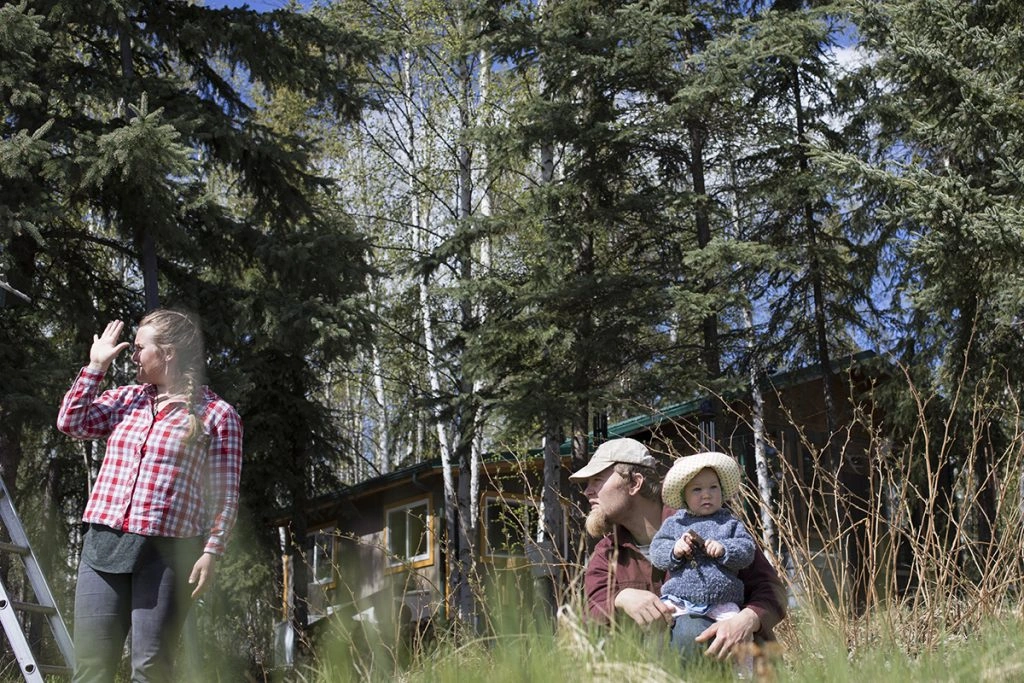
I’m on the line with Tyler Selden, and the interview isn’t exactly smooth sailing at first.
Maybe it’s because he and his wife, Ashley, spend roughly eight months each year in a remote part of Alaska and aren’t used to being bombarded with questions.
But that likely isn’t it…
After all, they’ve been featured for years on a TV series called “The Last Alaskans.” Anyone who’s accustomed to cameras in their face can probably handle a phone interview.
So perhaps Tyler suspects I won’t grasp his way of life — one that’s drastically different from mine and from what most Americans experience.
As the conversation progresses, though, Tyler loosens up. He describes his trapline, his sled dogs and his family, and shares the dangers — and exhilaration — of life alone in the wild.
He tells me he’d rather die than take a conventional job. He says things fall into place when you chase your dreams.
He shares his journey.
Tyler, 35, grew up in Nebraska; Ashley, 33, is from Minnesota. They met while attending college in Duluth.
During the summer break in 2005, Tyler landed a restaurant gig in Denali National Park. On his days off he wandered the surrounding backcountry — and was stunned by what he found.
“I was really fed up with school,” he says. “I felt like I wasn’t on the path I was meant to be on.” So he decided to pursue his pipe dream — moving to Alaska to live off the land.
“I place a lot of value on having a direct tie to nature,” Tyler says. “I don’t get the same satisfaction from the idea of a traditional job or climbing a career ladder.”
Ashley didn’t want to end their relationship, so she left school too. The next March they relocated to Alaska to start their new way of life.
Living In Tune With the Land

Tyler taught himself how to trap, and they eventually erected an off-grid cabin above the Arctic Circle.
Together they built out a winter trapline:
They constructed a main cabin plus other outbuildings, cleared trails and familiarized themselves with the unforgiving landscape.
“When you’re up there your work is maintaining those trails,” Tyler explains. “They’re like arteries into the wilderness. You have to head out to check and maintain your sets to catch fur.”
Now, each year from roughly August through March or April, they live in that cabin, travel by dog sled and eat what they harvest or catch. For income, they trap animals such as Canadian lynx, wolves, wolverines, martens, foxes and beavers.
“You go after whatever is plentiful,” Tyler says. “We trap them, skin them, preserve the pelts, and feed the carcasses to our dogs or ourselves. We keep the skulls and everything; we try to get as much value from an animal as possible.”

When they return to Fairbanks for summer, they sell pelts to small buyers and dealers or to folks interested in crafts or wall mounts.
On average, they fetch roughly:
- Fox: $50
- Marten: $90–$100
- Lynx: $150–$200
- Wolverines and wolves: $300–$500
The couple aims to earn enough to cover their costs, which come to about $10,000 per season (much of that is for charter flights to and from their remote spot).
“It’s not about getting rich,” Tyler points out. “It’s a way of life.”
The Network Comes Calling
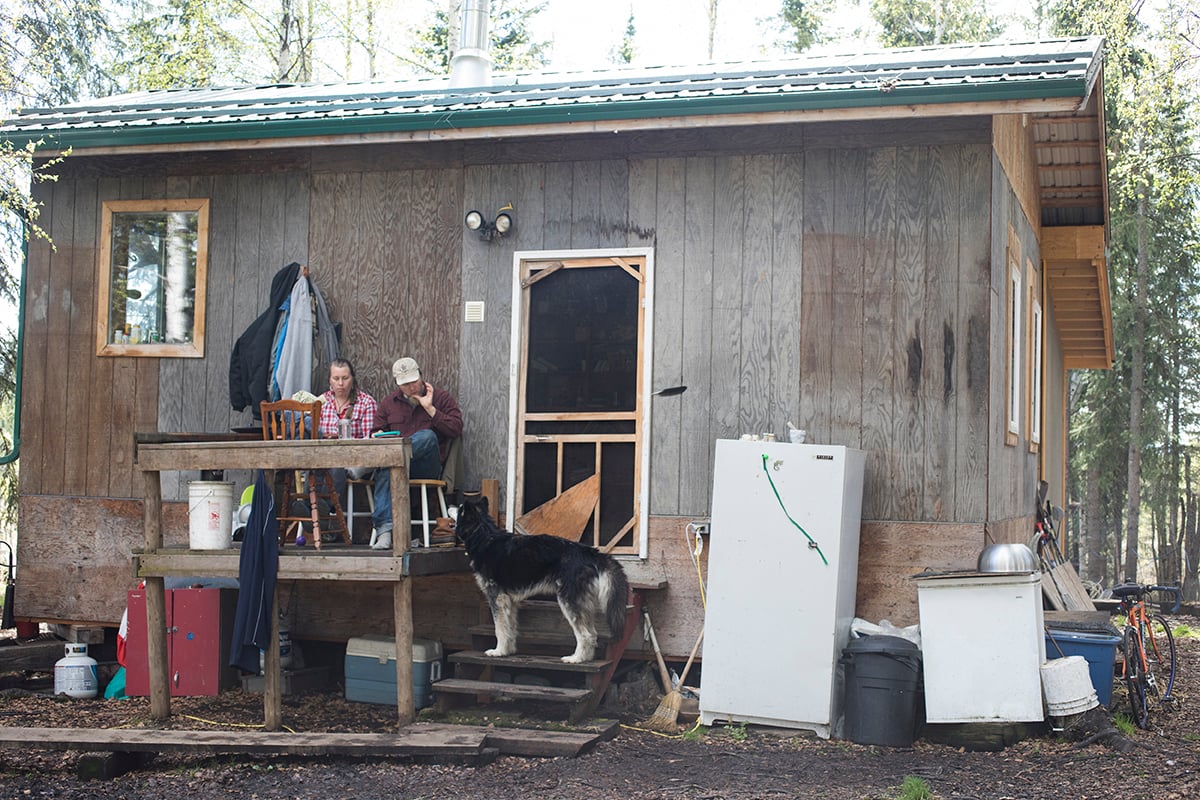
For several years while living in Alaska, the Seldens held steady construction work in Fairbanks. “We worked as hard as we could all summer so we could go blow it on the trapline,” Tyler says.
But in 2014 things shifted.
Animal Planet approached the Seldens, asking to film their winter trapping life for a new series. The network assured them they wouldn’t need to change their routine — just allow cameras at times. They agreed.
“It’s a way to keep living out there,” Tyler explains. “If we could do it without, we would, but it’s extra income. We were busting our butts trying to make ends meet.”
The program later moved to the Discovery Channel and introduced the Seldens into millions of living rooms across the country.
Although their bank balance is a bit healthier now, the core of their lifestyle hasn’t shifted much.
In the Fairbanks summers they live in a dry cabin — they have electricity but no running water. They use rainwater for dishes and cleaning, and either have drinking water delivered or haul it from a nearby spring. They also maintain a greenhouse and a large garden.

They’ve paid off all debt and live very frugally. Their main ongoing costs are firewood, fuel, car insurance and upkeep for eight sled dogs.
They source clothing and most shoes for free from a waste transfer site and use chicken manure as compost.
“I feel like our spending patterns are so habitual, so normal to me,” Tyler says. “A lot of what we do is just routine. Every chance we get we try to cut costs. We’re always scavenging.”
When they have extra funds, they plow it back into their land or trapline. They recently bought an adjacent lot in Fairbanks, which they rent out on Airbnb.
They don’t, however, have retirement savings. “I’m not planning for retirement,” Tyler explains. “I don’t intend to ever retire.”
When he’s no longer able to work, he hopes their lifestyle will be so well established that they’ll need very little money.
Working for Their Own Food

One massive cost-saver: they produce or procure roughly 75% of their food.
“Our lives largely revolve around food,” Tyler says. “I think most people’s lives do — they just don’t see it. You work to earn money to buy food and other things. We work straight for those needs.”
Most of what they buy are pantry staples: flour, rice, oats, nuts, beans and a few comfort items like chocolate and sugar.
The rest is supplied by their summer garden — which yields kale, cabbage, carrots, onions, beets, tomatoes, peppers and herbs such as sage, rosemary and thyme — and by their hunting and fishing.
“We harvest a moose every fall, snare rabbits, shoot grouse, catch fish and trap animals — mostly lynx,” Tyler says. “We feed our dog team with fish from the river right by our place.”
They estimate this way of life saves them about $10,000 annually. Imagine: a thousand pounds of moose, fresh Alaskan salmon, other wild game and a season’s worth of organic produce.
“If you priced all this on the open market, it would be astronomical,” Tyler says. “Most people couldn’t eat that way because it would cost too much. We enjoy a high quality of life because we put the work into securing excellent food.”
“If you spend your time doing that,” Ashley adds, “you can’t afford to work a normal job or chase a corporate career like some folks do.”

Neither of them intends to return to a conventional career.
“Trying to go back would be like trying to break a wild horse,” Ashley says. “We’re molded this way… and we’re so involved with the things we need from life that we wouldn’t trade all our time for groceries at the big-box and whatever else people buy.”
Tyler concurs: “I’m hooked on this life — the backcountry, the freedom. Being my own boss, living alone with my family. I’ll do this until I physically can’t. It’s who I am.”
Now that they’ve welcomed a daughter, Sydney, they’re even more committed to spending time together — not clocking hours at a 9-to-5.
“I’d pick the poor house,” Ashley says. “I’d rather eat at a food bank than get a job and not raise my own kid.”
But the Wild Can Strike Back

A few winters ago, while on their trapline, the Seldens mushed all day toward one of their shelters, only to find the river hadn’t frozen and they couldn’t cross. They were stranded. Night was coming. They had sleeping bags but no food — and no choice but to camp for the night.
These moments of self-reliance are frightening, yet they’re exactly what makes the Seldens feel alive.
“You’re in the middle of the last great wilderness,” Tyler says. “You’re king of your own tiny realm. You’re completely isolated and must figure everything out yourself. It’s utter freedom.”
“It’s easy to go back to the hot shower and the big screen,” Ashley says. “But it’s deeply satisfying to be truly connected to the world and to notice all the small things.”
The Seldens say you don’t need to uproot to Alaska or subsist on moose to feel that bond. You just have to be willing to try something different — maybe embrace living off the grid in some way.
“Happiness exists elsewhere — on the side trails of life,” Tyler explains. “We’re not extraordinary; we just aren’t scared of hard work and aren’t afraid to try and fail.”