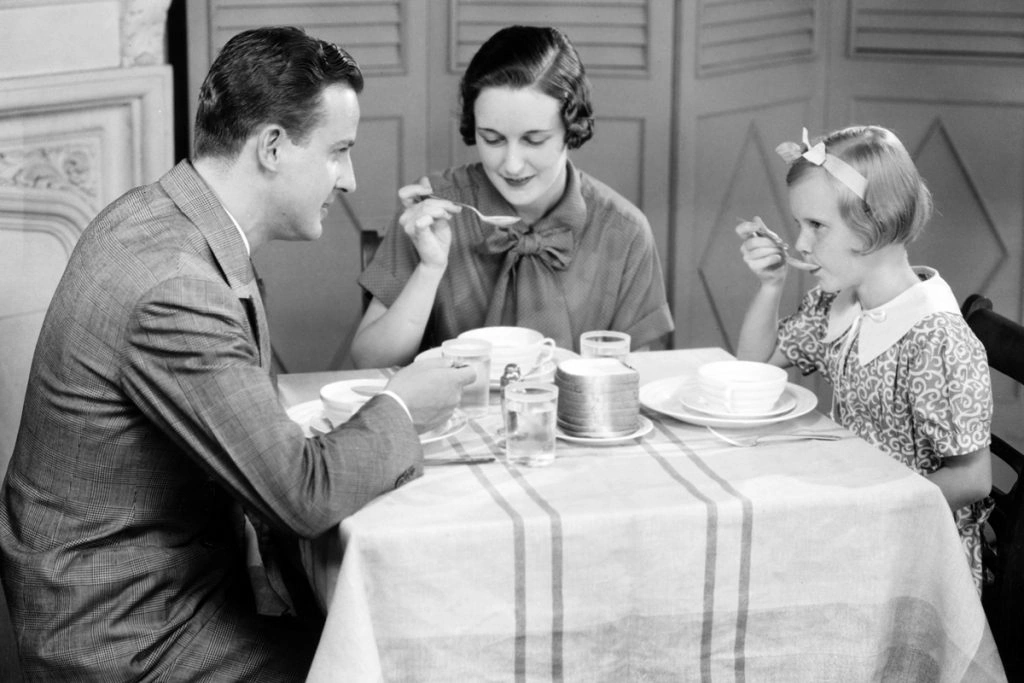
The New York Stock Exchange collapsed on October 24, 1929, a day remembered as Black Thursday. It marked the beginning of a cascade of financial disasters that ushered in the most infamous era of economic hardship in U.S. history — the Great Depression. Throughout much of the 1930s, Americans endured soaring unemployment that peaked at nearly 25% and grim economic conditions that drove prices up, even for basic food. That reality spawned a category of dishes now referred to as Depression-era recipes.
Why Cook Depression-Era Dishes?
If your parents or grandparents lived through those years, you’ve likely heard accounts of how people stretched resources and improvised to survive. Much of that ingenuity centered on putting food on the table.
That resourcefulness still matters today amid rising grocery costs and shrinking budgets. Folks are hunting for clever ways to economize. Maybe it’s time to revive some family recipes that helped the Greatest Generation manage through one of the harshest stretches in American life. From desserts made with water to hearty soups with surprising origins, here are Depression-era recipes that deliver flavor while being gentle on your wallet.
Dandelion Salad
This dish is about as inexpensive as it gets. Its roots extend well before the Depression: medieval monks in England and Ireland recorded foraged greens as edible, and American pioneers used similar preparations during westward expansion. When the Dust Bowl and economic collapse of the 1930s devastated crops, many families turned to whatever greens they could find — even common yard weeds.
The version we suggest includes onions, tomatoes, salt and pepper to season the dandelion leaves. It’s a straightforward salad that can be combined with whatever extras you have available. Be sure to wash wild dandelions thoroughly and let them soak for at least an hour. Avoid harvesting from lawns treated with pesticides.
Poorman’s Meal
This recipe comes to us via Clara Cannucciari, who experienced the Depression firsthand and whose grandson documented her recipes on YouTube. Though Clara has passed, she left behind both stories and a collection of Depression-era dishes in her cookbook, Clara’s Kitchen.
Poorman’s Meal had many versions and was a common staple for low- and middle-income families in the 1930s. Clara’s take mixes potatoes, hot dogs, onions and tomato sauce. Like the dandelion salad, it’s a simple, adaptable dish you can tweak with whatever ingredients you have on hand.
Hoover Stew
President Herbert Hoover led the nation through the early years of the Depression and was widely criticized for not doing enough to help. Consequently, his name became shorthand for Depression-era hardships: makeshift shantytowns were dubbed Hoovervilles, rabbit or squirrel meat was nicknamed Hoover steaks, and newspapers used as bedding by the homeless were called Hoover blankets.
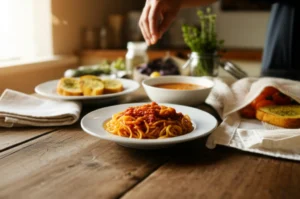
That association explains the name of our next dish, Hoover Stew. Large households and struggling communities often relied on this nourishing, filling meal. Based on pasta, tomatoes and hot dogs (or similar inexpensive proteins), the stew stretches to feed many and lasts for several days, making it ideal for tight budgets.
Scarface’s Soup
Few criminals in American history achieved the notoriety of Al Capone. The Chicago mob boss built an empire that began during the 1920s and prohibition era, reaching prominence in 1929 just before the market crash.
Part of Capone’s ability to cultivate public support was his visible charity work. He operated multiple relief efforts, including a soup kitchen in Chicago that opened in 1931 at the height of the Depression. That kitchen served thousands, and its soup remained talked about in the city for decades.
Thanks to the YouTube channel Tasting History, we have a rendition of one of Capone’s recipes: a soup derived from a 1917 Italian cookbook. It regained popularity in the 1930s because the cookbook included recipes “especially to meet the high cost of living.”
Primarily made with beef, tomatoes, potatoes and pasta, this soup is hearty and satisfying, yet inexpensive and flexible enough to be adapted to what’s available at home.
Peanut Butter Bread
You’ll notice many of these dishes lack spices and staples like milk and eggs. International trade collapsed during the Depression, sending imported spices to high prices, while milk and eggs were scarce due to the Dust Bowl and the heavy strain on rural farms.
Some shelf-stable staples, however, remained accessible — peanut butter among them. Having been promoted as a ration-friendly protein during World War I, peanut butter was cheap and plentiful for families in need during the 1930s. That’s the origin of peanut butter bread. YouTube creator Dylan Hollis demonstrates a straightforward 1932 recipe that yields a sweet loaf suitable as a snack, dessert or sandwich base.
Water Pie
Few Depression-era innovations are as striking as a pie whose central ingredient is literally water.
This dessert was especially common in the South, where fewer urban centers and scarcer supplies made frugality even more necessary. The Southern Plate recipe uses the most basic pantry items — water, sugar, butter, flour and a bit of vanilla. The outcome is a custard-like pie with a gentle sweetness.
Water Pie found a modern revival, particularly on TikTok during the 2020 lockdowns, when people discovered they could substitute water with other sodas, like Sprite, for variation in user videos.
Mock Apple Pie
This pie is an inventive and tasty treat with a surprisingly convincing flavor at a low cost. Like dandelion salad, its history predates the Depression: frontiersmen developed the recipe for cold winters when fresh apples were scarce. Dylan Hollis also demonstrates this one: Mock Apple Pie showcases culinary ingenuity by using Ritz crackers and cinnamon to replicate the taste of apples.
The recipe even appeared on Ritz cracker packaging after winning popularity during the Depression, and it gained further traction during World War II when apples were rationed for troops abroad.
Depression Cake
Like Poorman’s Meal, Depression Cake exists in many forms, shaped by whatever ingredients people could scrounge. The most familiar version, called Depression Cake, features raisins, cinnamon, nutmeg and allspice for a warmly spiced, sweet result. Requiring no milk, eggs or butter, it also serves as an economical vegan option.
Chocolate takes on this cake in other popular takes, such as the chocolate variations. For the truly frugal, the so-called Waste Not Cake even calls for sour milk.
Necessity often sparks invention. The Great Depression was an unforgiving era, and many contemporary families may recognize struggles their ancestors endured. These Depression-era dishes, with their modest ingredient lists and straightforward techniques, are both a testament to past resourcefulness and a way to rethink economical cooking today.
Perhaps, given our current economic pressures, a few decades from now people will reminisce about TikTok Sprite Pie, Two-Ingredient Pizza Dough and TikTok Spaghetti.
Alex Mercer has been a freelance writer since 2017, contributing to literary journals and local cultural publications. He has self-published fiction, taught social studies in Florida public schools, assisted with museum research, and most recently worked as an editor for a small publishing start-up.