The demise of the traditional dinner party is one of the great cultural losses of our time.
The truth is, it’s often too costly (and nerve-racking) to prepare a full-course meal for a dozen people. And expecting all of your friends to chip in for an expensive restaurant outing is unrealistic — especially when children and babysitters enter the equation, driving costs even higher.
Yet companionship and shared meals are as fundamental to people as keeping enough cash to, you know, cover the bills and such. So what if I told you there’s a way to enjoy the feast (without the hefty tab)?
To resurrect the convivial dinner party without the stress and expense of a mid-century living-room spectacle, I offer a simple solution: the potluck dinner.
Why the Potluck Deserves a Comeback
If the term “potluck” paints images of kindly older neighbors serving endless variants of tuna casserole, it’s time to update that mental picture.
Below are practical pointers for running a successful potluck so you can stop fretting and shelling out — and just savor the evening.
1. Decide Who’s Invited
This is your starting point. Are you inviting your book circle? The parents from your child’s playgroup? Members of your Thursday cornhole crew? Or a curious mix of every social circle you’ve ever been part of?
Your guest list will determine the vibe for the night, and it’s easier to pick a theme and location once you know who’s coming.
Also remember: brunch can be a potluck. Instead of splurging on weekend mimosas, invite your brunch-loving pals over and ask them to bring a shareable breakfast dish!
2. Choose a Theme

A potluck without a theme is like a toddler’s tale: meandering and slightly unsatisfying.
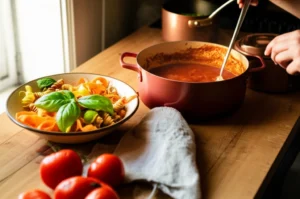
To prevent the awkward plate lineup of seven-layer taco dip, salmon mousse tartlets and ambrosia salad (seriously, why?), pick a theme that gives guests direction. Broad categories like Italian or Thai help produce a cohesive meal, but if you want to be playful, choose something as specific as “tomatoes” or “street food.” Those constraints often spark the most inventive dishes.
You could also turn it into a friendly competition: everyone brings their version of mac and cheese, or number each dish and vote anonymously for the favorite at the end. Winner receives a small prize — or all the cheesy leftovers.
3. Use a Sign-up Sheet
Employ a tool such as Signup Genius or Perfect Potluck to streamline coordination. The host can list the location, suggested dishes, and any food allergies or dietary considerations, and guests sign up for what they’d like to bring.
Remember to add cups, plates, napkins and utensils to the sign-up! Unless you plan to pay for disposables or spend days washing dishes, let people volunteer to bring those supplies too.
Note: If you’re a control freak, the potluck setup may not suit you. The joy of potlucks is the diversity and inventiveness guests contribute — literally. Make sure you cover categories like appetizers, sides, mains, desserts and drinks, then let people do their thing. Don’t micromanage the menu.
4. Lay Down a Few Ground Rules

A few simple rules are helpful.
Request that guests bring their own serving utensils (and serving vessels if you’re aiming for a fancier spread), plus a storage container for leftovers. That way, folks can take home extra food without you hunting for missing Tupperware later.
Ask that no one plan dishes that require on-site cooking. Reserve oven use for warming only. Nothing’s worse than bringing out a hot plate just as everyone has already stuffed themselves.
Also clarify that a potluck contribution doesn’t have to feed the entire crowd. A portion built for four can go a long way when everyone samples a bit of everything.
5. Prioritize the Space, Not the Menu
With guests supplying most of the food, you’ll have time to focus on your home. Tidy up, arrange extra tables and chairs, and prepare a kitchen staging area — but don’t stress over an obsessive deep clean.
The essence of a potluck is an informal gathering of friends, not a formal, perfectionist dinner party.
Set up a power strip so slow cookers can plug in, assemble a self-serve drink station (low-maintenance party = low-maintenance beverages), lay out trivets and spare spoons (people will forget them), and place a stack of index cards and pens for guests to label their dishes when they arrive.
6. Enjoy Yourself
Then relax — you’re not responsible for eight separate dishes — and wait for guests to show up. Be available for last-minute tweaks and the inevitable “hey, do you have an extra…” requests, but try not to spend the night holed up in the kitchen.
Focus on conversation and enjoying a wallet-friendly, low-effort, stress-free gathering.
After all, it’s easier to unwind knowing cleanup will likely be a trash bag and a quick wipe-down — and that mildly awkward moment when you gently nudge the lingering guest to pack up their dish so you can return to your latest streaming obsession.
Grace Martin is an email content writer at Savinly. She’s fantasizing about a potluck composed entirely of brownies.