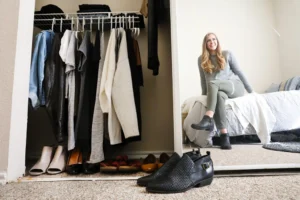
The red terry cloth dress my mother posed in for a 1984 family portrait still hangs in my closet. To its left sits a Missoni dress my sister-in-law gave me one Christmas, and to the right is a rarely-worn long-sleeved bodycon frock from Shein — an impulsive click-and-buy purchase.
A space-saver bag stuffed with clothes for when I fluctuate 10 pounds up or down hides on the shelf above.
Garments often carry memories, which makes them simple to keep and tough to let go of.
I felt that pull until I attended my first clothing swap.
What Is a Clothing Swap?
A welcome sign at Stephanie Bolling’s home greets guests who joined her annual clothing exchange. Tina Russell/Savinly
Think of cleaning out your closet like you would before donating to Goodwill — but instead of dropping items off, you bring them to a swap party.
In short, you clear out unwanted pieces and trade them with others doing the same.
Swaps can happen in someone’s living room or at a local business. I’ve seen cafes host them, and I’ve organized several at work and recently threw one at my house.
I invited a handful of friends, arranged the space, put out snacks and enjoyed an afternoon of catching up and swapping clothes.
This sustainable, budget-friendly approach to refreshing your closet yields good fashion, new friendships and savings.
How to Host a Clothing Swap
Hosting at home creates a casual “party” vibe that encourages people to join in and mingle.
Guests may hesitate initially, but once they start — or take a sip of wine — the appeal of free pieces takes over. Sit back and enjoy the show.
Invite
I invited friends, coworkers and relatives and allowed them to bring guests.
Casting a wide net of invitesensures a mix of styles and sizes. About 15 women showed up, roughly a third of those I invited, which felt like a great turnout.
Ten participants is a solid number, depending on how much space you have.
I made a Facebook event, though Evite, email or any free invite tool works just as well.
Include all the swap essentials in the invitation: time, place, guidelines and whether it’s a potluck.
You can make your swap coed, gender-specific or kid-friendly — there’s no single correct approach. I’ve had the best luck with women and allowing kids to join in.
Because I donate leftovers, I accept all sorts of clothing, including children’s and men’s items (even when men aren’t attending). That’s optional, of course.
Set Up

You’ll need room for people to drop off their piles, a full-length mirror and some light snacks for guests.
I cleared surfaces in the living, dining and breakfast areas to use as staging zones. I had a small folding table and borrowed a large folding table and two clothing racks from friends.
If you host with others, ask them to bring extra tables, hangers or racks and to help arrange things beforehand.
Set up the area to suit your space. Leave room for people to sift through items and find a private spot to try things on.
I put finger foods and drinks in the kitchen to create a clothes-free zone for chatting and necessary swap breaks.
I picked up inexpensive wine, chips and cheese-board supplies from the grocery store. Most of the plates and nonalcoholic beverages were already in my cupboards.
I asked attendees to bring a snack or drink to share.
Organize

Sorting items by type makes it easier for guests to arrange their contributions when they arrive and simpler for everyone to browse later.
Having people sort their own donations reduces pressure on you and builds excitement.
I made clear, handwritten signs to help guests find and classify pieces. There were designated areas for tops, bottoms, dresses, jackets, accessories, intimates (bras, swimwear), beauty items and shoes.
Most people arrived carrying several bags, so maintaining order made the process far smoother.
You can further separate by size — or by age for kids’ clothing — or try a pretty boutique-style display, but I’ve learned that when lots of items are moving around, the presentation quickly becomes a jumble and ends up in a pile anyway.
Donate or Sell
At the end, you’ll likely be left with mountains of clothing.
You can wait until everyone leaves and try things on while finishing the leftover wine like I do, or ask friends to help bag the extras. Either way works.
After one swap I filled nine 30-gallon trash bags.
I donated the surplus to a thrift shop that backs domestic abuse survivors and to a local homeless shelter.
Ask if any guests want to take items to donate to a charity or church they support.
Because I write for Savinly, I considered reselling some garments online for a little extra money but ultimately chose to donate. How you handle leftovers is your call.
Rules of Swapping

The rules are low-key, especially among friends.
Everyone should bring clean garments in wearable condition — nothing stained, torn or missing buttons — but be explicit about this in your invite. I kept a small fixer-upper pile for crafty items, but that’s optional.
Schedule your swap on a weekend and give at least a month’s notice.
This lets people prepare, create buzz and purge slowly. It can take time to decide to part with certain pieces.
My mantra: give items to the swap and you’ll come away with more. I agonized over that Shein dress for weeks before finally adding it to the pile. What I brought back into my closet made up for it.
Set a clear swap start time. If your event begins at noon, state the swap starts at 12:30 p.m. so folks have time to sort their items and scout the selection.
Once the swap begins, everything is fair game.

The basic guideline: bring at least one item and take home as many as you like.
Some swaps limit the number of items or use ticket systems and turns, but that can dampen the fun. There’s less excitement when rules are rigid.
My swap ran for five hours. People arrived and left throughout the afternoon. Latecomers often found quick decisions being made, with others calling dibs on coveted pieces. Honor systems formed spontaneously and it made the whole experience delightful.
Why Swap?
There’s no cost. You walk away with free clothes.
“I cleaned out my closet and came home with free pieces. It was a win-win,” said Patricia Ramos, an aunt I persuaded to join the swap.
Free items encourage you to experiment and try styles you might skip in a store. You don’t worry about price tags — even though some swapped items still had tags attached.
Some attendees brought items but didn’t take anything home. The swap gave them space and peace in their closets, and they came to socialize.
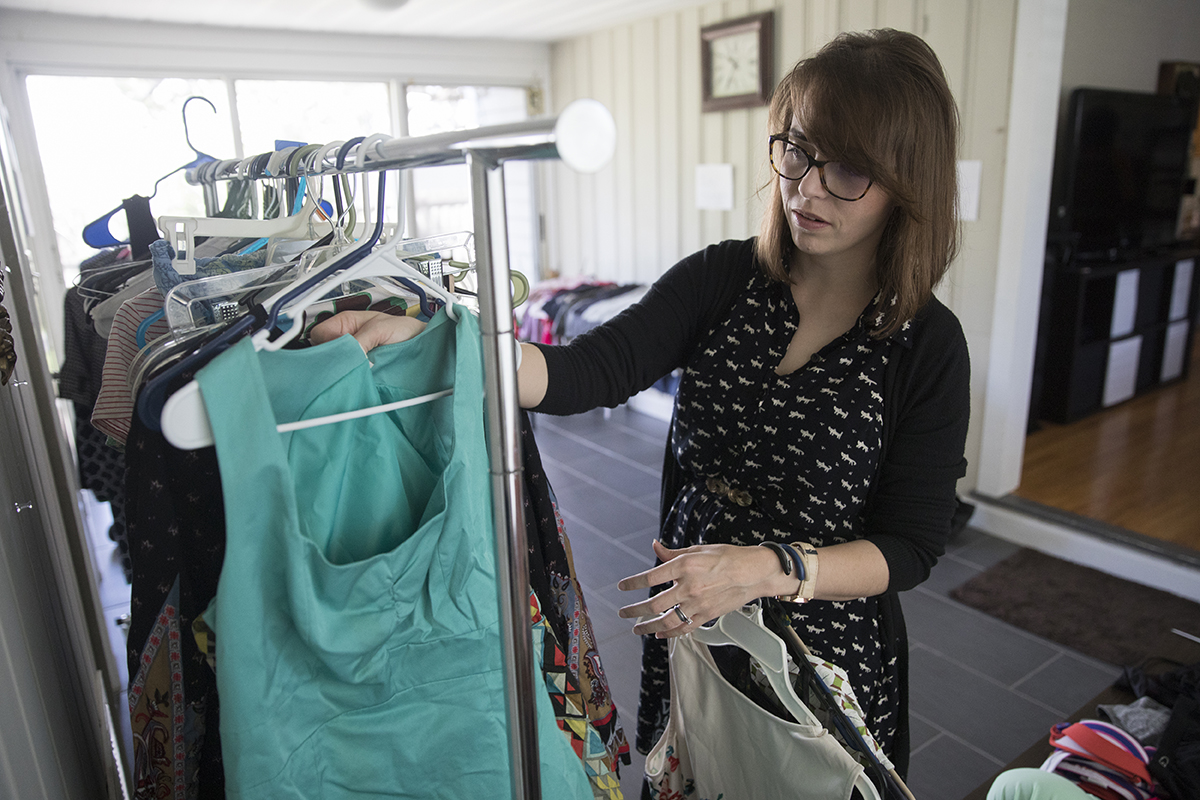
Maggie, a first-time swapper and new mom, kept pulling armfuls to fit her new post-baby body.
“Every pass through the tables I ended up with more. I had to stop,” she said.
She later messaged to say her full work outfit was made from swap finds and that it made her feel great.
Tina Russell, a Savinly photographer, reluctantly parted with a pricey vintage dress she loved. We watched as several women tried it and returned it; eventually it landed on someone whose style it matched perfectly and the room erupted in applause for the dress’s new owner.
“It felt so satisfying to see dresses actually work on someone else after many of us had tried them on,” Maggie said.
Together, swappers left with more than 100 items without spending anything.
Knowing your clothes may get a new life with a friend can make it easier to let them go.
As for that Shein dress — Maggie ended up taking it home.
Stephanie Bolling is a contributor at Savinly. A third of her wardrobe comes from clothing swaps.
For more ideas on simplifying your closet and making the most of what you already own, consider building a capsule minimalist wardrobe or learning ways to upcycle clothes into fresh pieces.