Nope — my daydream is owning a Pinterest-perfect tiny house nestled in a Colorado valley. In summer, a nearby creek rushes by and my little pigs scamper about. In winter, snow sparkles against my compact windows.
It’s the type of scene HGTV sells…
But let’s be realistic.
Plopping a tiny house into a Colorado valley and living blissfully ever after with my partner and future cats (yes, multiple) isn’t quite that simple.
This Couple Shows Others How to Embrace Tiny Living
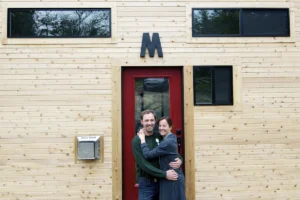
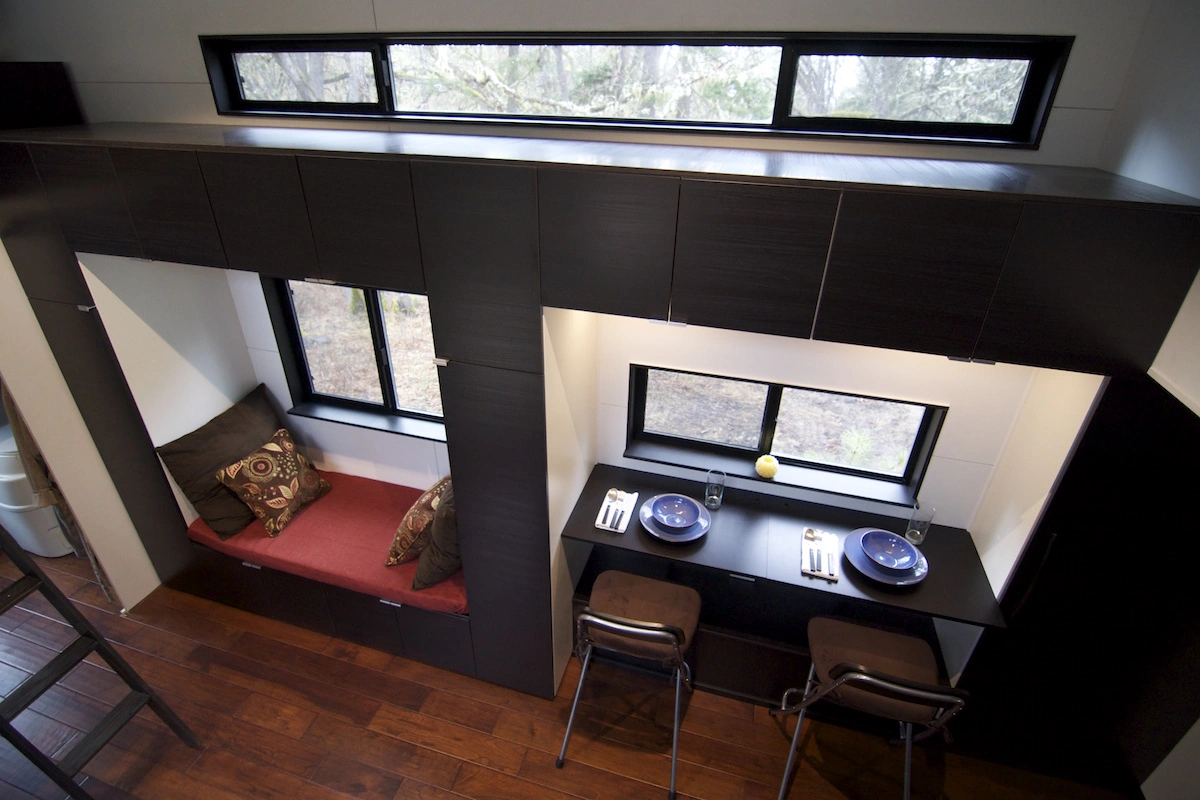
Andrew and Gabriella Morrison have been calling a 207-square-foot tiny home their residence for three years — long before it became fashionable.
Andrew constructed the modest dwelling himself, and it sits quietly in Oregon’s Rogue Valley. (They even have a creek nearby.) They teach workshops and run courses to help people like me design and build tiny houses and adopt the lifestyle.
Oh, and they’re keeping a lot of money in their pockets. Because they occupy a smaller footprint and don’t have a mortgage or hefty utility bills, Gabriella figures they saveabout $3,600 a year.
It’s no surprise tiny homes excite people. It’s a modest way of living that yields significant savings.
That said, the Morrisons have watched many jump on the tiny-house craze without fully weighing the legal, financial and even emotional obstacles.
Gabriella says the most common reason people give up is underestimating construction expenses. Tiny house, tiny cost — not always the case.
She also points out that folks often misjudge the right size. Sometimes homes are too small, and other times — surprisingly — they’re too large.
5 Things to Ponder Before Constructing Your Own Tiny Home
Keep these typical mistakes in mind as you embark on your tiny-house adventure. Andrew and Gabriella share practical pointers to get you moving in the right direction.
1. Research your municipality’s housing rules.
“[Regulations are] a huge issue right now with tiny houses,” Andrew explains. “They’re not technically legal in most cases.”
Although certain locales have updated zoning to permit permanent occupancy of tiny homes, the majority have not. Andrew notes these structures often get labeled as RVs, which are treated as temporary dwellings or recreational park residences.
Sure, living in an RV while you move around fits the recreational category — butin many places, you can’t reside in an RV as your permanent home.
“There are definitely ways through the maze and ways to get your house legalized, but it’s the biggest hiccup in the tiny house movement right now,” Andrew says. “It definitely takes some effort and some research to do well.”
It’s also time-consuming. How long will vary depending on your location and the applicable local regulations.
Alongside architect Martin Hammer, Andrew recently drafted and submitted Appendix V for the 2018 International Residential Code. If adopted by your community, this would serve as a model code for permanent tiny dwellings and help clarify legal gray areas.
So before you sink money into your prospective tiny home, verify zoning and local ordinances if you intend to live there permanently.
2. Think about where your tiny home will be located.

Similar to zoning issues, decide whether you want your tiny house to be stationary or mobile.
For the Morrisons, settling down was their goal. In fact, purchasing their parcel in Oregon was their biggest expense — an important factor to consider.
If you’d rather avoid buying land, investigate the costs to lease a lot or stay in an RV park.
If you choose a more transient path, account for how you’ll transport the dwelling (for example, what vehicle will tow it?) and any required “Wide Load” or other permits, which add to the cost.
3. Plan your utilities carefully.
The Morrisons live off-grid, meaning they don’t rely on municipal utilities.
For electricity, they use six solar panels and four batteries, plus a generator for particularly overcast stretches. Water comes from a private well. For heat, a propane delivery truck visits a few times each year to refill their tanks.
If you don’t choose off-grid living, you’ll need to design the house so it can hook up to grid power wherever you park.
And if you intend to travel with the home, make sure systems are set up for mobility — essentially like an RV.
If you’re doing a DIY build, dig into research. The web is loaded with forums, tutorials and how-to videos. Tiny living isn’t new, so there’s abundant information available.
4. Be prepared for the emotional adjustments.
Andrew and Gabriella stress the emotional effort required to adapt to tiny living.
Before committing to their tiny house, they trialed living in a pop-up camper.
The first month in the camper was rough. Getting used to compact quarters and limited possessions demanded work.
Gabriella labels it “emotional work.” You must be ready to tolerate discomfort early on — especially if you choose to share the space with a partner.
“We hear this again and again and again,” Gabriella says. “Moving into tiny spaces is an incredible opportunity for relationships, but, honestly, my experience is that some couples just don’t want to do that work.”
It doesn’t mean you don’t love your partner. It could mean one of you typically avoids conflict, which is hard to do in a cozy living situation.
5. Become deliberate about what you buy.

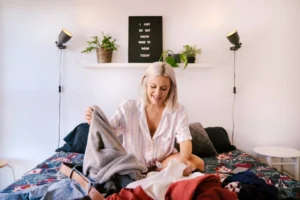
A tiny house requires far fewer possessions. The Morrisons parted with about 80% of their things before moving into their small space.
Andrew even told a tale about declining a pair of free pants at a store. There’s little room for impulse purchases in a tiny home.
Your refrigerator will probably be smaller too, so you’ll buy less food — and likely consume it more readily.
If you want a deeper look into the Morrisons’ tiny-house construction and lifestyle shift, they candidly shared their journey with me.
You can also explore more on their site and enroll in a free 7-day online course outlining the essentials of tiny homes. (Nope, they didn’t compensate me to say that.)
One more tip: if you’re thinking about creative ways to make the most of a compact footprint, check out ways to maximize your space — small design tweaks can make a big difference.
Your Turn: Weighing the advantages and drawbacks of tiny homes, would you choose to live in one?
Brooke Turner is a staff writer at Savinly. She plans to try tiny living by booking a tiny-house stay on a weekend getaway.