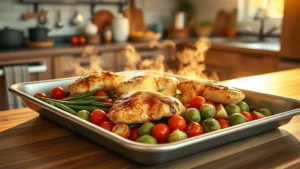
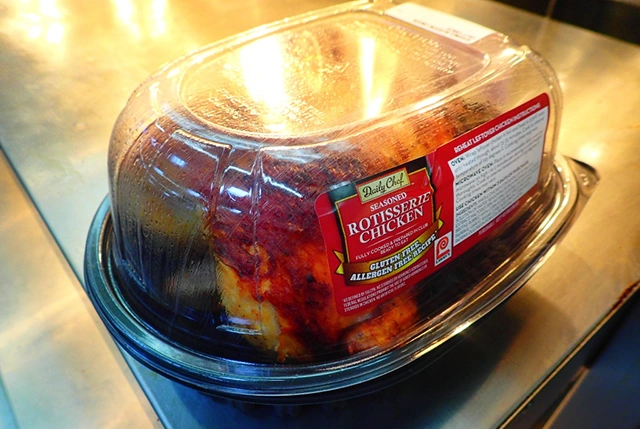
Their irresistible aroma hits you the moment you step within a few yards of the deli case, rivaled only by the sight of their golden, crunchy skins.
Rotisserie chickens.
They’re the unquestioned MVP of quick, inexpensive dinner choices that still feel wholesome and tasty. I pick one up almost every week — honestly, who’s eager to cook after lugging in countless grocery bags?
But have you ever stopped to ask why those deli chickens are such a great value?
In many stores, they sell for roughly the same — or even less — than fresh whole chickens in the meat aisle. And the hard part is already done for you!
So what’s the deal?
Why Pre-Cooked Rotisserie Chickens Are So Inexpensive
Journalist Karin Klein decided to investigate this apparent puzzle and dug in at stores and interviewed experts to uncover what’s really behind The Chicken Question.
After all, the price of rotisserie birds “feels like an unbelievable bargain,” she notes. But Klein’s reporting showed that appearances can be deceiving.
Yes, rotisserie chickens often cost less than the raw ones… but it isn’t because they’re destined for the trash.
Nor are they usually true loss leaders — deliberately underpriced items meant to lure shoppers into spending more elsewhere.
The main reason is that they’re smaller.
So while it looks like you’re paying the same rate, you’re actually paying more per pound for the ready-made bird.
“Rotisserie chickens tend to be on the small side,” Klein writes — “maybe two to two and a half pounds. The broiler chickens sold raw are more like four and a half pounds.”
“Even after cooking — a process that, according to the U.S. Department of Agriculture, trims their weight by just over 20%,” she found, “the chilled raw chicken almost always weighs substantially more than the rotisserie option.”
Luckily for retailers, this size difference is usually hidden from shoppers — especially those who are hungry and short on time.
Also, the smaller birds intended for rotisserie are often supplied ready-to-cook from a different vendor than the fresh ones — and commonly come pre-seasoned and “pre-injected” with additives like water, salt and carrageenan — so the store doesn’t need to do much to prepare them for sale.
Do Rotisserie Chickens Make Financial Sense?
Klein conducted a price comparison to determine how much you’d save, per pound, by skipping the deli bird and roasting a fresh chicken at home.
She compared rotisserie birds to fresh chickens from seven California markets, taking into account the loss of weight from cooking and the cost of oil and simple seasonings she used. She even factored in the oven’s energy use and cleanup time.
In five of the seven markets, “the homemade chickens were less expensive by about a dollar or more per cooked pound.” When fresh chicken was on sale — which happens frequently — the gap widened to about $2 per pound.
In the other two markets, the deli chickens were positioned as loss leaders — but even then they were nearly the same price as fresh ones, saving buyers less than 20 cents per pound.

Given that the finished rotisserie product typically weighs three pounds or less, you’re looking at overall savings of roughly $6 at most — hardly a windfall.
But the reality is, a whole chicken is one of the simplest things to roast. My basic approach goes like this:
1. Season the chicken with salt, pepper and whatever other flavors seem right.
2. Place the bird in a 350°F oven on a cast-iron pan or roasting rack.
3. Wait.
Still, it’s tough to beat the convenience of a deli rotisserie when you realize you’ve got nothing planned for dinner as you’re leaving work at 4:57 on a Thursday.
And as Klein observes, when you assign a value to your time as labor, “whole chickens become more expensive than rotisserie choices.”
Should You Pick Up Rotisserie Chickens?
For many of us — whether we’re tired, strapped for time or just unwilling to turn on the oven during a hot summer day — rotisserie chickens are a reasonable little indulgence, despite their compact size.
Besides, I don’t know what magic goes into that “mojo” rub at Publix, but that’s one flavor I simply can’t match at home.
If you want to cut costs even more, check strategies for avoiding rotisserie chicken overspending, try swaps like vegetarian chicken dinners, or use techniques from freezer cooking to stretch meals further.
Your Turn: How often do you grab a pre-made rotisserie chicken for a speedy, no-fuss meal?
Alex Rivers is a staff writer at Savinly and an avid, frequent purchaser of rotisserie chickens. Their work has appeared in several online outlets. Find @AlexRivers on Twitter to say hi.