Nice work. You already know how much cash you can keep when you cook at home and bring lunches to work or school.
But consider this:
Exactly how many more sandwiches can you make with the bread you have left?
If you can’t answer that, you might wake up one morning and realize your loaf only makes one more sandwich.
Then you’ll spend the next few days dropping $12 on takeout or delivery — money you hadn’t budgeted for.
In 2023, the typical American spent over $3,933 a year on “food away from home,” according to the U.S. Bureau of Labor Statistics.
Meal planning can prevent surprise spending on emergency lunches or late-night deliveries. You’ll eat better, spend less and enjoy your meals more when they’re planned ahead of time!
How to Begin Meal Planning So It Actually Works
First, determine how many meals you’re responsible for preparing each week.
If it’s just you, that number could be 21: seven breakfasts, seven lunches and seven dinners. Don’t forget to subtract meals you don’t usually need — for example, if your boss supplies Friday bagels or you join family for Sunday supper.
For families, tally meals per person — a dinner for three counts as three meals, even when everyone eats the same dish.
Next, consider the meals you make most often: sandwiches, canned soups, salads and taco nights that constitute a typical week.
How many sandwiches can one loaf of bread yield? Does a bagged salad last several meals or get eaten in one sitting? And remember to count how many servings your go-to dinners actually produce — will there be enough chicken left for another meal?
When you begin estimating how long your groceries last, you can plan ahead. You’ll look at a package of sliced ham and think, “That makes four lunches.”
Converting food items into “number of meals” is the first step toward effective meal planning.
At that point, you can take one of two approaches.
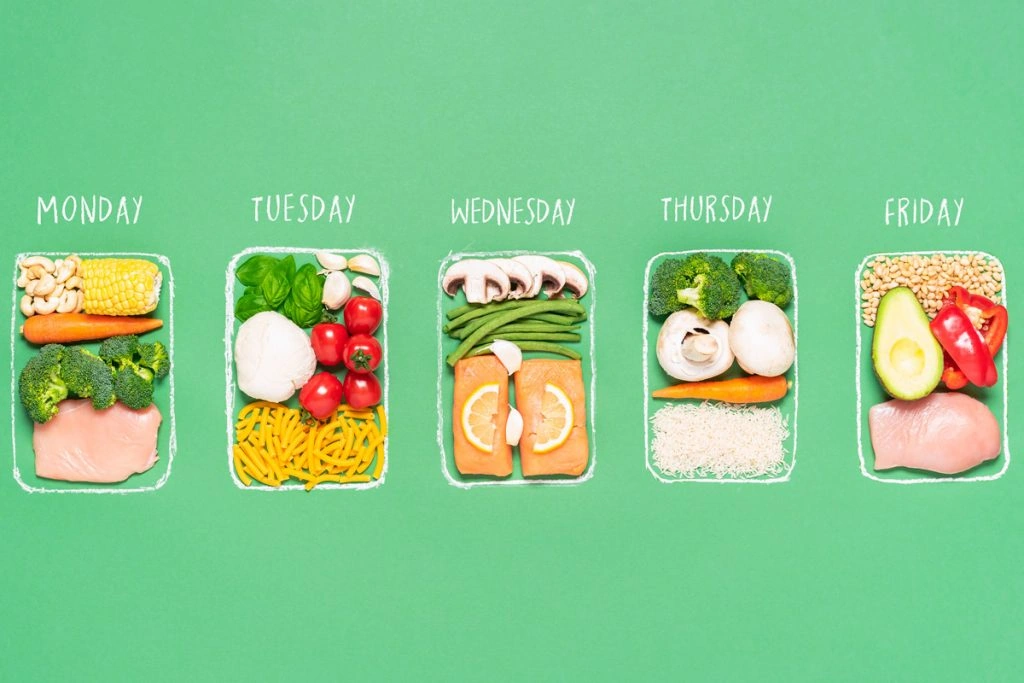
Some people schedule every meal in advance: ham sandwiches on Monday, Tuesday and Wednesday, then peanut butter on Thursday, and pizza from the office on Friday.
Others prefer a looser method: “I have ham and peanut butter; I can stretch this to the end of the week.”
That’s the essence of meal planning: estimating how much food you need to last until your next grocery run. Once you master that, you’ll find emergency takeout orders happening far less often.
Try a Meal Planning App or Calendar
No need to stress about tracking your meal plans — there are simple ways to map out meals and build grocery lists.
Here are a couple of apps worth checking out:
- $5 Meal Plan provides a weekly menu with five dinner entrées and sides, plus one lunch and one breakfast. It also includes a “goodie” like a dessert, drink or snack, and offers a gluten-free option. Cost: Free for 14 days, then $5 monthly.
- Plan To Eat offers recipe storage and a drag-and-drop planner that creates grocery lists automatically. Cost: Free trial for 30 days, then $4.95 per month or $39 per year.
Or keep it simple with pen and paper or a wall calendar — a dry-erase board makes changing plans easy with a quick swipe.
Taking Your Meal Plan to the Grocery Store
At the store, it’s time to follow your meal plan.
Create a shopping list using an app or old-fashioned paper — and stick to buying only what’s on that list.
Meal planning simplifies grocery shopping because you know exactly what to buy and where to find it.
When you repeatedly buy the same items, you’ll start recognizing sales cycles at your usual stores. That’s when you can stock up on favorites during price drops.
Buying sale items also supports prepping and freezing meals for later. Purchasing in bulk and preparing meals you eat regularly can boost your savings.
What about coupons? If there’s a great deal on something you regularly use, grab it.
But coupons for items that don’t align with your plan won’t help — your “savings” will be wasted if you never actually use the product.

Actually Eating What You Buy (This Is Crucial)
Americans discard a lot of food.
Households in the U.S. waste almost 32% of the food they purchase, according to a 2020 study. That’s roughly $240 billion lost to food waste.
You don’t want your groceries ending up in the trash. The final step in meal planning is ensuring you consume what you buy.
How do you make that happen? It’s about not only creating a plan but following it.
Try these strategies:
- Pack lunches the night before so mornings aren’t an excuse for skipping your plan.
- Alternate lunch and dinner choices. If you make lasagna, don’t eat it for dinner, then lunch, then dinner again. Space it out and add variety with sandwiches or soups.
- Give yourself flexible options. When planning, decide, “This week I’ll have either a sandwich or a homemade frozen burrito for lunch.” That keeps you from feeling stuck.
- Repeat favorite entrees so you’re more likely to stick to the plan — you know they’re well-liked, quick to prepare and how long they last.
- Keep dedicated snacks like almonds and string cheese so you don’t nibble on an entrée you’re saving for later.
- Use a slow cooker strategically. Start it in the morning to avoid being “too tired” to cook at night. Add ingredients before leaving, set it low and come home to a hot meal.
- Maintain emergency freezer meals. On busy nights, knowing a meal is ready-to-cook in the freezer helps you avoid the fast-food lane.
Be intentional about using foods before they spoil.
For instance, if you plan to eat either a salad or a sliced orange with dinner, and the lettuce is starting to wilt, eat the salad first. The oranges will last longer.
You can go a step further with a pantry challenge.
Finding a meal planning rhythm will likely take some trial and error. Don’t be discouraged if a casserole you expected to last seven meals disappears in two days and you end up ordering takeout… again!
The more you learn about your household’s consumption patterns, the better you’ll craft meal plans that keep your fridge stocked with everything you need.
If you want more tips and simple recipes, check out our meal prep ideas to make planning even easier.
Jordan Ellis is a contributor to Savinly.