Home gardens are popping up in neighborhoods across the country.
With grocery bills rising, many people are turning to digging in and learning how to cultivate their own food.
Potting mix is flying off shelves at hardware stores, and the phrase “victory garden” is being heard more often, much like during World War II.
“There was already a renewed interest in returning to the land, and it’s growing, especially right now,” said Danny Green, who operates Woodcrest Farm in Hillsborough, North Carolina, alongside his parents.
Green noted families can launch their own victory garden without a large plot. “You don’t need a lot of space to grow some really good food,” he said.
Green speaks from experience. He and his wife relocated from Brooklyn, New York — where he worked in theater production with the Blue Man Group — to his family’s farm a few years back. Although he hadn’t farmed before, he now tends cattle, hogs and chickens, and produces enough from a one-acre garden to supply aCommunity Supported Agriculture co-operative.
He offers one main tip for would-be vegetable growers: “Plant the foods you enjoy eating that are feasible to grow for the current season and your region,” he advised.
Tomatoes are among the simplest crops to nurture, Green said. “If you like tomatoes, that’s a great place to begin. Anyone can grow tomatoes in most places, and they beat grocery-store tomatoes hands down.”
Pro Tips for Launching a Productive Victory Garden

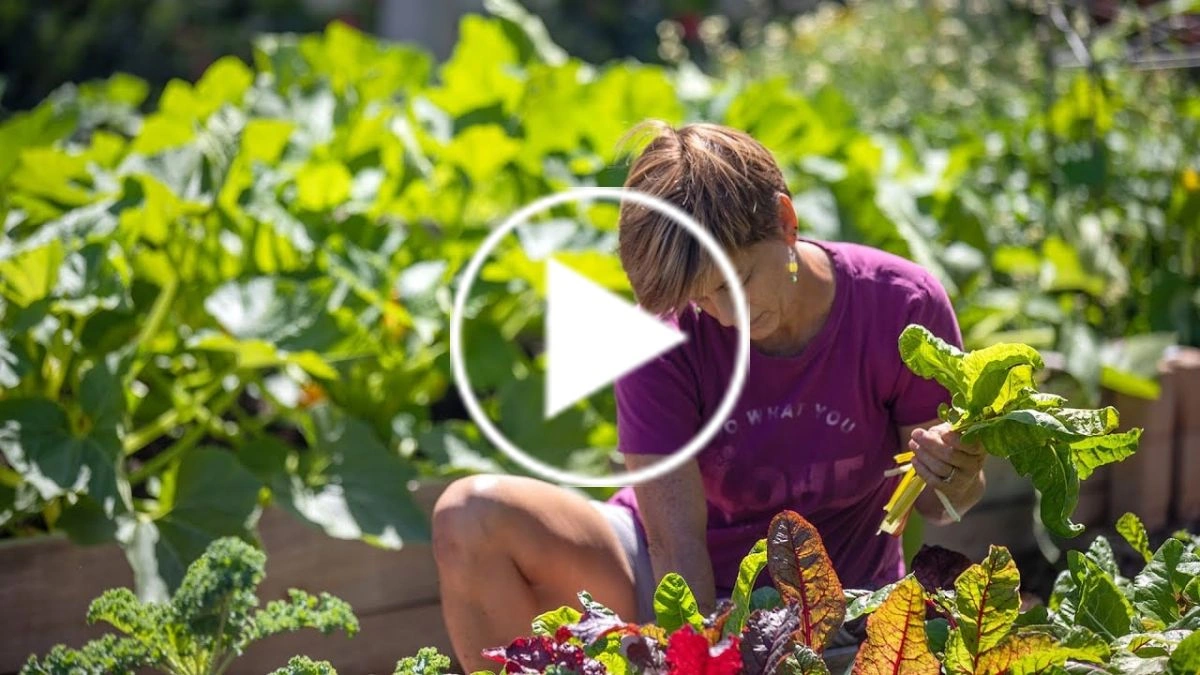
Robin Clemmons sowed her first edible garden 15 years ago as a teacher to demonstrate seed growth to preschoolers. She now serves as Volunteer Gardener in Residence at Daystar Life Center, where she and a handful of volunteers harvest roughly 30 pounds of produce weekly for the center’s food pantry. The garden covers about 650 square feet of raised beds.
When launching your garden, Clemmons cautioned that you can plant seeds from some grocery-bought foods, like peppers, but those seeds aren’t as reliable as fresh seeds purchased in packets.
Also, vegetables require varying lengths of time to mature and thrive at different seasons depending on your climate and location. You’ll need to look up your growing zone and how that affects what, and when, you can grow. Some crops mature quickly, which is perfect for gardening with children (or for impatient gardeners).
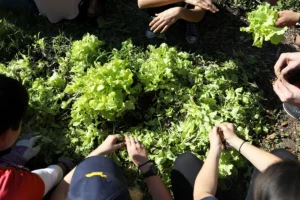
“If you have kids or want quick results, plant radishes. You can see them in about 20 days,” Clemmons said. “Beans grow fast too, roughly an inch a week. That’s why the story was ‘Jack and the Beanstalk,’ not ‘Jack and the Pepperstalk.’”
She shared the following recommendations for beginning your own victory garden.
Planning Your Victory Garden
1. Your garden can be as compact as 6’x1’, with six vegetables spaced a foot apart. A practical size is 3’x10’.
2. Most vegetables do best with about eight hours of direct sunlight daily.
3. Some of the simplest crops to cultivate include okra, peppers and tomatoes.
4. Some of the quickest vegetables to harvest are cucumbers, squash, radishes and beans.
5. Plants that tend to do well in warm months across many regions include beans, cucumbers, eggplant, melons, peppers, summer squash and tomatoes. (See the Urban Farmer site for month-by-month planting suggestions based on your area.)
Preparing Your Soil
6. Preparing soil typically takes about three weeks, so factor that into your planting schedule. (For much of the U.S., that means planting in late May.)
7. Outline your plot, then cover it with black plastic (like a trash bag) to solarize the ground. This will kill weeds, grass and other growth beneath without chemicals.
8. After three weeks, till the soil and spread a layer of manure blended with compost about six inches deep over the entire garden.
Planting Your Seeds
9. Purchase the seeds you want for your plot. Seed packets usually cost $1 to $3 and are available online and at stores offering curbside pickup.
10. Make holes and place a little topsoil with your seeds or seedlings. Follow the seed packet instructions on planting depth and spacing closely — they matter a lot.
11. Sow several seeds to produce one plant because not every seed will germinate. You’ll need to thin extras later.
12. If space is limited, grow vertically. Peppers can be staked up about three feet, tying the stem as it grows. Cucumbers need a tripod or lattice to climb; the vine will curl and attach itself. In larger plots, cucumber vines can sprawl across the ground.
Where to Turn When You Need Help
If you run into problems you can’t solve, reach out for help. Nearly every county in the U.S. has an agricultural extension website full of advice and resources. Some offer apps to guide you. Both Clemmons and Green said extension offices are invaluable for novice gardeners.
Green also recommended asking nearby gardeners which garden centers have the best supplies and advice. Many communities also host gardening-focused Facebook groups where people share tips.
How to Construct a Raised Bed for Your Victory Garden

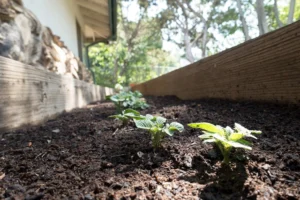
“The fastest way to begin a garden is by making raised beds,” Green said. “If your yard lacks topsoil or you don’t have a yard, raised beds still work.”
He outlined these steps for building a basic raised bed.
1. Clear a 4-foot-by-8-foot patch of grass and weeds, then dig up and till the soil.
2. Use four boards that are six inches high and form a 4-foot-by-8-foot box, nailing them at the corners.
3. Anything that will hold soil is acceptable, for example a large plastic tub from a garden shop or even a big laundry tub — just remove the bottom.
4. Fill with potting soil and compost, then sow your seeds.
5. Planting seedlings gives you a month or more of head start on growth.
Caroline Rivers is a freelance writer and editor based in Chapel Hill, North Carolina, and author of Rules for the Southern Rulebreaker, Missteps & Lessons Learned.