It may not be surprising: the cost of fresh produce is climbing.
Although overall food inflation has moderated, prices are still headed upward, forecast to rise 6.2% in 2023. Coupled with supply-chain stresses and food-waste issues, fresh fruits and vegetables are expected to see a modest increase this year — roughly 0.3%.
Given these figures, you need a plan for purchasing fresh items while still enjoying nutritious foods.
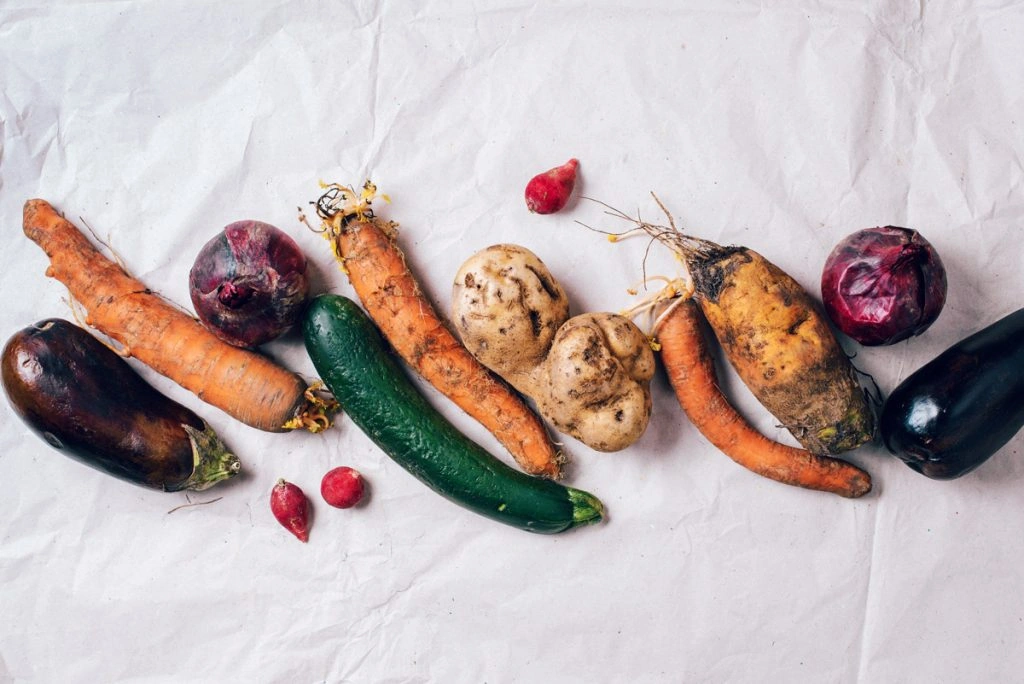
So how can you work around the current food system, minimize waste and lower costs on your favorite fruits and vegetables? Consider imperfect produce — those cosmetically flawed fruits and veggies with marks or odd shapes.
Reframe What “Good” Produce Looks Like
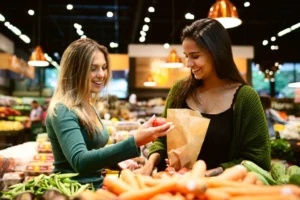
All too often we pass by cratered potatoes and strawberry packs with oddly shaped berries. We gravitate toward perfectly uniform baby carrots for snacking because they look nicer.
But opting for imperfect produce can stretch your grocery dollars and reduce food waste.
“If it’s ugly and misshapen only because of its shape, it’s still perfectly edible,” said Linda Ly, founder of Garden Betty. “You simply deal with it by chopping it up the same way you would when preparing most meals.”
Wilted greens aren’t always ruined, either. Ly recommends reviving them by soaking in a bowl of ice water for about 20 minutes. That chilly-water trick also refreshes veggies like celery and radishes that are going limp. Wilted greens can also be chopped and simmered into soups.
“If it’s merely a bruise — that’s a superficial blemish you can trim away, and the remainder of the fruit or vegetable is fine,” she added.
Give imperfect produce a second glance; setting aside visual preferences can help lower your grocery bill. From subscription services to grocery aisles and local farms, here’s how choosing less-than-perfect produce can save you money.
What Counts as Ugly Produce?
Call it ugly, misshapen or imperfect — ugly produce refers to fruits and vegetables that don’t meet typical cosmetic standards. Sold by ugly-produce delivery companies like Imperfect Foods, Misfits Market and Hungry Harvest, and also available at farmers markets and some supermarkets, imperfect produce is just as nutritious as its visually flawless peers. The key difference is that ugly produce can meaningfully reduce your weekly food expenses.
The American Heart Association recommends four to five servings of fresh produce daily. With food waste rising and grocery prices increasing, how can we minimize waste, eat healthfully and save money?
The solution: purchase imperfect produce via delivery boxes or shop at local farmers markets. Many ugly-produce companies were launched to encourage healthier eating by making produce more accessible. While some companies don’t sell imperfect items exclusively, others like The Fruit Guys donate cosmetically imperfect goods to food banks.
Subscription Boxes That Deliver Imperfect Produce
- Best for Selective Shoppers: Imperfect Foods
- Best for Wide Reach: Misfits Market
- Best for Adjustable Box Sizes: Hungry Harvest
Imperfect Foods, Misfits Market and Hungry Harvest are companies focused on delivering farm-fresh produce while cutting food waste and shortening the supply chain from growers to consumers.
Subscription services delivering oddly shaped fruits and vegetables emerged several years ago, appealing to shoppers who want to reduce food waste.
Although critics contend that market-driven fixes for food waste can be imperfect and sometimes counterproductive, customers can often save 30% or more compared with conventional store produce. There’s also the convenience of home delivery.
Imperfect Foods, Misfits Market and Hungry Harvest are the three primary players in the imperfect-produce subscription market.
Imperfect Foods
Best for Selective Shoppers
Imperfect Foods is a grocery and imperfect-produce delivery service operating largely across the upper Midwest, Northwest, West Coast, and parts of the South like Texas and Louisiana. Founded in 2015, it was one of the earliest players in the space.
The company aims to be net-zero carbon by 2030. Their delivery uses 100% recycled boxes and company drivers who drop off multiple orders in a neighborhood to reduce emissions. They plan to switch to fully electric vans by 2027. After deliveries, they retrieve old packaging for recycling. Additionally, Imperfect Foods makes weekly donations to food banks.
The perks include no minimum order, choice among four box sizes, options for organic or conventional produce, and the ability to add fruits, vegetables, eggs, dairy, meat, fish and other pantry items to customize your box.
Prices vary from $11 for about 7 pounds up to $30.50 for 25 pounds, with $5.99 shipping for orders under $60. Organic items cost more, similar to grocery-store pricing.
Price: $11 – $30.50 per box, $5.99 delivery fee
What you can order: Imperfect produce, pantry staples, snacks, eggs and dairy, meat and fish, plant-based options
Delivery area: Much of the Upper Midwest, Northeast and West Coast, plus Texas and Louisiana
Misfits Market
Best for Wide Reach
Misfits Market launched in 2018 to tackle food waste by addressing inefficiencies in the food supply. Misfits partners with farmers to source high-quality organic produce that may look a little unusual. Its current model resembles that of Imperfect Foods — customizable boxes, organic options, upscale pantry items, seafood, eggs and more.
One notable distinction: Misfits Market delivers to 49 states, making it accessible to both rural and urban customers.
Price: Minimum $35, with $6.99 shipping
What you can order: Imperfect fruits and vegetables, groceries like snacks, meat, fish and seafood, plant-based items, pet food and wine
Delivery area: Most ZIP codes across 48 states
Hungry Harvest
Best for Flexible Box Sizes
Hungry Harvest serves a smaller footprint, offering weekly or biweekly deliveries in select metro areas across eight states — Delaware, Florida, Maryland, Michigan, New Jersey, North Carolina, Pennsylvania and Virginia — plus Washington, D.C.
They offer various box sizes and both conventional and organic produce at these price points:
- Mini Harvest (feeds one to two people): $15 minimum or $28 for organic
- Full Harvest (feeds two to three people): $25 minimum or $34 for organic
- Super Harvest (feeds four to seven people): $33 minimum or $42 for organic
Hungry Harvest lets you customize your selections and offers a “Never List” where you can exclude up to six items you won’t use.
Orders under $39.99 incur a $4.99 delivery fee.
Price: $15 plus shipping
What you can order: Imperfect conventional produce, organic produce, bread, yogurt, eggs
Delivery area: Metropolitan areas in eight states

Other Places to Find Imperfect Produce
You can get imperfect produce from several sources, in-person or by delivery — some operate on a subscription basis and others don’t. Check local options. For example, Farm Fresh to You serves northern and southern California, and Farm to People delivers to New York City and New Jersey.
Buying Ugly Produce from Farmers and Markets
Buying directly from local growers usually saves money because farmers avoid the marketing and overhead that supermarkets incur.
Local farmers aren’t bound by supermarket appearance standards, so you may find oddly shaped tomatoes or extra-large eggplants at better prices.
Two ways to purchase directly from growers are shopping at a farmers market or joining a Community Supported Agriculture (CSA) program. Visit the farmers market if you prefer choosing specific items each week. If you’re fine with a rotation of seasonal items, a CSA provides a pre-selected share of what’s just been harvested.
Alternatively, grow your own and enjoy whatever imperfect produce your garden yields.
“Gardening can be done very inexpensively,” Ly noted. “Some people think you need fancy cedar beds and a landscaped area, but you can keep costs low by reusing materials and being creative with what you already have.”
Finding Imperfect Produce at Grocery Stores
Your neighborhood grocery store might also discount produce that doesn’t meet appearance standards.
If you don’t spot marked-down imperfect items, ask store management what happens to produce that gets rejected and whether there’s a chance to buy it at a reduced price.
Another money-saving tactic is purchasing pre-bagged produce — apples, oranges, lemons, potatoes, sweet potatoes and onions often come in bags priced lower per item than buying loose. Those bags frequently contain items that are smaller or have minor imperfections, even when stores aren’t advertising them as such.
Frequently Asked Questions About Imperfect Produce
We researched and answered the questions shoppers ask most about imperfect produce.
It’s called ugly produce because it doesn’t meet strict cosmetic standards. Ugly produce is simply imperfect fruits and vegetables that are as nutritious as more flawless options but are often overlooked at stores or markets. This appearance-driven expectation in our food system contributes to waste.
Many grocery stores reject imperfect produce because customers tend to pass it by for visually “perfect” items. Some stores sell imperfect produce to consumers at a discount, while others donate it to food banks and pantries.
There are two good reasons to buy imperfect produce: It helps reduce food waste and it can be less expensive than buying supermarket-perfect items. Signing up for an imperfect-produce subscription or shopping at farmers markets both help address flaws in the current food system while saving you money.
With no minimum fee and boxes starting at just $11 (plus a $5.99 delivery charge), the smallest box from Imperfect Foods can be significantly cheaper than a Misfits Market box, which has a $35 minimum and $6.99 shipping.
Contributor Megan Carter writes about lifestyle topics from North Carolina. Nicole Dow is a former writer at Savinly.