I detest chaotic fitting rooms, packed stores and racks crammed with too many items. I loathe searching for my size, which shifts so much across labels that my first estimate is never right. I’ll wander into a shop, circle the clearance section a couple of times, and usually leave frustrated and with nothing to show for it.
Shopping online isn’t much better. It’s simple to become overwhelmed by pages and pages of results that showcase how prone people are to decision fatigue.
My ongoing dressing-room dread became starkly obvious this summer when I spent an inordinate amount of time hunting for dresses with sleeves. From resale stores to fashion-forward retailers to the endless online options, I found plenty of airy, sleeveless sundresses… but very few with sleeves.
So when the internet kept showing me ads for MM.Lafleur, an online boutique promising to “take the work out of getting dressed for work,” I decided to take a look. There were lots of sleeves. I liked the sleeves.
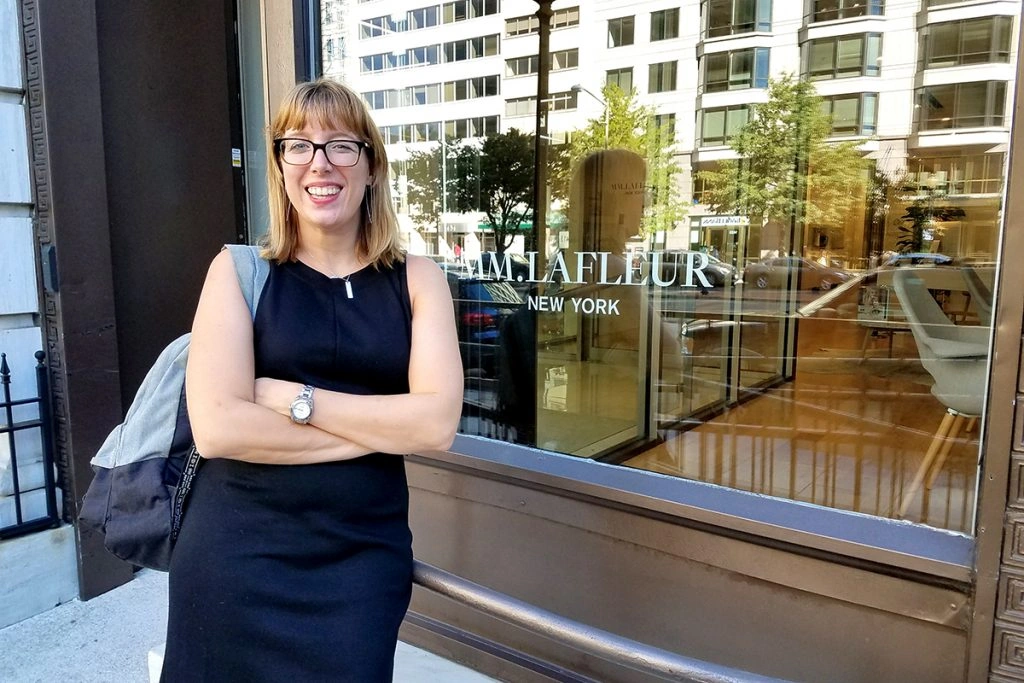
There was even a physical store in my former city, Washington, D.C. With a visit “home” planned, I booked an appointment at MM.Lafleur.
I knew blouses began at about $100. Dresses easily nudged the $300 mark. Clothes at that price can feel purely indulgent. But as my career progressed, I wanted to shift my look from “cozy freelancer” to more like “I’m completely comfortable appearing on live TV weekly.”
Paper-thin knits and trendy patterns from fast-fashion outlets weren’t going to cut it anymore — at least not for my professional wardrobe. My aim: to find several staple pieces that could stand up to time and Florida heat, even if that meant a higher initial cost.
Your Stylist Will See You Now

Forget the glaring lights and pulsing music at mall outlets. Everything felt softer at MM.Lafleur. The soundtrack was calming, the decor was polished, and the prosecco was served in stemless glasses that were less likely to tip as elbows slipped into clothing.
Washington, D.C.’s busy, corporate K Street hosts one of the brand’s boutiques it dubs Out of Office. There will be four of these by the close of 2017 to complement the brand’s yearly roster of roughly 40 pop-ups, where curious shoppers can experience the line in a temporary space.
The company began with trunk shows in hotel rooms before refining a concept of personal shopping by mail in 2014 to help customers overcome decision paralysis.
That same year the brand started trying the appointment-based model.
Most clients complete a survey to note their needs and estimated sizes before their appointment. I listed my occupation, job title, age and my best size guess based on where I typically land at other stores.
When I arrived, my stylist, Ashley, had already pulled several looks from dresses to blouse-and-trouser combinations and placed them in my roomy fitting suite.
We discussed fabrics and care, ways to layer pieces to produce multiple outfits, and how to pair jewelry and accessories to keep the collection — mostly black, because I’m classic that way — adaptable.
I was considering alternate colors and trying on extra pieces as Ashley whisked more options from a secretive back room. But I didn’t feel hurried. There was time to sit and sense how each piece moved. I also had time to snap a few mirror selfies and text friends for their take.
“An hour of shopping can be stressful and overwhelming,” Rachel Mann, director of the brand’s showrooms, told me later, as if she’d plucked the thought from my head. “Searching for your size, sweating, needing the restroom, waiting in line, poor lighting, needing a different size, getting overloaded by decision paralysis.”
An hour later, my prosecco was gone, and I stood before a rack of items I adored.
A friend and former stylist had warned me about getting drawn in. A personal shopper, beverages notwithstanding, is still a salesperson.
“When you finish shopping, be decisive,” my friend had advised. “Don’t allow yourself to be coerced into spending more than you’re comfortable with.”
April Benson, Ph.D., shared similar counsel in her book “To Buy or Not to Buy: Why We Overshop and How to Stop.”
“Yes, it may feel much easier to bring something home than to risk feeling awkward or ‘high-maintenance’ after a salesperson has taken time to cater to you,” Benson wrote. “But the salesperson is simply doing their job. Your job is to look out for yourself, not to appease the salesperson.”
Benson’s book also cautions against getting too friendly with your salesperson, since even polite small talk about the weather can gradually make you more susceptible to upselling.
Too late. I liked Ashley — she wasn’t aggressive and asked questions that seemed to steer me toward my own choices. (Psychology in action, folks.)
I chose three pieces: two blouses and a dress that totaled just over $500. I hardly recognized the version of myself who once scoured thrift racks for resale treasures to fill her wardrobe.
I know what you’re thinking — maybe I’ve lost my mind. Sometimes, I wonder the same. But this wasn’t one of those moments.
MM.LaFleur, Mann explained, originated when the founders commiserated about lugging dry-clean-only work clothes on business travel. The expense of dry cleaning alone was enough to make any professional reconsider frequent trips.
“The amount we spend on dry-cleaning is ridiculous,” Mann said. “If you compare the cost of dry-cleaning over time to a $200 machine-washable dress, it’s worth it. You spend something like four times more on dry cleaning over time.” The brand’s pieces, most of which are washable at home, undergo shrink, spill, pilling and other tests to ensure longevity. “We’re always thinking about money and cost per wear,” Mann adds.
Wear a $200 dress once weekly for a year, and it costs less than $4 per week. Your laundry outlay is minimal, whereas dry cleaning that dress typically runs about $10 per visit. No thank you.
It was time for my wardrobe to be an investment, even if it meant not buying another garment for the rest of the year — and maybe through the next year as well.
What’s the Value of a Personal Shopper?
Private shopping with a stylist isn’t novel. Think of storied department stores and independent boutiques that cater to upscale clientele.
But modern showrooms don’t require a minimum spend or personal connections. They’re available to anyone seeking the bridge between stylish online pieces and their existing closet.
Bonobos pioneered the Guideshops to introduce men to its chinos and dress shirts. The company was later acquired by Walmart. Nordstrom, famed for customer service and in-house tailoring, opened a Nordstrom Local in Los Angeles this fall that stocks no inventory. Instead, it brings in items from a local warehouse for complimentary personal shopping sessions.
Online cult-fave-turned-Walmart-acquisition ModCloth is experimenting with showroom service, too. The brand tested seven pop-ups last summer before opening a permanent shop in Austin, Texas.
Here’s what others had to say about working with a personal shopper.
Tracy Travaglio, a high school English teacher and style blogger in Pittsburgh, booked an appointment and browsed the showroom while a ModStylist brought her a few extra pieces to try.
Travaglio arrived with a budget but admitted she went a bit beyond what she expected. However, her upcoming birthday made the indulgence feel reasonable.
“This method of shopping obviously isn’t for immediate needs, but I could see myself shopping this way seasonally to pick up a few key pieces,” she said.
Sydnee Merrell, a student in Ogden, Utah, visited Everlane’s showroom while in New York. Already a fan of the brand online, she found the showroom’s limited selection — which accepts walk-ins rather than appointments — disappointing.
“It mostly validated my decision to buy those items,” she said of the three T-shirts she planned to purchase. But she doesn’t feel a strong urge to return to a physical Everlane because ordering online — and returning if needed — is straightforward, she added.
“I prefer shopping in stores because I like to feel the fabric, try things on, and be certain before buying,” Merrell wrote in an email. “Buying online forces you to purchase first. I thought the showroom would fix that problem.”
I Spent $265 on a Dress — Was It Worth It?
My MM.Lafleur order arrived a week after I placed it, each piece neatly folded and wrapped in tissue for shipping. I still felt confident about the choices I’d made with Ashley’s guidance. I remained glad I invested the money, believing that owning fewer, better-made pieces would suit me.
When I first slipped into the Tory dress, made in New York and tagged at $265, I felt certain it would become my staple dress for years. At roughly $5.10 per wear, I intended to make that true.
Rachel Hayes is a senior writer and producer at Savinly.