There’s no such thing as too early to start teaching childrenhow to manage money.And with the holidays approaching, you’re likely hunting for meaningful presents that do more than gather dust. Here’s an idea: Give the gift of financial smarts.
Sure, it might seem a touch dramatic to open a Roth IRA for a five-year-old — but how often do adults wish they’d learned better money habits when they had time to act?
One surefire way to raise the kid who becomes the teen who understands when to be frugal and when to spend is to give toys, books and games that encourage smart thinking about how to use the $2 you handed them for taking out the trash.
Offset Holiday Costs With These Simple Ways to Earn Money
The holidays can drain your wallet. Need extra funds to make it through the season? From taking brief surveys to completing small online tasks or sharing your opinion, quick ways to earn cash can help fund your thrifting and gift shopping.
19 Entertaining, Money-Focused Gifts for Kids
Learning about money doesn’t need to be dry. While topics likecompound interest or investingmay feel advanced, you can begin the conversation with money-centric gifts for children.
You might be surprised how many aisles in toy stores or game shelves double as entry points to financial lessons when you look closely. Consider these picks as you shop for presents for the future financiers in your life.
Note: Prices listed are the online list prices as of Dec. 4, 2024, and do not account for discounts. Tax and shipping are extra.

Books
Let’s be honest: your kid won’t want a heavy textbook for the holidays. But storybooks and illustrated nonfiction that sneak in financial lessons through rhymes, fables or beloved characters are perfect. Bonus: many of these titles are wallet-friendly.
1. “The Berenstain Bears’ Trouble With Money” by Stan and Jan Berenstain
An Amazon summary we can all relate to: “Mama and Papa worry that Brother and Sister act like money grows on trees.” The siblings learn a valuable lesson about starting a small business. Kids enjoy this tale for its life lessons — including a simple explanation of interest — andalsobecause it comes with 50 free stickers!
Cost:$5.57
2. “One Cent, Two Cent, Old Cent, New Cent” by Bonnie Worth
Remember The Cat in the Hat? Share the same whimsical voice with this money-focused story that doubles as a kid-friendly nonfiction introduction to currency history — from bartering to paper money. It’s a good way to teach young readers how to navigate nonfiction, complete with an index.
Cost:$9.29
3. “Curious George Saves His Pennies” by Margret and H.A. Rey
Curious George wants a bright red train from the toy aisle. He discovers he needs to save and work to buy it. This sweet story is ideal for young children beginning to identify wants — it shows how effort and saving can lead to small rewards, like that coveted toy train.
Cost:$4.79
4. “How to Turn $100 Into $1,000,000” by James McKenna, Jeannine Glista and Matt Fontaine
For older kids curious about saving and investing, this 144-page guide covers getting a first job, building savings and harnessing compound interest. It’s action-driven, offering practical steps kids can take after reading to begin saving and investing.
Cost:$7.68
5. “Finance 101 for Kids: Money Lessons Children Cannot Afford to Miss,” by Walter Andal
If your child is part history buff, part hands-on learner, this clear and engaging book covers the origins of money, ways to earn, basics of credit and an introduction to markets. Adults might find it a helpful refresher, too.
Cost:$12.40
6. “A Smart Girl’s Guide: Money: How to Make It, Save It and Spend It” by Nancy Holyoke and Brigette Barrager
While many finance books target boys or use gender-neutral language, this American Girl title speaks directly to young girls who want practical tips on earning and managing money. Interview prompts like “What was your best buy ever?” let readers learn from peers their age about smart spending choices.
Cost:$9.69
Games
Board games bring the family together for financial lessons disguised as fun. They’re holiday-friendly activities that show kids how saving and spending are household practices.
7. Monopoly
Monopoly is a classic — either you grew up playing it or you never have. Built around buying properties, collecting rent and trading, Monopoly’s core lesson is that accumulating wealth usually determines the winner — though early leads don’t guarantee victory.
Cost:$14.97
8. Pay Day
Pay Day is a retro favorite launched in 1975 that can be played in as little as 15 minutes once you know the rules. Like Monopoly, the aim is to finish with the most money, but you also manage a salary and monthly bills — a useful lesson in balancing income and expenses.
Cost:$19.95
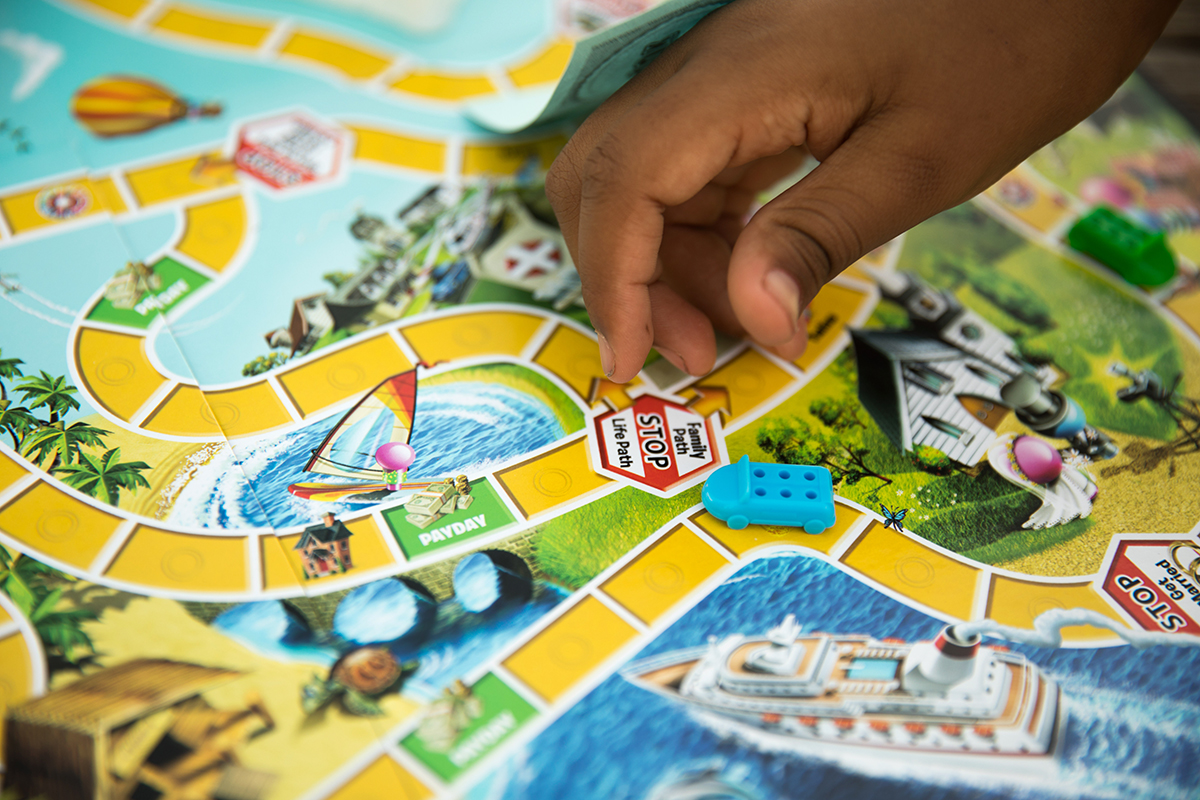
9. The Game of Life
The Game of Life simulates life choices: career paths, trips, surprises and obligations. Players ultimately total assets and pay off debts — which teaches kids that financial ups and downs are part of life. Remember, it’s a game, so enjoy the drama.
Cost:$21.99
10. Money Bags
This coin-focused game helps players practice counting change and exchanging coins for different denominations. It’s ideal for kids beginning to understand how cash works and for curbing impulse reaches into a parent’s wallet.
Cost:$13.99
11. Buy It Right Shopping Game
Perfect for kids learning basic math, this game includes calculators, paper bills and coins so players practice making change and recognizing money values while playing a shopping scenario.
Cost: $39.99
12. The Allowance Game
Just started giving your child an allowance for chores like tidying their room or making their bed? This game frames saving, spending and making change in a context they’ll recognize, reinforcing everyday money skills.
Cost:$19.99
13. Stock Exchange Game
The stock market can seem mysterious, but this game shows strategic approaches to investing: opting for higher-risk choices when young versus safer holdings later. It demonstrates how different choices can grow or shrink an initial investment over time.
Cost:$49.99

Imaginative Play
Preschool teachers will tell you: kids learn by pretending. Role play is an effective, engaging way to introduce money concepts to little learners.
14. Play Money
If children mostly watch card payments at checkout, they may not grasp the look and feel of bills and coins. Play money helps them identify denominations and understand value — especially useful paired with games that teach making change.
Cost:$9.49
15. Cash Registers
A toy cash register ups the realism of play money. Kids can set up pretend stores and alternate between customer and clerk. These registers range from themed versions—Barbie, Minnie Mouse and Disney Princess—to neutral models suitable for any child. Expect a satisfying “Kah-ching” sound to make play time more fun.
Cost:$27.49
Piggy Banks
The traditional piggy bank has come a long way from the fragile porcelain model that needed a hammer. Today’s kids’ banks are smarter and more engaging.
16. Melissa & Doug Created By Me Piggy Bank
As the name implies, kids decorate this piggy bank themselves using paint, glitter and stickers. Personalizing it gives them pride and incentive to protect their savings.
Cost:$13.99
17. Moonjar Classic Moneybox
This segmented bank divides savings into three jars — save, spend and share — helping kids allocate funds for different goals. The “share” section is a thoughtful way to teach generosity from an early age.
Cost:$15.99
18. Cartoon Excavator Piggy Bank
For kids who love trucks and construction, this excavator piggy bank doubles as a fun toy. Drop coins in the rear slot, then enjoy imaginative play — a practical and playful combo.
Cost: $29.99
19. Dog Balloon Animal Piggy Bank
If your child is fascinated by balloon art, this dog-shaped piggy bank offers both aesthetic appeal and usefulness — it looks stylish on a shelf while helping them store money.
Cost:$19.99
Writer Anna Mercer contributes pieces about selling items online and personal finance tips for Savinly. Her work has appeared in Teen Vogue, Smithsonian Magazine and the Tampa Bay Times.