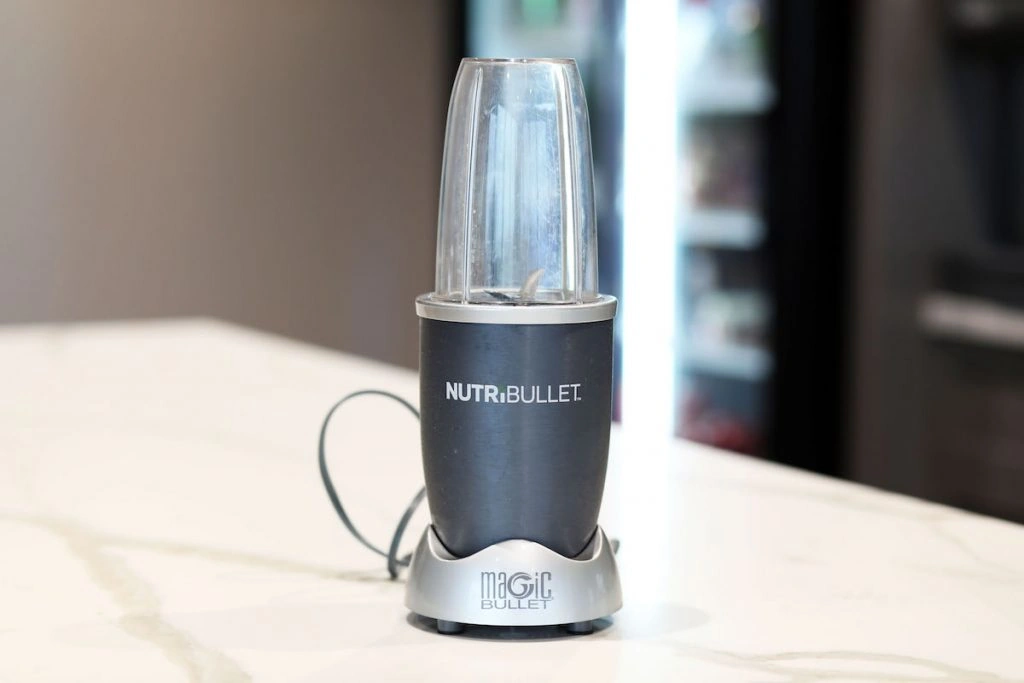
Whether you’re aiming to kick off the morning with a nutrient-packed shake or craving a pitcher of icy margaritas, a blender is an essential kitchen appliance.
Increasingly, people are opting for compact “bullet” blenders, which promise simple operation and easy cleanup while still delivering respectable power.
These bullet-style machines generally have smaller jars than full-size blenders, which many users appreciate. In fact, that compactness makes them perfect for single-serve smoothies — often using a cup that doubles as a travel tumbler.
But as more bullet models appear on shelves, it becomes tricky to determine which one is the best purchase — especially when prices vary wildly.
Bullet blender prices span fromaround $10tonearly $300. One might assume they all accomplish roughly the same tasks.
So, what’s the deal?
Magic Bullet vs. NutriBullet vs. Nutri Ninja: Which Delivers the Best Value?
Bullet blenders come with a wide range of motor strengths and accessories, which helps explain the seemingly absurd price differences. It’s reasonable to expect that some models simply perform better than others.
But between the $10 budget option and the $300 luxury model, where’s the sensible midpoint? How do you maximize blending capability for your money?
While it’s impossible to evaluate every bullet blender on the market, three brands stand out as popular contenders.
The Magic Bullet, NutriBullet and Nutri Ninja offer comparable functions and compact footprints, yet their prices fall roughly between $40 and $100-plus.
Which one is the smartest purchase? We took a close look — in the name of science.
And, yes, for smoothie research.
Magic Bullet: $39.99
Branded as “The Original,” the Magic Bullet has one immediately appealing quality: simplicity.
Unlike other bullet lines, the Magic Bullet largely sticks to a single size and format, so you don’t have to wrestle with yet another purchasing choice.
The Magic Bullet typically ships as an 11-piece set including the motor base, one blade, multiple cups and lids, plus a recipe booklet featuring quick blends that take seconds to prepare. It also includes a complimentary one-year warranty, covering repairs or replacement if a manufacturing defect occurs.
Price at the time of writing is $39.99 from the manufacturer with free delivery; you can find it for a similar rate on Amazon (often with Prime shipping).
However, the Magic Bullet’s motor is only 250 watts, and its cups hold just 18 ounces, making it the least powerful and smallest option of the three we examined.
But the most important question remains… can it blend?
“The Magic Bullet works fine for the price if people don’t want to spend money on something they might not use,” commented Rachael McNeal on Facebook. She uses hers daily to make breakfast smoothies.
“It does a decent job. We’ve also used it as a coffee grinder and food processor — it’s held up.”
Her lukewarm endorsement echoes the sentiment of over 2,000 Amazon reviewers who collectively give the product a 4.1-star average. Review distribution*:
5-star: 62%
4-star: 11%
3-star: 6%
2-star: 6%
1-star: 15%
Top reviewers praise it as “a sleek, excellent blender that pulverizes chunky ingredients to a silky finish” and say it’s “perfect for beginners — straightforward to operate and simple to clean.”
Simplicity is a core selling point: “Using the Magic Bullet couldn’t be easier,” reads its Amazon description. “No buttons, no dense manuals. Place the cup on the powered base and press — that’s it!”
Less favorable reviews report motors burning out early or trouble processing frozen fruit — an issue Magic Bullet notes can occur when the cup is overfilled.
NutriBullet: $79.99
NutriBullet sells a variety of blenders with differing sizes and motor strengths. For this comparison, we’ll concentrate on the entry-level model.
The base model is the original 600-watt NutriBullet, which offers up to 24 ounces of capacity and comes in multiple colors.
It’s priced at $79.99 on the official site with free shipping — and you can save 10% by joining the free NutriLiving program, which provides an app for tracking wellness data and connecting with nutrition coaches.
Unlike Magic Bullet, additional cups and accessories are not included by default; you’d need to step up to a $89.99 kit for more gear. NutriBullet also offers a comparable warranty.
Where it lacks in freebies, NutriBullet compensates with its marketed functionality — notably the “nutrition extraction” feature, which claims to help users access more nutrients from food. The site even implies it may be more effective than chewing, a claim that invites some skepticism.
Whether it lives up to nutrient-boosting promises or not, NutriBullet appears to enjoy a loyal following.
“I have a NutriBullet,” shared my friend Molly O’Steen on Facebook. “It does an excellent job with smoothies of all varieties.”
“NutriBullet is my go-to!” raved another contact, writer and teacher Phillip D. Wentirine. “I like that it keeps the drink thick,” he compared it to the commercial-grade machines he used while working at Tropical Smoothie Cafe.
Despite the roughly $40 price difference over the Magic Bullet, NutriBullet’s Amazon reviews (over 7,600) give it the same 4.1-star average.
Review breakdown:
5-star: 65%
4-star: 11%
3-star: 6%
2-star: 5%
1-star: 13%
Enthusiastic reviewers say the NutriBullet “makes early-morning smoothies effortless even when half-asleep” and call it a “must-have.” Some point out that leakage issues often stem from user error, like overfilling.
My Facebook circle also noted a few limitations offering context for the middling scores.
“It struggles with anything tougher than fruits, veggies and liquids,” O’Steen reports, referring to nuts and flours she sometimes adds.
“The downsides for me are the noise and the inability to easily add ingredients mid-blend,” says Casey Larsen, who mentions her dog gets unsettled by the racket.
Nutri Ninja Pro: $79.99

Ninja produces a broad assortment of kitchen gear beyond blenders, but focusing on bullets, the closest rival is the Nutri Ninja Pro, which retails for $79.99 with free shipping — or can be found as low as $69.99 on Amazon (often with Prime delivery).
Like the others, the Ninja includes a limited one-year warranty. The package typically contains two cups (18-oz and 24-oz), an extra spout lid, and instruction and recipe booklets without needing to buy an upgraded bundle.
But here’s the clincher: Although it’s similarly priced to the NutriBullet, the Nutri Ninja Pro boasts a 1000-watt motor, so it should handle frozen fruit and ice without much trouble.
That extra power may explain its slightly higher rating on Amazon, where over 800 shoppers give it a 4.4-star average. Its review split is more favorable overall:
5-star: 73%
4-star: 11%
3-star: 5%
2-star: 4%
1-star: 7%
High marks highlight the motor’s strength: “It makes everything so smooth — like velvet! It crushes ice like nothing,” one reviewer exclaims. Disappointed buyers mostly report machines failing after a few months, which should be addressed by the warranty if purchased from the manufacturer.
And according to Savinly’s email specialist Colleen Rice, you can sometimes save more by opting for a lower-tier Ninja like the Master Prep (about $35 on Amazon or $50 at Walmart) for slightly different models).
“I can’t justify paying extra for ‘nutrient extraction,’” Rice says, yet she’s “never had issues with the texture or quality of [her] blended drinks.”
Which Blender Gives You the Best Value?
On a cents-per-watt basis, the Ninja is the most economical of the trio, delivering the best value at roughly 8 cents per watt. (NutriBullet costs about 13.3 cents per watt, and Magic Bullet about 16 cents per watt).
Put another way, if you take your smoothies seriously, it may be logical to invest a bit more initially for better performance.
That said, claims about “nutrition extraction” are questionable, and you can get your daily servings of fruits and vegetables without a blender simply by eating them.
While cheaper appliances are sometimes criticized for early failure, pricier blenders also occasionally die prematurely, as reflected in the reviews for all these devices. Conversely, bargain models sometimes turn out to be surprisingly durable.
“I have a Hamilton Beach single-serve blender, and it’s just as good as my sister’s NutriBullet,” says Kari Clancy — she’s been using her $15 unit for five years.
¯_(ツ)_/¯
*Note: Prices and review data current as of August 30, 2017.
Alex Morgan has contributed to VinePair, SELF, Ms. Magazine, Roads & Kingdoms, The Write Life and other outlets. Their work focuses on food, travel and frugal living.
If you’re considering an upgrade beyond these bullets, also compare them to larger systems like a vitamix blender to decide what best fits your blending needs.