Looking to lower your energy bills? Here’s a simple tip: take another look at the light bulbs in your home.
Per the EPA’s Energy Star initiative, the typical American residence has about 50 light sockets, and 60% of those still use inefficient lighting types.
Incandescent? Basically Wasteful
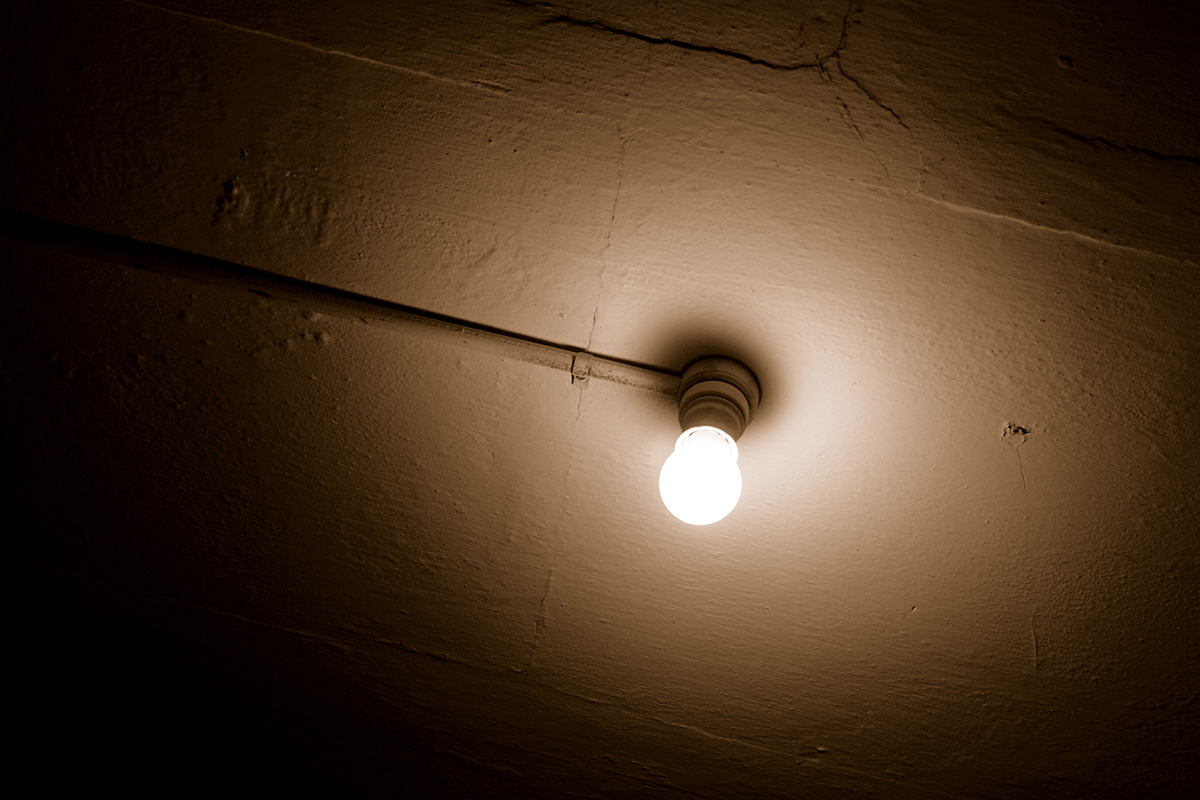
For over a century, incandescent bulbs were the primary source of artificial light in most U.S. homes. They come in familiar wattages like 40W, 60W, 75W and 100W.
What’s wrong with these bulbs? They rank among the least efficient lighting options. About 90% of the energy they consume becomes heat, and only roughly 10% produces light. Even worse, these bulbs last only around 1,000 hours — roughly a year — before needing replacement, which means more spent bulbs and packaging ending up in landfills.
Due to their inefficiency, these bulbs have been phased out in the U.S.
As demand shifted, manufacturers produced more efficient alternatives. One such option was the halogen incandescent, which gained popularity after the traditional incandescent faded. While it’s about 30% more efficient than the classic incandescent, it still pales compared with two other more efficient choices.
CFL Bulbs: Efficient, But Risky

The compact fluorescent light bulb (CFL) showed up in the 1980s as a response to the 1973 oil crisis and soaring energy prices. When first introduced, CFLs sold for anywhere between $25 and $35.
Even though the initial cost was high, early CFLs often didn’t fit existing fixtures well and sometimes failed to meet their promised lifespan. Nowadays, CFLs are far more affordable (you can find them for around $1.74 each) and are roughly 75% more efficient than traditional incandescent bulbs.
One downside: the EPA notes CFLs contain about 4 milligrams of mercury (a very small amount) sealed inside. That becomes an issue if a bulb breaks. A shattered CFL requires evacuating the room and following a careful cleanup procedure that can take hours.
How Much Money LEDs Can Save You

Light-emitting diode (LED) bulbs are becoming more common because they’re about 90% more energy-efficient than traditional incandescents and can endure up to 20 years. Unlike CFLs, LEDs don’t contain mercury, making cleanup after breakage much simpler.
Like CFLs, LEDs were once pricey — Energy Star notes that as recently as 2010, bulbs could cost around $50 each. Today you can buy a two-pack of LED bulbs for under $5.
With LEDs and CFLs now priced similarly to traditional and halogen incandescents, their long-term benefits are obvious. Energy Star points out:
- A standard (now discontinued) 60W incandescent lasts about one year and costs $7.23 per year to operate.
- A 43W halogen incandescent lasts one to three years and costs $5.18 per year to operate.
- A 13W CFL lasts six to 10 years and costs $1.57 per year to operate.
- A 9W LED lasts 15 to 20 years and costs $1.08 per year to operate.
Assume your household has 50 light sockets and you need a bulb for each.
You could buy a $1.50 halogen incandescent for every socket every three years over 20 years, or you could buy a $2.50 LED for every socket once during the same 20-year span. That’s $500 over 20 years for halogen incandescents versus $125 over 20 years for LEDs. Based on product cost alone, LEDs save you $375 across two decades.
On top of that, switching to LEDs saves $4.10 per bulb per year in energy costs. That equals $205 per year or $4,100 over 20 years.
The combined savings from buying and using LEDs instead of halogen incandescents totals $4,475 over 20 years, or more than $220 each year.
Want more ideas to reduce energy spending? Take a look at these 18 inventive tips.