One afternoon I needed bacon for a dish but didn’t have time to cook it myself.
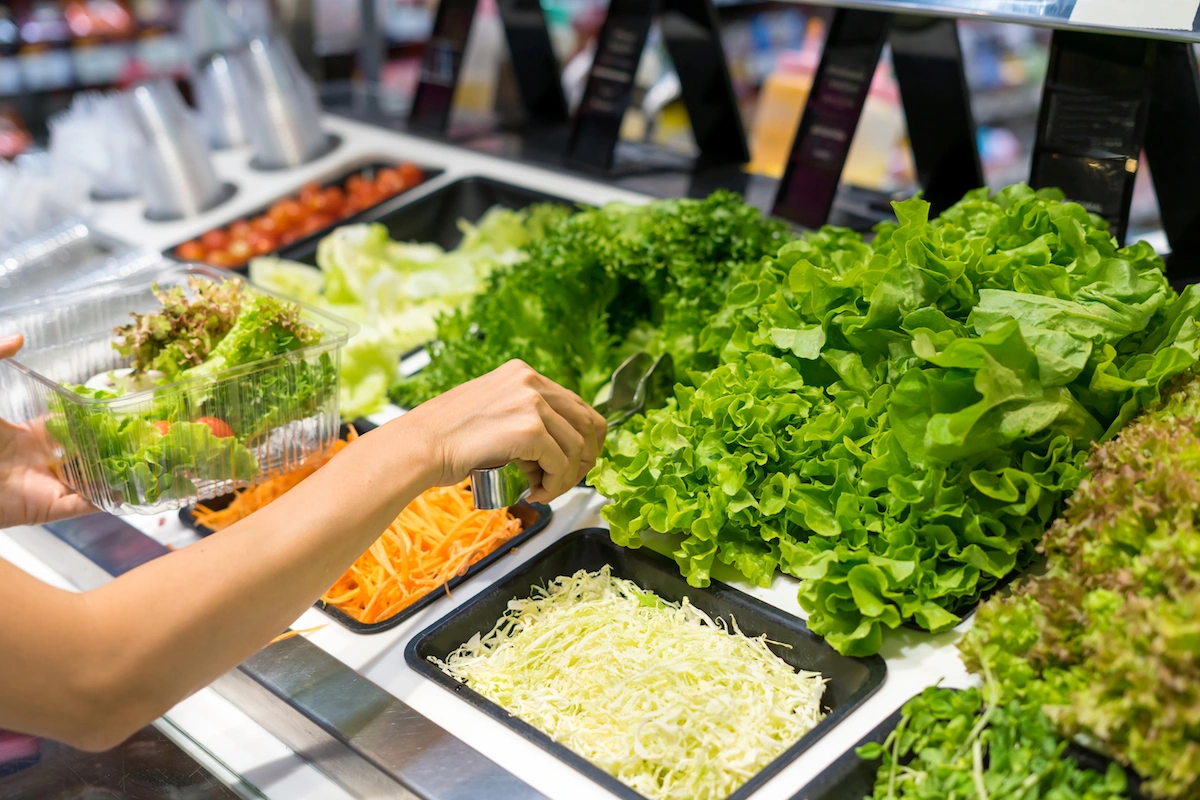
In a rush, I checked the grocery store’s salad bar and noticed chopped bacon pieces. I scooped roughly 1/3 cup into a small container, and was amazed when the bacon rung up at just 34 cents.
Thirty-four cents!That’s considerably less than buying a whole package of bacon.
And it’s far more convenient, too. The bacon came pre-cooked and ready to use. No fuss, no cleanup!
Before you dash to your local market to stock up, there are some things to be aware of so you can get the most value from the salad bar.
What to Buy — and What to Skip — at the Salad Bar
Prior to your first stroll around the salad bar, it helps to know which items tend to be bargains and which often cost more than buying them prepackaged.
Here’s what Food Network Magazine suggests:
Top Savings at the Salad Bar
1. Blue cheese: 57% less expensive
2. Bacon bits: 55% less expensive
3. Grilled chicken breast: 44% less expensive
4. Walnuts: 19% less expensive
5. Ham: 14% less expensive
6. Shredded cheddar cheese: 14% less expensive
7. Dried cranberries: 11% less expensive
Foods Better Bought Elsewhere
Not everything at the salad bar is a bargain. Below are items you might want to limit or avoid because they often cost more by weight at the salad bar:
- Grape tomatoes: 13% pricier
- Avocado: 31% pricier
- Broccoli: 50% pricier
- Carrots: 50% pricier
- Chow mein noodles: 50% pricier
- Sunflower seeds: 63% pricier
- Black olives: 78% pricier
- Croutons: 87% pricier
- Celery: 150% pricier
- Hard-boiled eggs: 167% pricier
- Mandarin oranges: 188% pricier
- Mushrooms: 200% pricier
- Green beans: 201% pricier
- Cucumbers: 274% pricier
- Radishes: 302% pricier
- Chickpeas: 368% pricier
Keep in mind these percentages aren’t universal.Salad bar costs can differ widely between stores. I’ve seen salad bar pricing range from $5.99 per pound up to $8.99 per pound.
If your neighborhood market charges on the lower end, you’re in luck and can feel free to indulge. Or do a quick comparison between the salad bar price and the shelf price before you buy!
When to Use Salad Bar Ingredients
If I need a small amount of an ingredient for a recipe and won’t use an entire package, I’ll grab a portion from the salad bar instead.
Here are some realistic examples using lower-cost salad bar items:
Buy shredded cheddar to top four burgers:
- $1.99 for 4 ounces of shredded cheddar at the grocery store
- $1.76 for 4 ounces of shredded cheddar from the salad bar at $6.99/pound
Buy walnuts to mix into homemade granola:
- $2.32 for 2 ounces of walnuts from the supermarket
- $0.88 for 2 ounces of walnuts from the salad bar at $6.99/pound
Buy blue cheese to sprinkle on a salad:
- $2.24 for 2 ounces of blue cheese from the supermarket
- $0.88 for 2 ounces of blue cheese from the salad bar at $6.99/pound
Again, costs vary. You’ll want to calculate how much an item would cost if bought in a package to judge whether the salad bar is the better value.
Think About Weight
When deciding if an item is a smart buy, factor in weight. Cooked pasta, for instance, is heavy, so it tends to be more expensive at the salad bar where you pay by weight. It’s usually cheaper to buy dry pasta and cook it at home.
Hard-boiled eggs are another dense item that can be much more costly from the salad bar than preparing them yourself.
Avoid purchasing salad dressings by weight. A 16-ounce bottle of ranch dressing at the store is around $4.99, and buying 16 ounces of ranch from the salad bar could cost nearly twice that amount.
Use the Salad Bar for Specialty Ingredients
You might be surprised by some of the items available on the salad bar: sun-dried tomatoes, feta, roasted garlic, shrimp, pomegranate seeds — the offerings are extensive.
If you need a modest quantity of a specialty ingredient, check the salad bar before committing to a full container.
I frequently pick up roasted garlic from the salad bar to add to pizza, scrambled eggs or hummus. Roasting garlic at home takes time and energy, so buying it pre-made is a clear time-saver for me.
Pay Attention to Price Per Pound
What counts as a reasonable price per pound?
$5.99 per pound is a good value, while $8.99 per pound is on the expensive side. My local Whole Foods runs $8.99 per pound, so I tend to avoid buying too much there unless it’s something rare.
The salad bar at another neighborhood grocery store is $6.99 per pound and is my preferred spot for a variety of items.
On your next grocery run, swing by the salad bar. Once you start using it to supplement your shopping, you might never look back!
Your Turn: Do you shop your grocery store’s salad bar? Share your strategies and advice in the comments below.
Emma Carter writesCheap Recipe Blog, featuring budget-conscious recipes and thrift tips. She’s been using the grocery store salad bar since 2010 — long before it became trendy.