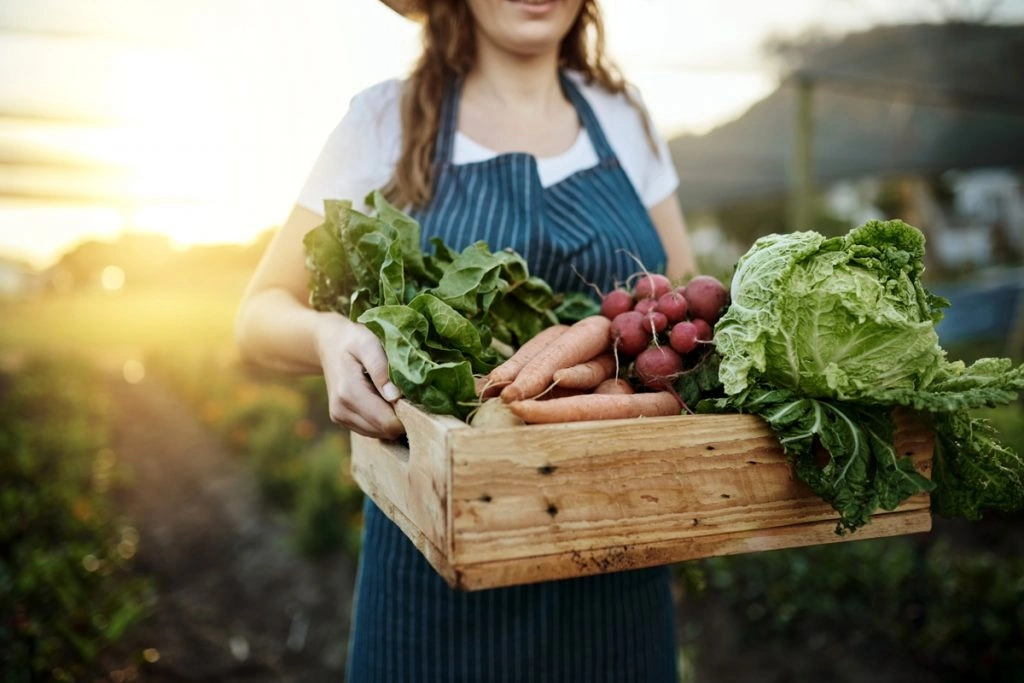
Eating well becomes much simpler when a big crate of freshly harvested organic veggies shows up at your door each week.
If you join a Community Supported Agriculture (CSA) program, that’s exactly what you’ll receive. You’ll probably also begin to appreciate unfamiliar produce (radicchio, anyone?) while enjoying the extra perk of cutting food costs.
At times it can be challenging to use everything from one week’s share before the next delivery arrives, but remember you’re saving money and you can always split the haul (and the expense) with a friend, neighbor, or family member.
Interested in trying this smart (and tasty) approach to stretch your food dollars? Here’s what to understand and how to get started.
What Is a CSA?
A Community Supported Agriculture (CSA) program is a model where consumers purchase “shares” of a farmer’s harvest. Payment is made before planting and harvest. This community-driven arrangement helps finance farms while letting consumers access produce straight from the field.
CSAs are an excellent way to obtain a large amount of fresh, often organic produce that commonly costs less than what you’d find at a farmers market or in supermarkets.
How Does a CSA Work?
Members pay ahead for a farm’s produce, which is then distributed in one of a few ways. Either members pick up their share at a designated time and spot, or the farm delivers it to their homes.
The contents of the share reflect what’s ready to harvest that week and each box includes a mix. Some CSAs allow members to note items they don’t want. Since minimizing waste is a goal, CSAs prefer not to deliver things people will discard. Still, generally you receive what the farm has available that week.
Each farm’s offerings vary, and the produce changes through the season (and by climate and region). Many U.S. regions begin the season in mid-June with tender greens, baby garlic, and herbs, then shift to sturdier vegetables like turnips, sugar snap peas, bok choy and kale. In warmer climates such as Florida or Arizona, peak production often occurs in winter and early spring.
Late summer across much of the country brings tomatoes, summer squash, peas and herbs; fall typically delivers a bounty of root vegetables like onions, beets and potatoes, among others.
How to Find a CSA
Local Harvest is one resource that can direct you to farms offering CSA programs. You can also search online for “CSA farm” plus your area, or ask locals. Farmers markets are a good place to meet growers who may run CSAs.

What to Expect From Your CSA
Generally, you’ll pay for the whole season up front, choosing either a full share or a half share. The quantity and composition of that share can differ widely depending on the farm, what’s planted that season, and how the season unfolds. Some years produce bumper crops, while others are a bit leaner.
Participating in a CSA means being open to variety: you may receive fewer tomatoes than you hoped for and more arugula. That’s part of the arrangement.
You’ll typically sign up for specific pick-up times and locations when you purchase your share. Many CSAs provide multiple pick-up options.
Bring bags or boxes for weighing and sorting your vegetables. Some CSA pick-up sites are organized with bins, scales, and a whiteboard indicating how much of each item members should take that week. People line up, gather their produce and weigh each type to ensure they collect the correct amounts. Friendly farm staff often circulate, chatting and checking names off the list.
Other CSAs offer more convenient setups, such as pre-packed boxes or home delivery, so check for these services before you commit.
Pros and Cons of Joining a CSA
We’ve listed the benefits and drawbacks of joining a CSA so you can decide if this method of buying produce suits you.
- Lower cost compared with stores
- Broad variety of produce
- Connection to the local community
- Upfront payment
- Extra time and effort
- Potentially more produce than you need
More About Pros of Joining a CSA
Thinking about signing up for a CSA? Here are some specifics on the advantages.
Lower Prices than Stores
CSAs can offer a large assortment of high-quality vegetables at a comparatively low price because you aren’t covering grocery store overhead or retail markups. To save further, ask about volunteer opportunities. Many farms give free produce or a discounted share in exchange for farm work.
Wide Variety of Produce
A CSA is a great way to experiment with new recipes and sample vegetables you might not otherwise try. Some items may not be to your taste (anyone have a favorite pea shoots dish?), but you may discover new favorites.
Community Involvement
Some farms host potlucks or member events so people can connect and build community. Helping out on the farm is another way to meet fellow shareholders.
More About the Cons of Joining a CSA
Your fresh produce does come with a few caveats. Be sure you understand these potential downsides before signing up.
Upfront Cost
Instead of budgeting small weekly amounts for vegetables, you’ll need to pay the full share price at the season’s start. Some farms provide payment plans, but you’ll still need to prepare to spend more money at once than you might normally.
Extra Work
After you receive your box, you’ll need to decide how to use all those fruits and vegetables. Planning meals, cooking, or preserving the produce can be time-consuming and a bit overwhelming. You may also need to work around the CSA’s pick-up schedule. If convenience is a concern, look for CSAs that offer delivery.
Too Much Produce
Some members freeze, pickle or can surplus items, but if you lack the time, skills or desire to do that, it can be intimidating. Even with good intentions, food waste can occur.
How to Make the Most of Your CSA Membership
If you’re excited to try a CSA this season, don’t let the downsides deter you. Here are a few tactics to reduce hassle and maximize benefits.
Split a Membership With a Friend or Family Member
Sharing a share reduces each person’s cost, and you can rotate pick-up duties. Many farms sell only full and half shares, so pairing up with someone makes sense if you want a smaller portion. If you don’t know someone to split with, farms can often connect you with another member.
Look for Recipes for New and Unusual Items
Visit Pinterest and search “recipe + [veggie],” or check out ideas on how to use what’s in your CSA box. Many CSA programs also send newsletters with recipes and suggestions for dealing with less familiar items.
Plan Ahead for What You’ll Do with Extras
Think about freezing, canning, pickling, or sharing some of your harvest. You could even build a simple root cellar in your yard.
Alex Morgan is a senior editor at Savinly and a longtime food writer. Additional Savinly staff contributed to this report.