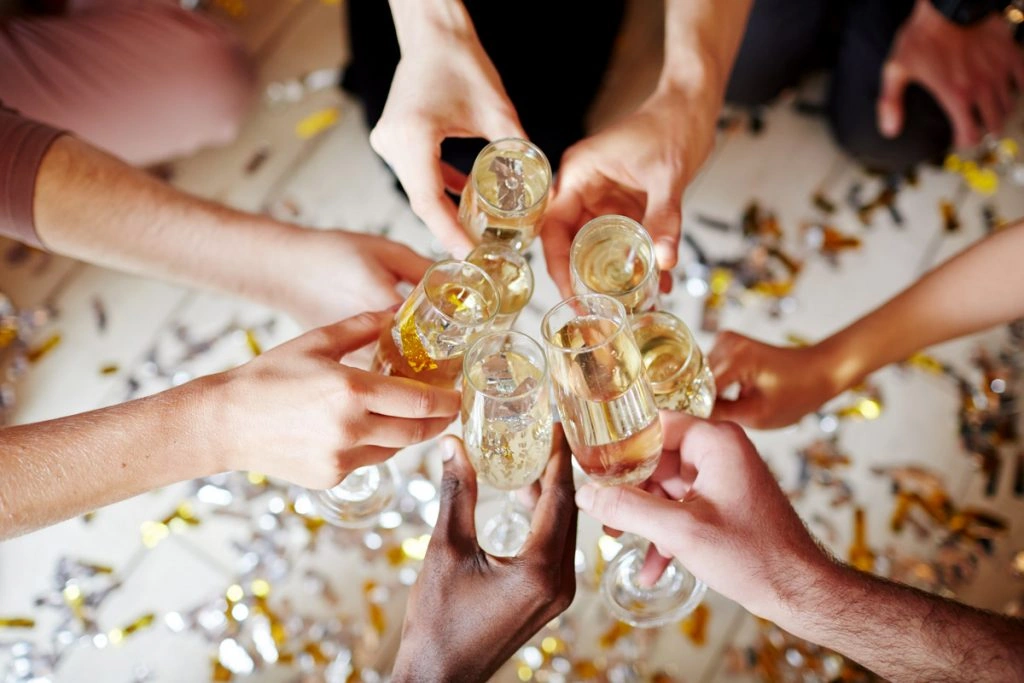
It’s finally (finally!) time to say au revoir to 2020.
To mark the occasion, you may want to celebrate in style by popping a bottle of Champagne or sparkling wine this New Year’s Eve.
And while bubbly can sometimes carry a steep price tag, it’s entirely possible to locate bargains that actually taste good. It’s just about knowing what to watch for.
We consulted a few experts for their top tips on locating a decent bottle of Champagne that won’t break the bank.
Sparkling Wine vs. Champagne: What Sets Them Apart?
To make a smart pick when shopping for celebratory bubbles, you first need to know the difference between Champagne and sparkling wine.
Not all sparkling wines are Champagne, but all Champagne is sparkling wine, explains Michael Bottigliero, a Detroit-based founder and head sommelier at Bottles Nation.
Champagne is a sparkling wine produced by the traditional method from grapes grown in the Champagne region of France and aged en tirage, also called “sur lie” aging. That’s when the wine rests on its spent yeast cells, which imparts those signature toasty notes and aromas. The longer it remains with those lees, the more intricate the wine becomes. By definition, it must age for at least 18 months to be labeled Champagne.
“These wines have enjoyed a strong reputation across Europe for centuries, and that legacy continues today, making them well established in the marketplace,” Bottigliero said.
8 Tips to Help You Find Good, Affordable Sparkling Wine
Here are several pointers to keep in mind when shopping for sparkling wine or Champagne.
Know Vintage vs. Non-Vintage Sparkling Wines
It helps to recognize the difference between vintage and non-vintage sparkling wines when choosing your bubbly.
Non-vintage sparkling wines can be blended with wines from prior harvests to create a consistent flavor profile from release to release, Bottigliero says. Vintage wines come from grapes harvested in a single year and often command a higher price, as they tend to express the character of that particular growing season.
Some labels are special vintage, produced only in exceptionally good years — names such as Dom Pérignon and La Grande Dame fall into this category and are typically quite expensive.
“Pricing comes down to marketing, perceived quality and supply-and-demand,” Bottigliero said.
Read the Bottle for Clues
The bottle itself should be made from thick, dark glass — otherwise you risk ending up with flat grape juice rather than lively wine, advises Haith Razuki, owner of Buy My Liquor in San Diego.
The label also offers hints about quality. Champagne is often categorized as classic, reserve or prestige. If you’re shopping on a budget, opt for one of the classic Champagnes. There are six sweetness levels, from dry to very sweet, so pick according to your palate.
“A solid, affordable option to try is Luc Belaire Luxe,” Razuki suggested. “They have multiple expressions, including a rosé, so you can sample a variety and find what you like.”
And the quality of the label itself can sometimes be informative — though not always.
“The attention given to a label is often a decent indicator of care, but ornate labels can just as easily appear on lesser wines,” said Amie Fields, a sommelier, marketing and education director and partner at Botanist & Barrel Cidery and Winery in Asheville, North Carolina.
Look for Specific Growing Areas on the Label
“Seeing a wine labeled simply ‘Bourgogne’ or ‘Burgundy’ versus a smaller appellation such as Nuits St. George, Gevrey-Chambertin, Chambolle-Musigny, etc., signals to the buyer that this wine may come from a distinct microclimate or terroir, making it potentially more special than juices sourced from across the entire Bourgogne area,” Bottigliero said.
Even better: these often come at friendlier prices.
Explore Lesser-Known Regions
Be willing to try sparkling wines from places you might not immediately consider, like Australia, South America and New Zealand — these regions can produce excellent sparkling wines that don’t cost a fortune, says Shawn Paul, wine operations director at Foxcroft Wine Co.
And don’t rule out American producers; the U.S. has many areas crafting fine sparkling wines too.
Consider Grower Champagnes
Look for grower Champagne if you prefer wines made and bottled on the same estate, Fields recommends. These can range in price from budget-friendly to pricey.
You can spot grower Champagne by the initials RM (Récoltant-Manipulant) printed in small type on the label.
Seek Out Small, Independent Producers
Small, independent houses focus on a limited set of grapes and often sell direct with minimal export. Big-name brands frequently blend fruit from various producers they own to meet the demand generated by heavy marketing, says Yoann Bierling, founder of YBierling, an international consultancy. Bierling’s family also makes Champagne in France.
“A fine Champagne from many independent houses can cost about $20 — or $30 for a special cuvée — while brand-name Champagnes often climb in price more for branding than a distinct difference in taste,” Bierling said.
Be Open to Different Styles of Sparkling Wine
Consider bubbles such as Crémant de Bourgogne, Crémant d’Alsace, Crémant de Jura, Crémant de Limoux or Crémant de Loire. These are crafted using the traditional Champagne method in other French regions.
“These wines use regional grape varieties and are typically cheaper than Champagne, yet deliver comparable quality,” said Amanda Goodwin, a sommelier and founder of The Real Housewine Blog in Pennsylvania.
You might also sample pétillant naturel (pét-nat), made using an early method for producing sparkling wine, or try bottlings made from unconventional grape varieties. Fields even suggests staying open to a dry cider or perry as an alternative to grape-based sparkling wine.
Pét-nat and similar styles are often less costly without sacrificing quality. You can find an outstanding pét-nat on the shelf for $15–$25. Because they’re bottled earlier in their lifecycle, they’re cheaper to produce, Fields notes. They’re lively, vibrant and full of expressive flavors — a true snapshot of that moment in the vineyard or orchard.
Ask the Knowledgeable Staff
When unsure, ask the pros. The easiest way to discover new sparkling wines is to speak with a savvy wine professional at a retail shop and request recommendations. They can usually steer you to a quality bottle that matches your budget.
Also consider exploring curated lists of value bubbles like this one on best cheap champagne to find more options that deliver flavor without a huge cost.
Danielle Morales is a contributor to Savinly.