A couple of years ago, after tumbling down a rabbit hole of desaturated Instagram grids tagged with buzzwords like “minimalism” and “simplify,” I stumbled across one that grabbed my interest: #capsulewardrobe.
As I scrolled through seemingly endless images showcasing curated, pared-back outfits, I instantly admired the cool, effortless aesthetic. I opened my laptop and read up on the idea; five minutes later, I was all in.
I’ve long been curious about minimalist living — yet I’ve also had a habit of accumulating clothing with no concern for my bank account. As a loyal follower of fashion influencers on Instagram, I was constantly buying new items, trying hopelessly to keep pace with fleeting trends. It was draining.
I was fed up with my life centering on shopping and spending, and with fretting over what to wear each morning. I needed permission to escape the endless loop of purchasing, purchasing, purchasing and then feeling like I had nothing to wear.
And I had to stop funneling more than $100 every month into my poor shopping habits. I’d always been savvy at hunting sale racks, but it still added up.
It was time to experiment with a minimalist closet, commonly called a capsule wardrobe.
What Is a Capsule Wardrobe?

A capsule wardrobe is a selected set of 30 to 50 clothing pieces, shoes and accessories that you agree to wear for roughly three months at a time to simplify your life and reduce spending.
The guidelines are straightforward and can be tweaked by individual preference, but the cardinal rule is: no new buys.
Many people try a full year, divided into four “capsules” of about 90 days each. That way, those who experience seasonal changes — unlike those living in perpetual-summer locales — can swap pieces as the weather shifts.
How I Put Together My Minimalist Wardrobe
After skimming a few blog posts about assembling the ideal capsule, I emptied every garment from my closet and dumped it all onto my bed. Then I separated the pile into three stacks: love, like, and (since I hadn’t purged in a long time) must-go.
The “love” stack became the foundation of my first capsule. I packed the “like” items into bins for potential use in another capsule later (or as a comfort fallback if this whole plan went sideways — I had to test the waters before diving).
I sold most of the “must-go” items online, bringing in about $60.
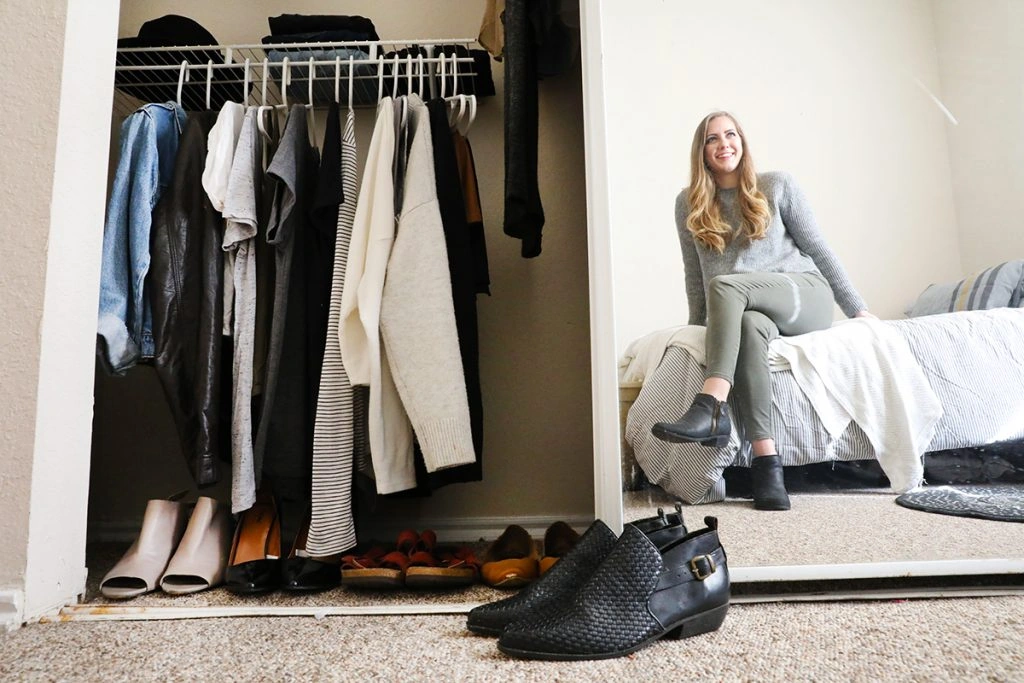
Returning to the “love” pile, I began assembling my 40-piece capsule. The first 20 items were simple selections: basics, a few office-friendly staples and several pieces I imagine I’ll never part with (I’m looking at you, leather jacket).
After that, it became a little trickier, but having everything spread across my bed (a little KonMari-style accountability to keep me going) pushed me to stay up and finish the task that night.
The following morning I tested the capsule. Standing in front of my closet, I could choose an outfit in seconds. After slipping into my favorite jeans, comfy booties and a plain white sweater, I walked out the door a full 20 minutes earlier than usual.
I used that time to pack lunch, make a proper breakfast and brew a pot of coffee — which meant I wasn’t spending money on meals (another win).
Cracking the Shopping Habit

By day 10 of my experiment, I recognized shopping wasn’t merely a bad habit — it had been an expensive kind of therapy. So I stopped cold turkey.
I unsubscribed from promotional emails and deleted my online shopping profiles. With fewer ads and no easy one-click ordering tempting me, I had to pause and actually think about purchases — and then close the tab.
If I felt the urge to shop, I’d try a new hairstyle or a makeup trick instead, which made me feel refreshed and polished without buying anything new.
Within a couple of weeks I noticed a shift.
I no longer needed to soothe my emotions with mall trips whenever I felt sad, excited, anxious or annoyed. For the first time in months, I felt content, and I genuinely enjoyed my calmer morning routine.
The downside? I became painfully aware of how much my poor habit had cost me.
My Budget Was Looser Than I Thought
At the end of those 90 days I felt transformed — and my savings account looked different too.
I went from spending about $150 a month on new clothes to spending nothing. By the end of my first capsule, I’d tucked away an extra $450; across the year, I saved nearly $1,800.
Before trying the capsule wardrobe, I’d been struggling to build an emergency fund — I didn’t think my budget had any room. This experiment proved there’s usually a bit of flexibility, and now I have some money set aside for emergencies. Plus, I began a travel fund!
If you’re curious about streamlining other areas of life, you might also enjoy resources like how to build a capsule wardrobe, tips on digital minimalism, or advice for minimalist money.
Your turn: Have you tried a capsule wardrobe? Did it help you save?