One after another, bin stores are sprouting across the United States.
There’s Bin City New York on Long Island. Cheap Charlie’s Bargain Bins in Appleton, Wisconsin. Bargains in a Box, a Chicago-based chain. And Where Ya Bin in Columbus, Ohio.
What exactly is a bin store? It’s a shop where customers sift through large bins of overstock or returned items sold at rock-bottom rates. Think of it as a treasure hunt. Below are some pointers for shopping at these retailers.

How Do Bin Stores Operate?
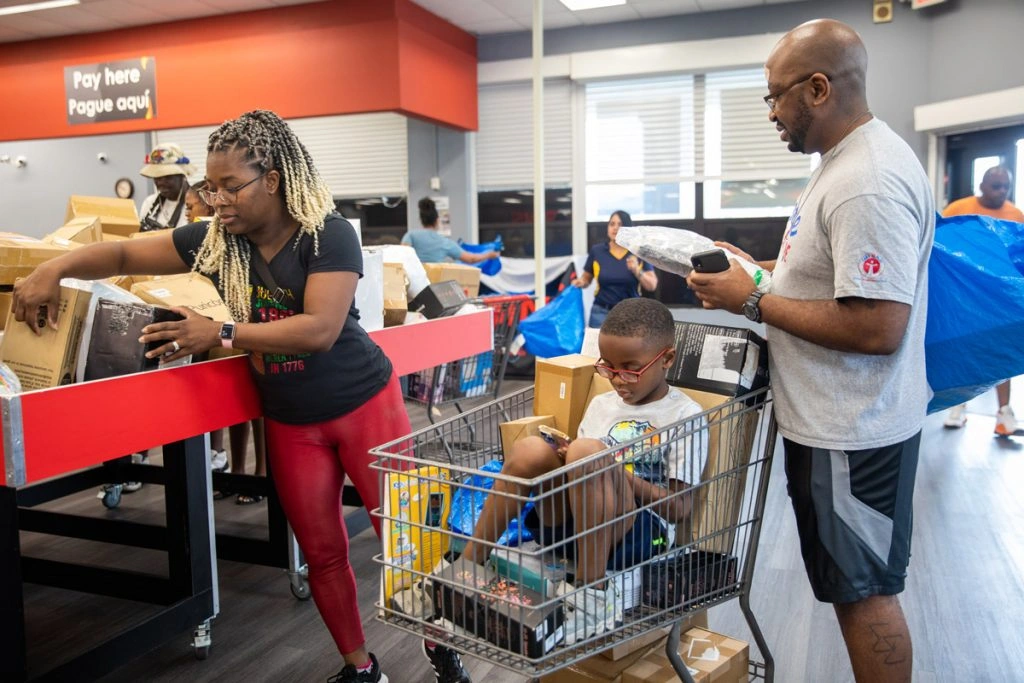
Most of these retailers function similarly. They receive truckloads of returned or excess inventory from Amazon, Walmart, Target and other big-box sellers. They pick a day each week to display the fresh merchandise — everything at a uniform price. Each subsequent day the price falls. Their goal is to clear the bins over the week, then repeat the cycle.
Here’s one way that can look in practice:
At Hotbins, a six-location chain in Florida that sells Amazon returns, every item is priced at $12 on Friday. On Saturday prices drop to $10, Sunday $8, Monday $6, Tuesday $4 and Wednesday $2. The stores close on Thursday to restock with a new shipment of returned goods.
So Friday has the highest price point, but it’s also when deal-seekers can uncover the best finds — often electronics sold for a tiny fraction of their usual cost.
“Friday mornings, we have 70 to 100 people outside waiting for the door to open, because that’s when they find the premium items,” said Mike Ijak, co-owner of the Tampa Hotbins location. “Everything from small kitchen gadgets to cordless vacuums, camera lenses and coffee makers.
“Two weeks ago, someone found a telescopic sight for a rifle. It was a $4,000 value on Amazon. He paid $12.”
‘You Name It, We’ve Sold It’
The story is similar at other bin shops.
“You name it, we’ve sold it. We had a PlayStation 5 today — a $600 item someone got for six bucks,” said Michael Prendamano, founder and CEO of The Bin Store, which operates two locations in South Carolina. “We’ve had Xboxes, phones, laptops. Depending on the season, we can have 200 people queued up for an opening on a Friday or Saturday.”
They price items at $6 on Friday and Saturday, $5 on Sunday, $4 on Monday, $3 on Tuesday, $2 on Wednesday and $1 on Thursday. Then they restock and run the same cycle again. Each week they bring in a tractor-trailer full of overstock or returned merchandise.
What might you find in a bin store? Electronics; bedding like comforters and sheets; curtains; apparel and footwear; toys and tools; personal care items; and a wide range of general goods. Basically, nearly anything sold on Amazon or at Walmart could show up at a liquidation sale — which is what a bin store essentially is.

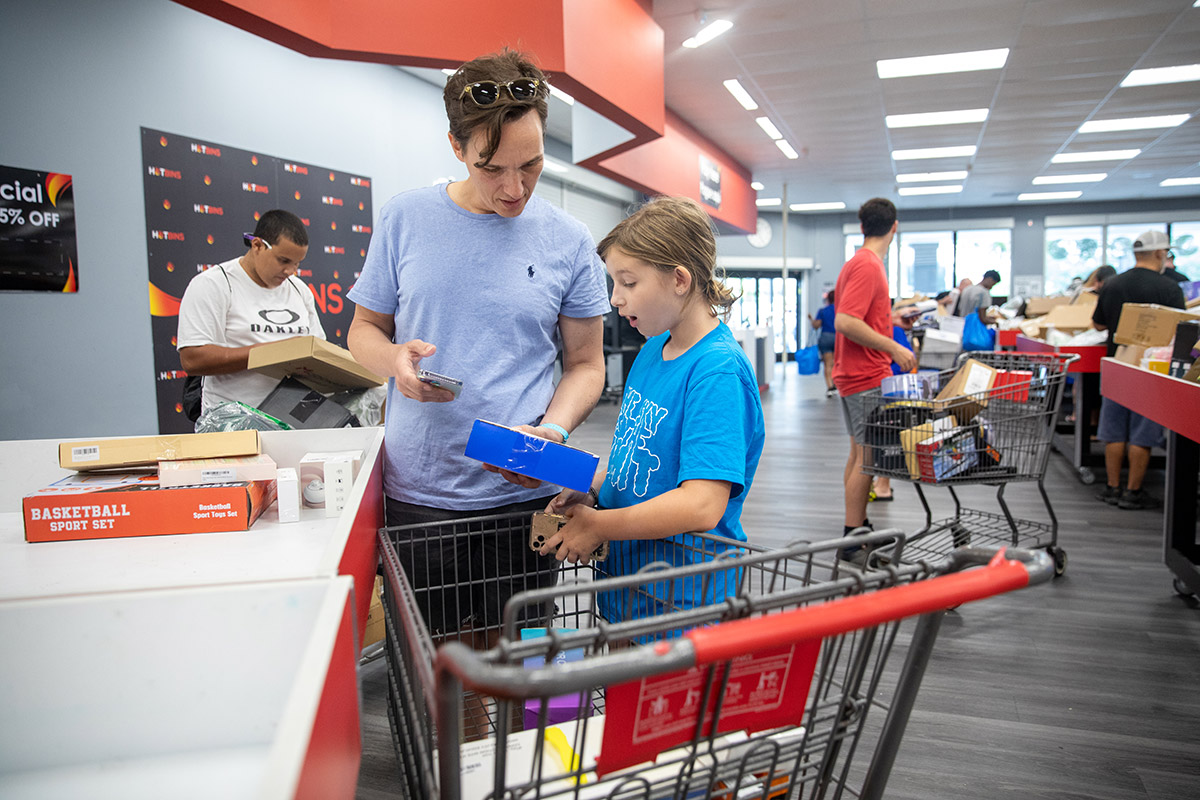
Many bin stores also offer “opening stations” where staff will open boxes so customers can see the contents.
The surge of new bin stores has made it somewhat harder to source liquidated inventory, Prendamano said — and he’s observed some shops shutting down because they lacked a viable plan.
“You have to be very customer-focused,” he said. “Some operators will just offload product into a warehouse with no lighting, no climate control, no music, and say, ‘Hey, it’s super discounted, so here you go.’ ”
He’s been in the liquidation business since 2021. In his outlets, he’s noticed that many customers do most of their routine shopping there before heading to a conventional retailer.
“In an economy like this, with inflation the way it is, where everyday items cost so much more than they did a year or two ago, people still have a place to come and count on savings here.”
8 Tips for Shopping at Bin Stores
These recommendations come from The Bin Store in Columbia, South Carolina, and operators at several other locations.
- Get there early. Bin shops have finite quantities of merchandise, so arrive early to secure the best bargains. Stores often restock overnight, so try to be there when the doors open.
- Bring cash. Some locations accept only cash or enforce cash-only rules for certain products.
- Consider haggling. Bin stores will sometimes negotiate on price, especially for items that have lingered. Don’t hesitate to request a discount or propose a counterprice.
- Examine items closely. Because bin stores often sell discontinued or slightly imperfect goods, inspect merchandise carefully before buying. Look for signs of damage. Many shops have “unboxing stations” where staff will open packages for customers.
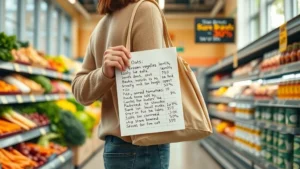
- Have a plan. Make a list of what you’re hunting for and which stores you’ll hit. This helps you stay focused and avoid impulse spending.
- Know return rules. Bin stores frequently have different return policies than standard retailers. Some items may be final sale or carry a short return window.
- Bring a bag. Pack a reusable shopping bag in case the store doesn’t provide one.
- If it’s a must-have, buy it now. In stores that reduce prices each day, you can’t assume an item will still be there later. If you wait for a lower price, someone else might snap it up.
Michael Brassfield ( [email protected] ) is a senior writer at Savinly.