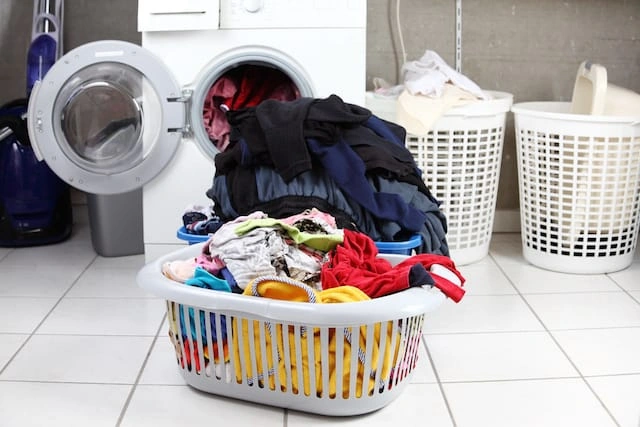
When my spouse and I purchased a bank-owned house last month, we already had funds set aside for the washer and dryer we knew we’d need.
But when the home inspection revealed someone had installed a gas range where there was no gas line, our costs suddenly grew much larger.
New electric ranges start around $500 and many quickly climb past $1,000 — which would have exhausted our entire budget. We didn’t want the coil-style kind, because me + coils = charred dinners.
We considered floor models and returned units, but the savings were minimal where we live in Albuquerque, New Mexico. We were left with one increasingly appealing option: preowned appliances.
There are clear downsides to buying used, since even well-cared-for appliances have already used up part of their service life. But with a few sensible precautions, used appliances can deliver exceptional value.
Here’s how my partner and I landed three high-end appliances for only $700.
1. Buy from a Store
Once you choose the used route, you have many avenues — from Craigslist and garage sales to secondhand appliance dealers.
Although used appliance retailers can inspire the same skepticism as used-car lots, they bring one major benefit: they typically provide a warranty.
Coverage often runs from six weeks to three months, and regardless of duration, a warranty ensures you’ll take home a functioning unit.
Warranties should be documented and clear about what is — and isn’t — included. They should generally be complimentary, although you can sometimes pay for extended protection. Our six-week warranty was free and included a full refund for any reason.
Stores also tend to have the broadest selection of used units, so you’re more likely to find the color or model you want. In our area, brick-and-mortar shops were substantially cheaper than Craigslist, though that may differ in wealthier markets.
Check recent online reviews to confirm the store’s reputation and return terms. With a bit of homework, local stores provide strong purchase protection for secondhand appliances.
Another plus: many stores offer delivery — and several will even install your items at no charge. Our shop delivered, rewired our oven for a 220-volt outlet, installed it and hauled away our old stove for free.
You can also haggle on price, which quickly became my husband’s favorite part; I’d never seen him this eager to negotiate. Like buying used cars, bargaining is normal and expected.
We ended up saving nearly 10% off the initial asking price, which itself was already a solid deal.
2. Choose Higher-End Models
When you buy new, price often dictates quality, design and features.
But appliances lose value quickly, so the gap in price between a used premium model and a used budget model can be as little as $50. That makes it possible to buy appliances that will pay off over time.
For instance, think about a double-oven freestanding range. Besides being a desirable upgrade when you sell, the smaller top oven can handle most daily cooking tasks without heating a large oven space.
In my view, the original price point of these ovens means they’re built more sturdily. Plus, having two ovens simplifies and speeds up cooking big meals.
Buying used also let us afford an energy-efficient washer and dryer. Preowned Energy Star washers, dryers and refrigerators cost only a bit more than their energy-guzzling counterparts, which can translate to meaningful reductions in utility bills.
3. Pick Repairable Units and Factor in Repair Costs
Purchasing used means limited warranty protection, so favor reliable makes and models.
Even so, every appliance can fail eventually, so repairability should be high on your list.
Online reviews are a useful starting point. How an appliance fails matters as much as how often.
Whether you hire a technician or tackle repairs yourself, a washer that occasionally clogs a drain pump is much simpler and cheaper to fix than one that periodically burns out the main motor.
Research may take longer than buying new. But I discovered that if the appliance was made within the last five years, reviews were plentiful and easy to locate.
The more moving parts a unit has, the riskier the purchase. Complex machines like dishwashers, range hoods and dryers will likely need minor fixes within a few years, which explains their lower used prices.
Other general tips:
- Upright washers tend to break down less often than front-loaders — particularly when looking at models older than five years. When they do fail, top-loaders are usually easier to repair.
- Gas ranges are often simpler to fix than electric ones.
- Mechanical knobs are generally repairable. Faulty electronic touchpads often need full replacement.
Remember, used appliances frequently havesomeprior wear or damage. Some problems are merely cosmetic. For example, our new stove had a dent on one side, but it didn’t affect performance and is hidden by the cabinetry.
However, other defects can compromise function and safety.
For example, glass-top ranges must be free of cracks or chips. Those flaws can let moisture into electrical parts underneath, risking shocks or short circuits.
If you buy a stove with damaged glass, you’ll need to replace it before use — a pricy repair that can cost as much as an intact used stove!
With these guidelines, you can be economical and still acquire an excellent appliance.
My spouse and I paid $700 for three high-end units: $350 for the double-oven range, $200 for the upright washer and $150 for the dryer. We use them multiple times each week, and they still function as well as the day they were installed.
Even better, the whole process took less than a day — the same time it would have taken to buy new.
When another appliance in the house gives out (I’m looking at you, 20-year-old refrigerator), buying used will be an easy decision.
Your Turn: Have you ever bought secondhand appliances?
Alexandra Ford is a newlywed, newly relocated and newly expectant parent focused on cutting household costs. She lives in Albuquerque, New Mexico.