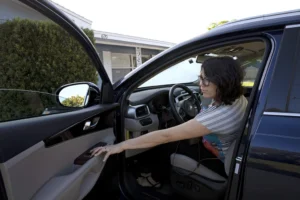
Susan Gibbons barely drives. She works from her home office and only hops in the car for quick errands, like picking up groceries or visiting the doctor.
Still, her monthly auto insurance bill is only $35.
That’s because her insurer provided a small plug-in gadget that charges her by the mile. It trims her expenses by around $720 a year.
“Most of my driving is just around my neighborhood,” says Gibbons, 55, who lives in Philadelphia. “A couple of miles here, a couple there.”
As an infrequent driver, she grew tired of paying high premiums on a vehicle that spends most of its time parked.
“I was paying State Farm about $1,100 a year just so I could look at my car sitting in the driveway,” she recalls.
It struck her as unfair that someone who drives under five miles daily would pay the same as a commuter covering 50 miles a day.
She discoveredMetromile, a San Francisco startup aiming to upend traditional auto insurance. The company provides a fresh alternative for low-mileage drivers: usage-based, pay-as-you-go policies.
A small gadget that plugs into your car
So how does Metromile determine your mileage?
It uses a complimentary device called the Metromile Pulse, which you insert into your car’s diagnostic port. That little unit relays mileage information to Metromile over a wireless network.
People often liken it to a Fitbit for your vehicle.
Customers usually pay a base rate of $35 per month plus about 5 cents per mile — though actual costs depend on things like where you live and your driving history.
Gibbons estimates her insurance costs have dropped by roughly $720 annually.
“It’s a big savings,” she says. “It’s money I’m not handing over each month. I like to save, so trimming bills really helps.”
Of course, some folks may worry about privacy — after all, Americans tend to be skeptical about being tracked.
Gibbons isn’t bothered. She says nobody at Metromile is monitoring her activities; the device on her 2007 Toyota Corolla simply records miles for billing.
“I get that some people wouldn’t want to plug anything into their car that shares data, but it doesn’t bother me,” she explains. “This is the 21st century. Younger people carry their location services on their phones and apps know where they are.”
She’s also found useful extras from the diagnostic plug: it links to an app that helps her find her parked car, and when her dashboard lit up with a “check engine” warning, Metromile texted an explanation.
Like trimming cable bills — but for your car
Gibbons used to be on the road more, but now that much of her work is remote and she lives within walking distance of stores and restaurants, she drives far less.
Before switching in 2015, she had been with State Farm since 1985 — three full decades.
But when State Farm couldn’t offer a discount that matched her low usage, she sought alternatives.
She fits the profile Metromile targets: drivers who use their cars infrequently, such as city residents, retirees and people who work from home. Metromile recommends its plans for drivers putting on less than 30 miles a day, or roughly 200 miles a week.
If you’re considering switching, keep these points in mind:
- Metromile’s pay-per-mile policies are currently offered in California, Illinois, New Jersey, Oregon, Pennsylvania, Virginia and Washington.
- Your vehicle must be a 1996 model year or newer to qualify.
- After you enroll, the company mails a free device that plugs into your car and logs mileage (that’s the key to saving money).
Launched in 2011, the insurer is also banking on younger drivers being attracted by affordable, personalized coverage — much like how many people are cutting cable and ditching subscriptions they no longer need.
“I was on the waiting list before they even launched in my state,” says Gibbons, who lives in Pennsylvania. “It’s a terrific deal for me.”
See if it could lower your costs by getting a free quote cheap car insurance.
Michael Hart (michael.hart@example.com) is a senior reporter at Savinly. He could probably trim his own car insurance bill, too.