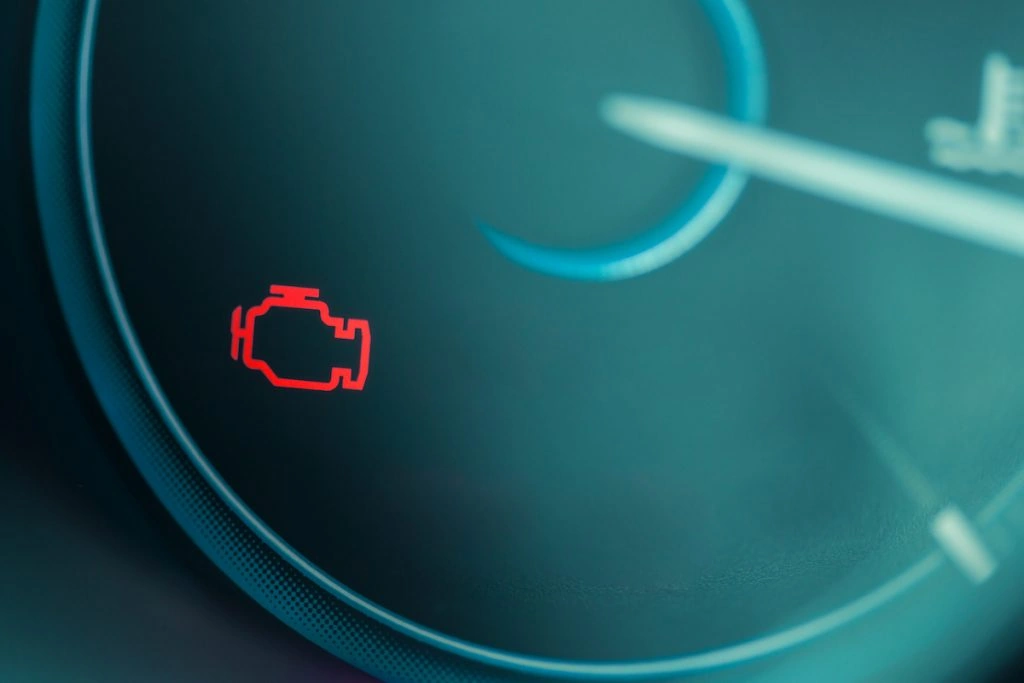
When I purchased my 2007 Toyota Yaris used, it included a 30-day engine warranty. On day 31, the check engine light illuminated. Classic bad luck for me — I procrastinated and ignored it for several days. It eventually went off by itself, but over the next few months it would sporadically light up and then extinguish after a few drives.
I finally brought it to my Toyota dealer, and though the problem turned out to be a defective gas cap, the technician warned that it could have been much worse. Like a strict parent, he advised me toneverdisregard a check engine light: I wasn’t only risking my safety, but I could also be facing far more expensive repairs later on.
I feel a lot more confident with my 2017 Subaru Crosstrek now, but I know the check engine light will likely come on again at some point. So I reached out for expert guidance from Ryan Kooiman, Director of Training at Standard Motor Products. In his role, Kooiman trains roughly 65,000 North American technicians each year.
Immediate Steps When the Check Engine Light Activates
First, I wanted to know whether the dealership mechanic was overreacting or if it truly was important to get the car checked immediately. It won’t surprise anyone that Kooiman sided with the dealer: If your car’s check engine light is on, you should have it inspected by a technician as soon as possible.
“The check engine light signals an emissions-related fault, so it’s important the driver has it diagnosed by a certified technician promptly,” Kooiman explained. “The same applies to any dashboard warning light. Manufacturers put these indicators there for a reason — primarily the customer’s safety, the vehicle’s protection, and to meet government air-quality regulations.”
Kooiman also stressed the importance of seeing a “certified technician.” He noted that many people assume anyone who plugs in a scan tool and pulls a diagnostic trouble code can properly diagnose the issue. Having a certified technician ensures peace of mind because the person working on your vehicle has the training to correctly interpret scan data and conduct the necessary tests to accurately diagnose the issue and identify its root cause.
“I’ve often seen people treat only the symptom and not the underlying cause. That leads to repeat failures, frustration and potentially unnecessary repairs. Finding a qualified technician to correctly diagnose the problem the first time is the best advice I can give anyone hoping tosave money on car repairs.”
When the Check Engine Light Signals an Emergency
Kooiman made it clear that you should get a certified technician to diagnose the check engine light quickly, but are some triggers more urgent than others, and are there obvious signs that the situation is critical?
According to Kooiman, a flashing check engine light indicates a misfire that could damage the catalytic converter, and this can ruin the converter within just a few miles. In short, stop your errands and head straight to a mechanic to avoid even higher repair costs.
Unusual smells and sounds or other symptoms like loss of power or stuttering can also increase the urgency. When the check engine light appears, watch for additional signs that something is wrong.
Typical Causes Behind the Check Engine Light
Kooiman told me that each make and model is different when it comes to the check engine light, so a certified technician needs to inspect the vehicle. Still, there are common problems that frequently trigger the check engine light. Here are some codes to be aware of:
P0300 Random Misfire Detected
“This trouble code means there are multiple cylinders misfiring or the engine control module can’t determine which specific cylinder is misfiring,” Kooiman explained.
Various faults can cause this — mechanical engine issues, fuel system problems, ignition faults, and more — and a certified technician will run tests to identify the root cause.
If left unchecked, this problem can damage the catalytic converter, which is often much more expensive to repair than fixing the misfire itself.
P0456 EVAP Large Leak Detected
“This trouble code signals a fault in the evaporative emissions system — the system that captures fuel vapors and recycles them instead of letting them escape into the atmosphere and contribute to pollution,” Kooiman said.
On newer vehicles, the emissions system can detect leaks as tiny as 0.010 inches in diameter. “That’s smaller than the diameter of a human hair,” Kooiman noted.
This problem usually won’t lead to costly repairs if ignored immediately, but its environmental consequences are significant enough to warrant fixing when feasible.
P0171/P0174 Fuel Trim Lean Bank 1 (P0171) or Bank 2 (P0174)
Kooiman explained that these codes occur when the oxygen sensors or air-fuel ratio sensors detect an improper air-to-fuel mixture. Typical causes include contaminated fuel injectors, a weak fuel pump, faulty sensors or unmetered air entering the engine.
“Any of these conditions can create a lean state in the engine,” Kooiman said, producing “internal engine damage, damage to the catalytic converter(s), reduced engine performance and higher tailpipe emissions.”
Therefore, addressing this problem promptly could prevent thousands in future expenses.
P0420/P0430 Catalyst Efficiency Below Threshold Bank 1 (P0420) or Bank 2 (P0430)
If a scan returns one of these codes, one or more of your catalytic converters failed its self-test.
Since many of these codes relate to catalytic converter health, Kooiman explained how vital the converter is: “The catalytic converter is part of the exhaust system that stores and releases gases from the engine, transforming them into a less harmful mix for the atmosphere. If there’s a fault like a misfire or contamination from coolant or oil, the converter’s lifespan is quickly reduced.”
He added, “Because catalysts involve various chemicals and precious metals, they tend to be relatively costly repairs. In some situations, the converter can fail so severely that it becomes clogged. An engine is essentially an air pump, so a plugged exhaust prevents it from running properly. That quickly leads to poor power or a start-and-stall condition.”
How Much Will Check Engine Light Repairs Cost?
When my Yaris’s check engine light came on 31 days into ownership, it wasn’t that I was lazy about getting it checked — as a college student working at a frozen yogurt shop, I simply didn’t have the funds without dipping into my beer money.
Thinking back to that period, I asked Kooiman about typical expenses for the repairs he described. Because the severity varies and each model differs, Kooiman couldn’t give a single figure.
However, he did say, “Delaying a repair won’t produce a cheaper bill. Ignoring an issue nearly always leads to more damage and a larger repair cost.”
Kooiman also advised, “Follow the manufacturer’s scheduled maintenance plan. In my time as a technician, the cars that came in regularly for inspections, fluid changes, tune-ups, etc., generally had lower repair bills. Plus, the work was handled conveniently for the owner instead of being an emergency breakdown or unexpected failure. People who neglected maintenance and drove until something broke were the ones paying for towing and higher repair costs.”
The takeaway I learned — fortunately not the hard way, though it easily could have been — is that if your check engine light activates, get it to a certified technician. Try to manage the cost when it happens, or you may end up in a much deeper financial pit later on.
Evan Harper, a Nashville-based editor and writer, has covered the automotive beat for five years. He currently owns a Hyper Blue 2017 Subaru Crosstrek and loves it — though he might trade it for an EV someday.