
For college students who need to get home during breaks, owning a car can be essential. And parents often don’t relish moving students in and out of dorms each year (believe me, it becomes a major inconvenience). Having a vehicle also makes running errands and commuting to an off-campus job much easier.
But what makes a good car for a college student? Which models are most suitable for campus life?
To simplify the decision, we picked eight vehicles that work well for college students: four new models and four used ones.
Several elements factor into selecting a vehicle: safety, interior space, features and more. For students, we prioritized these criteria:
- Manufacturer’s suggested retail price (MSRP) of $25,000 or less: Keeps monthly payments manageable.
- Strong reliability forecast: Helps avoid costly repairs down the road.
- About 30 mpg combined or better: So road trips home aren’t expensive.
- Basic connectivity (Bluetooth streaming or auxiliary jack): Because most young drivers stream music from their phones.
- Solid safety ratings: Keeps parents calm. We referenced ratings from the nonprofit Insurance Institute for Highway Safety.
- Reasonable engine output: Enough pep for everyday driving and merging onto highways.
- Adequate cargo capacity: Space for moving belongings between semesters.
Best Cars for College Students: New
We consulted Consumer Reports’ Best New Cars Under $30,000 list and filtered models that best met the criteria above.
Below are our top four new-car picks for college students:
1. Mazda 3

Consumer Reports notes Mazdas “tend to be very dependable,” which helps explain why the 2017 Mazda 3 tops our list.
It’s a car that’s unlikely to give you many problems, and the Environmental Protection Agency estimates 30-31 mpg combined depending on the drivetrain. (Trim levels with the 2.5-liter engine and a manual gearbox fall short of the 30-mpg mark at 28 mpg combined.)
The Mazda 3 comes as a four-door sedan or five-door hatchback and ranges from $17,845 to $24,945. Standard equipment includes blind-spot monitoring, rear cross-traffic alert, forward-collision warning, automatic emergency braking, a 7-inch touchscreen, keyless entry and ignition, Bluetooth and an auxiliary input.
It’s also roomy. Consumer Reports reports its 12.4-cubic-foot trunk can hold two large upright suitcases plus three duffel bags, great for semester moves. The hatchback offers 20.2 cubic feet with the rear seats up and 47.1 cubic feet with them folded, for even more cargo flexibility.
IIHS rating: Top Safety Pick Plus — good ratings in five crash tests, advanced or superior front crash prevention, and good or acceptable headlights.
Warranty:
- Bumper-to-bumper: Three years or 36,000 miles.
- Powertrain: Five years or 60,000 miles.
- Rust-through: Five years, unlimited miles.
- Roadside assistance: Three years or 36,000 miles.
2. Toyota Corolla
The Toyota Corolla is long known for being practical and affordable, and the 2017 edition continues that tradition.
Toyota emphasized safety for 2017: forward-collision warning, automatic braking with pedestrian detection and lane-departure warning with lane-keeping are standard.
The 2017 Toyota Corolla costs between $18,500 and $22,680, so even the top trim fits our budget. Standard amenities include a rearview camera, automatic climate control, LED headlights, Bluetooth and an auxiliary jack.
The Corolla scores “much better than average” on Consumer Reports’ reliability forecast, the service’s highest rating. Its 13-cubic-foot trunk can hold up to three large upright suitcases plus a duffel, and the rear seats fold for extra space.
The EPA estimates 30-32 mpg combined.
IIHS rating: Top Safety Pick Plus
Warranty:
- Bumper-to-bumper: Three years or 36,000 miles.
- Powertrain: Five years or 60,000 miles.
- Rust-through: Five years, unlimited miles.
- Roadside assistance: Two years, unlimited miles.
3. Kia Forte
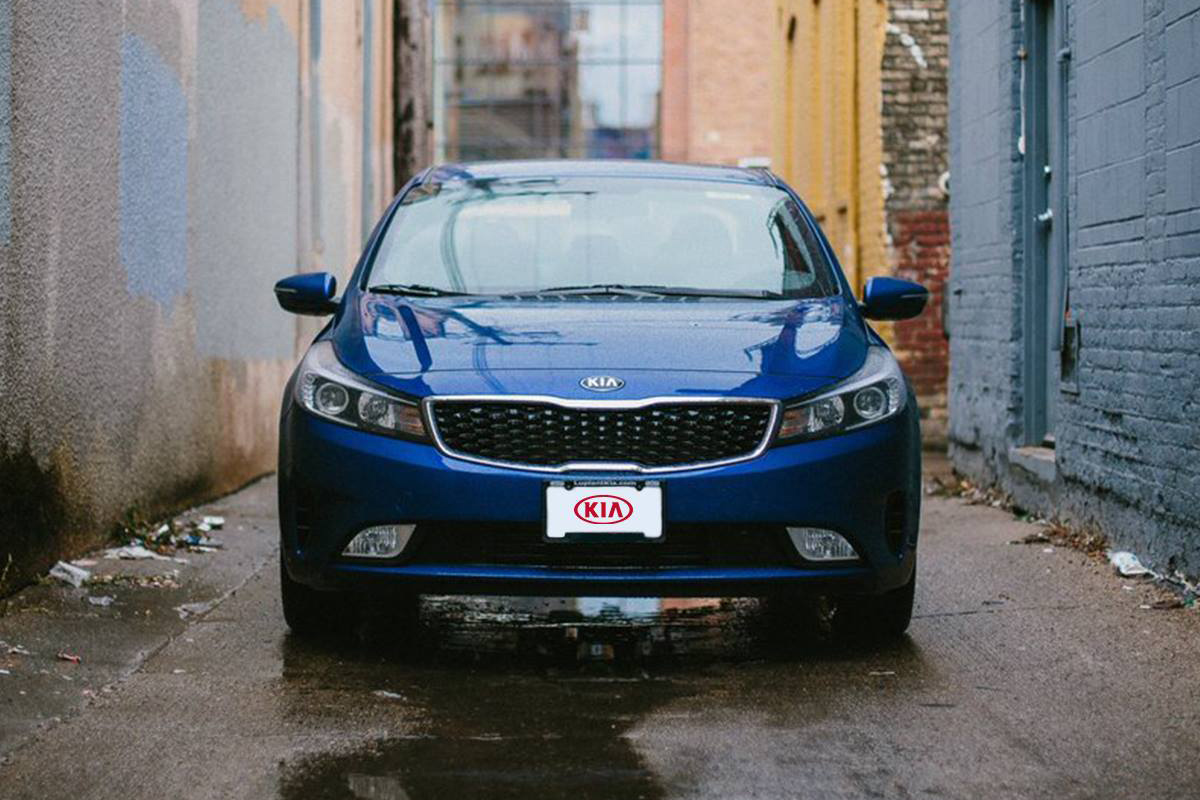
The Kia Forte ranks third among our new-car selections. To meet our mpg threshold, we focused on the LX and S trims, which fall in the $16,600 to $19,300 range and achieve the desired fuel economy.
With an EPA rating of 32 mpg combined, the Forte suits students who drive a lot. It may not be as engaging to drive as the Mazda 3, but it includes conveniences many students like, such as Pandora access, a USB port and an auxiliary input.
Consumer Reports says the Forte’s 14.9-cubic-foot trunk can hold three large upright wheeled suitcases and a duffel bag.
IIHS rating: The 2017 Kia Forte wasn’t eligible for the IIHS Top Safety Pick because it wasn’t subjected to the small-overlap test, though it earned top marks in other IIHS evaluations.
Warranty:
- Bumper-to-bumper: Five years or 60,000 miles.
- Powertrain: 10 years or 100,000 miles.
- Rust-through: Five years or 100,000 miles.
- Roadside assistance: Five years or 60,000 miles.
4. Chevrolet Cruze
Not every Cruze trim is under our $25,000 cap, but excluding the priciest Cruze Diesel with automatic transmission (priced at $25,395), most trims are between $16,975 and $23,945.
The Cruze comes standard with a backup camera and a full-color touchscreen infotainment system with Bluetooth. Consumer Reports calls the sedan’s 14.8-cubic-foot trunk a “good size,” and folding the rear seat opens up space for longer items.
The hatchback offers 22.7 cubic feet with the rear seats up and 47.2 cubic feet with them folded, if you need more cargo capacity.
Combined fuel-economy ratings range from 31-32 mpg for the hatchback to 32-37 mpg for the sedan, which helps students save on fuel.
IIHS rating: The 2017 Chevrolet Cruze wasn’t designated an IIHS Top Safety Pick because it hasn’t completed the full battery of tests; it did receive top marks in the two evaluations it has undergone.
Warranty:
- Bumper-to-bumper: Three years or 36,000 miles.
- Powertrain: Five years or 60,000 miles.
- Anti-corrosion: Six years or 100,000 miles.
Best Cars for College Students: Used
To identify the best used cars for students, we reviewed certified pre-owned programs across brands and consulted Consumer Reports’ 30 Best Used Cars for Under $30,000 report. We limited choices to models no more than five years old that aligned with our student-friendly criteria. Because high-mpg cars were less common five years ago, we relaxed the fuel-economy threshold to 28 mpg combined.
Here are our top four used-car recommendations for college students:
1. 2012–16 Toyota Corolla
One of the most budget-friendly options on our list is the 2012–16 Toyota Corolla. Priced around $10,250–$17,250, these Corollas can offer Bluetooth for hands-free calling or music streaming. Models from 2014–2016 may include a rearview camera for extra safety.
Consumer Reports praises the Corolla for sensible size, solid performance and excellent reliability. The rear seats fold for added cargo room, making it easy to pack up for summer. Fuel economy is estimated at 29–33 mpg combined.
IIHS rating: 2012–2014 Top Safety Pick — it earned generally good ratings across multiple crash tests. After 2014, a “Marginal” small-overlap test result prevented it from qualifying as a Top Safety Pick.
2. 2012–16 Honda Fit
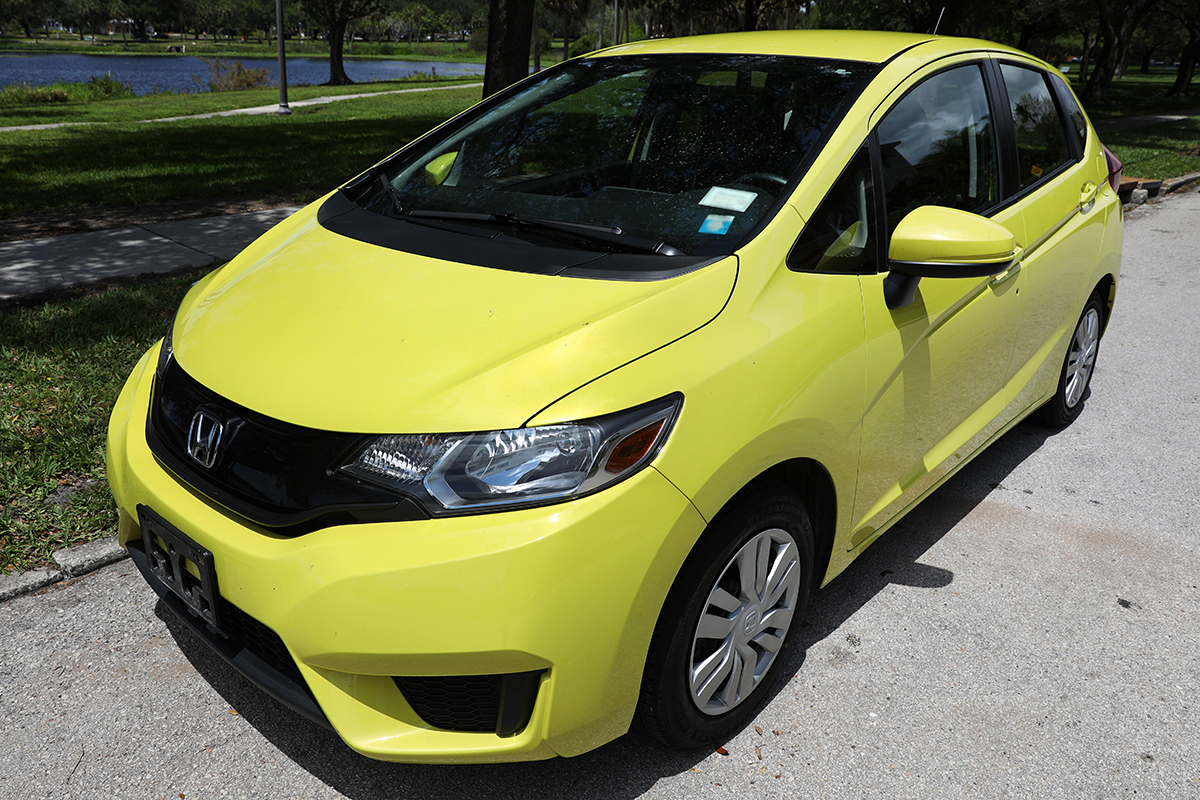
The Honda Fit is a compact hatchback that achieves 29–36 mpg combined. With the rear seats folded flat, it offers up to 57.3 cubic feet of cargo space, exceeding many small crossovers.
The Fit includes the connectivity students need — USB ports, Bluetooth and an auxiliary jack — and provides a surprisingly roomy interior for its size. Prices typically range from $9,775 to $17,600. Later models commonly include backup cameras as standard.
IIHS rating: 2012–2015 Top Safety Pick. In 2016 the IIHS raised its criteria and the Fit’s “Acceptable” small-overlap rating was no longer sufficient for the Top Safety Pick designation.
3. 2013–15 Buick Encore
The Buick Encore arrived in 2013 and its mix of price, features and fuel economy make it a solid choice.
Consumer Reports lists 2013–15 Encore prices between $14,300 and $21,575. In front-wheel-drive trim this subcompact crossover reaches about 28 mpg combined, and it commonly includes a rearview camera, USB and auxiliary connectivity.
With up to 48.4 cubic feet of cargo space with the seats folded, you can easily haul your belongings for semester transitions.
Note: AWD versions don’t meet the 28-mpg combined threshold and should be avoided if fuel economy is a priority.
IIHS rating: 2013 and 2015 Top Safety Pick. The 2014 Encore’s “Poor” small-overlap result meant it didn’t meet new IIHS criteria that year.
4. 2012–15 Toyota Prius V
The Toyota Prius V is the wagon version of the hybrid Prius. While it’s not the flashiest option, 2012–15 models typically cost between $14,375 and $19,575 and return an impressive 41 mpg combined, making up for its conservative styling.
The Prius V also delivers enormous cargo space — 34.3 cubic feet with the seats up and 67.3 cubic feet with them folded — so moving dorm items between semesters is straightforward and can often be done in a single trip.
The vehicle seats five and meets our connectivity requirements, with a rearview camera available and standard on 2015 models.
IIHS rating: 2012 and 2013 Top Safety Pick; 2015 Top Safety Pick Plus. The Prius V lost the Top Safety Pick label in 2014 due to a weaker small-overlap test score.
Your Turn: What are your picks for the best cars for college students?
If you’re researching options, also check out resources on best used cars, cheapest cars to insure and advice for buying teens first car to help narrow your choices.