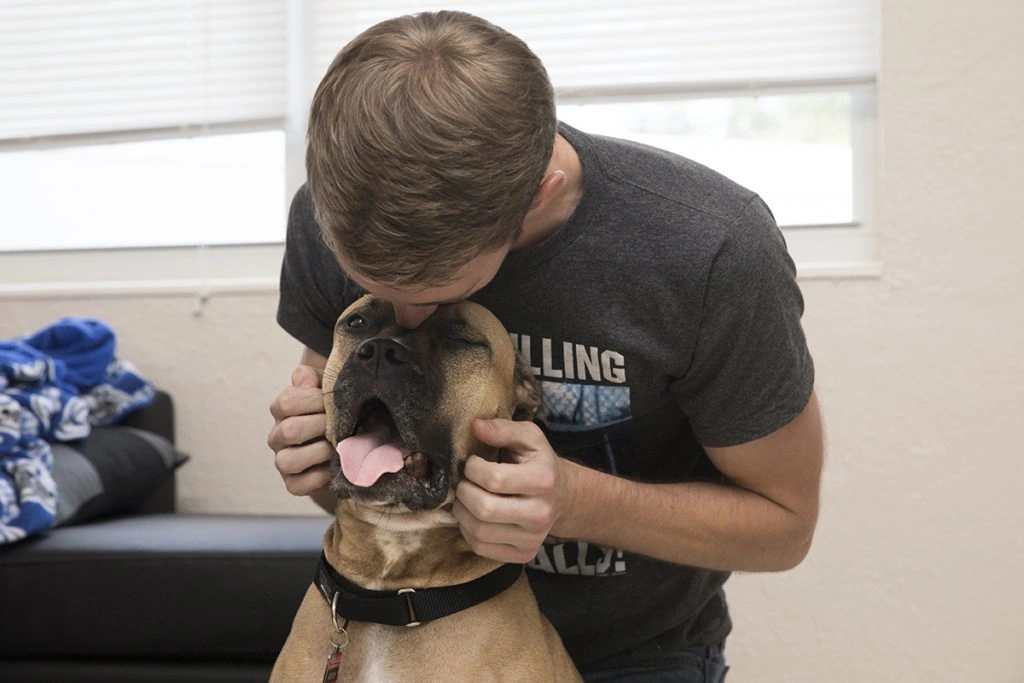
Dogs live to delight, protect, soothe and amuse their human companions. Yet sadly, more than 3 million of these affectionate animals enter U.S. shelters each year.
Most of those dogs are made available for adoption, which is why it’s wise to bring home a pet from a shelter or rescue rather than buying from a pet store or breeder (after making sure you can afford to provide the care a dog needs, naturally). Some pups, however, aren’t immediately listed for adoption and instead are placed into foster programs.
Foster programs offer a special option for animal lovers for whom permanent adoption might not be the right fit just now. Instead of adopting, you can opt to serve as a foster household for one dog or several over time. It’s a serious commitment and, honestly, time-consuming — but fostering is generally much less expensive than adopting a dog.
To learn more about why foster programs exist, what fostering costs and some of the hurdles involved, I spoke with Phyllis Stewart, a longtime volunteer at Franklin County Dog Shelter (FCDS) in Columbus, Ohio, and a trustee at Friends of the Shelter (FOTS), a nonprofit that raises funds to cover medical care for injured and ill dogs who arrive at FCDS.
Why Foster Programs Exist

Medical foster situations can include dogs that arrived at the shelter with injuries (for example, after being struck by a vehicle or with fractured limbs) or that are seriously ill (like those with parvovirus or heavy heartworm infestations).
Across the country, Stewart explained, shelters often “offer dogs to rescue groups for fostering each year when behavior or medical problems keep them from being adopted by the general public. These dogs may be too energetic to be humanely confined to a kennel for long stretches.”
Stewart added that many dogs open to fostering might have behavioral issues, which can show as barking, growling or jumping. They might suffer deep depression after months spent in a kennel, or they might be seniors — “…older dogs deserve comfortable homes rather than lying on the shelter’s hard floor.”
For some facilities, foster programs are vital simply because the shelter lacks the space to care for every dog looking for a “furever home.”
There are numerous reasons a dog may need to be placed with a foster family, but in many of these situations the animal will require extra training, focused attention and rehabilitation before becoming truly “adoption-ready.”
That means foster caregivers must primarily have the time, resources, patience and proper mindset to look after a foster dog.
Costs of Being a Dog Foster Parent

That said, one main distinction between adopting and fostering a dog is the expense. I have personally spent more than $10,000 on one of my dogs, whom I’ve raised for five years. While that’s on the expensive side, the long-term costs of adoption can be significant.
Fostering a dog, conversely, is almost free. “In principle, the shelter or rescue that owns the dog covers most costs,” Stewart explained. “They’ll supply food, necessary items and medical care while the dog is in foster… The foster caregiver will always have someone at the shelter or rescue to contact for guidance or in an emergency.”
Stewart noted, “There are a few small out-of-pocket costs for the foster, such astoys, chew items, occasional carpet cleaning and the odd chewed table leg.” But those expenses are, in many cases, tax-deductible, so hold onto your receipts!
Samantha Okazaki of Today also points out the financial advantages of the foster community, since other foster caregivers often provide free dog-sitting and training help.
If you’re thinking about long-term pet ownership costs before deciding to foster or adopt, check resources like a dog adoption budget to understand typical expenses.
Challenges of Being a Dog Foster Parent
While fostering can save you a lot of money compared with adopting, it does come with its trials. Foster dogs may need intense obedience work, medical rehabilitation and constant attention — and they can bring more complications, such as separation anxiety or aggression. Fostering is not a responsibility to be entered into lightly.
“The challenges of fostering are simultaneously tiring and rewarding,” Stewart said. “Any unfamiliar dog coming into a new home will need time to adapt to routines and rules. Our normal schedule is interrupted because you have another dog to train, walk, feed and soothe. Some dogs are hyperactive and want to run and play all the time. Others need help with housetraining. Some get nervous when left alone. Some chew. Your role is to teach [the dog] how to live in your home so they’re ready for their permanent family.”
And that’s not the whole story. Stewart added, “Some dogs don’t get along with men, strangers or other animals. The foster must manage these traits and work with the dog to improve them if possible.”
Foster families are also expected to bring dogs to adoption events and to constantly promote the animals among friends, on social platforms and to strangers to help secure their adoption.
The end goal, naturally, is to find a dog a loving, lifelong home, allowing you to take in another animal that needs help. But the hardest and most emotional part is saying goodbye.
How does Stewart, a frequent foster parent, cope with goodbyes? “I try to focus on the happiness and excitement of the new family as they begin their life together. I don’t need every dog to remain in my home as long as I know they’re going to a family that will love them as much as I do.”
She added, “Keep in mind you are a brief haven in the dog’s life, and another dog will be waiting for your assistance.”
Alternatives to Fostering
If you adore dogs and want to help them find forever homes but don’t have the time or stamina to foster, there are other ways to pitch in.
According to Phyllis, the biggest hurdle shelters face is recruiting committed volunteers.
Shelters need people for a variety of tasks — walking dogs, sanitizing kennels and more — and dependable volunteers who will show up regularly are essential. Consider contacting your local shelter to ask how you can help on a consistent basis.
Oliver Grant is a devoted dog dad to two rescue pups — Hazel and Baxter. When he’s not brushing Hazel’s fur or playing fetch with Baxter, Oliver often spends time reading, writing, editing or enjoying a cold beer.