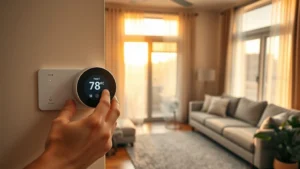
Asking a virtual helper to lower the lights or adjust the thermostat used to feel like science fiction. Today, home automation is commonplace. But is it possible to assemble a smart home without emptying your bank account?
Prices for smart devices — from smart plugs and bulbs to video doorbells and thermostats — have come down considerably. Below, we highlight our favorite budget-friendly options and explain how to begin building an affordable smart home.
And a quick reminder: be courteous to your virtual helper. We don’t want a replay of Disney’s 1999 film “Smart House.” That would be a little too creepy.
What Exactly Is a Smart Home?
Before we go further, let’s clarify what we mean by “smart home.” It’s a flexible buzzword, but here we mean a residence that includes some degree of automated, tech-driven control.
If that seems intimidating, don’t worry — it’s simpler than it sounds. A typical modern smart home connects everyday items like lights, outlets and doorbells to the internet, allowing you to manage them remotely.
One of the most common ways to interact with these devices is by voice using a virtual assistant such as Alexa, Google Assistant, or Siri. You can also manage them easily from a smartphone or tablet.
Which Smart Home Assistant Should You Pick?
When you decide to build a smart home, the first step is choosing a voice assistant and a smart speaker to run things.
But picking an assistant isn’t only about the voice you prefer. Different assistants support different devices and product ecosystems.
The leading assistants are Amazon’s Alexa, Apple’s Siri and Google Assistant. For this guide, we emphasize Alexa because its compatible device ecosystem is both large and budget-friendly.
Amazon’s speakers are called Echo devices, and you can often find one for about $20. For budget shoppers, we suggest the third-generation Echo Dot; it’s handy for issuing commands and streaming a bit of music.
Place an Echo Dot in every room where you plan to use voice controls — common choices include the living room or kitchen.
After your Echo Dot arrives, follow the included instructions to set it up. With your Echo ready, the enjoyable work begins: adding smart gadgets to your home.
Affordable Smart Home Devices
When shopping for inexpensive smart gear, the chief concern is compatibility with your chosen assistant. In our budget smart home setup, every item listed is compatible with Amazon Alexa.
Best Budget Smart Bulbs: Sengled Smart Bulb
Smart bulbs form the backbone of many smart homes. Lights are among the simplest devices to control via voice, so swapping regular bulbs for smart ones is a great first step.
The Sengled Smart Bulb series is a favorite because of its low cost: a four-pack runs about $30, roughly $7.50 per bulb. You can power lights on and off, dim them, or change colors by voice command.
Best Budget Smart Plugs: Kasa Smart Plug (HS103P4)
Smart plugs convert ordinary outlets into controllable sockets. Plug lamps or small appliances into a smart plug to switch them on or off remotely or with your voice.
For budget-minded buyers, we recommend the Kasa Smart Plug HS103P4. Sold in a four-pack for about $25, it’s an inexpensive way to make many devices smarter.
Best Budget Smart Switches: Kasa Smart Dimmer Switch (HD220)
Outfitting every bulb in a multi-light fixture with smart bulbs can get pricey. A more economical choice is installing a smart switch to modernize the wall control you already have.
Our pick for an affordable smart switch is the Kasa Smart Dimmer Switch (HD220), priced around $18. Replace your existing switch with this unit to control ceiling lights by voice — and installation is straightforward.
Best Budget Smart Thermostat: Amazon Smart Thermostat
Adding a smart thermostat is a sleek way to manage your home’s temperature without getting out of bed, and it can reduce energy costs. You’ll also be able to review usage data remotely.
We recommend the Amazon Smart Thermostat for its $60 price tag. It supports scheduling, remote temperature control, and energy-usage summaries over days, weeks or months.
Best Budget Smart Doorbell Camera: Blink Video Doorbell
Security starts at the front door. A smart video doorbell lets you monitor arrivals and visitors whether you’re in the living room, backyard, or across town.
For a low-cost option, consider the Blink video doorbell. At about $35, it’s a wireless, battery-powered doorbell with two-way talk functionality.
Best Budget Indoor Security Camera: Kasa Pan/Tilt Camera
If you want to monitor indoor activity, add an indoor camera. Paired with Alexa, you can view live feeds on your phone or a compatible Echo Show display.
The Kasa Indoor Pan/Tilt Security Camera offers a great value at around $35. It delivers Full HD video, night vision, and a patrol mode to scan for motion.
Best Budget Smart IR Remote: BroadLink RM4 Mini
This is one of those under-appreciated devices that can make many old gadgets smart. An IR remote hub can control devices that use infrared remotes through your virtual assistant.
We like the BroadLink RM4 Mini, which can handle TVs, set-top boxes, air conditioners, fans, electric fireplaces and more. At about $26, it can bring many legacy devices into your smart ecosystem.
Best Budget Robot Vacuum: Eufy RoboVac 15C Max
We’re not up to Jetsons-level robot servants, but today’s robot vacuums are impressive. With a voice command, these devices can clean floors automatically.
Many Wi-Fi robot vacuums can be pricey, but the Eufy RoboVac 15C Max is a strong budget pick at around $160 — effective on both hard floors and carpets.
Best Budget Streaming Stick: Amazon Fire TV Stick 4K
Streaming sticks let you access video and music apps through your TV. Integrating Alexa into your smart home lets you use voice to control the TV and playback.
The Amazon Fire TV Stick 4K is our go-to budget streamer and works seamlessly with Alexa. For roughly $50, you can tell Alexa to power on the TV, launch an app, and start a show.
How We Chose These Products
The smart home market is crowded, so we narrowed choices to the best budget-friendly devices.
We researched product categories, then created selection criteria to ensure options met our standards. We evaluated compatibility with ecosystems, reliability, and price.
Every product listed is confirmed to work with Amazon Alexa, the low-cost ecosystem we focused on. We tested many items ourselves for dependability, and where direct testing wasn’t possible, we relied on strong reviews from verified buyers.
Because cost was a priority, we chose the most affordable products that still delivered a quality experience. We also favored brands with solid reputations.
Frequently Asked Questions (FAQ)
Building a smart home affordably is not as hard as it seems. Choose a voice ecosystem that supports inexpensive devices —Amazon’s Alexa and Echo are our top recommendations. Then look for products labeled as Alexa-compatible; these are often available at low prices online.
Costs vary based on what you want. Replacing a few lamps with smart bulbs or adding smart plugs might run $7–$8 per item. But equipping your home with a robot vacuum and a wireless video doorbell will increase the overall expense.
Turning your house into a smart home can improve convenience and potentially save money. Voice controls make daily tasks easier, and devices like smart thermostats, bulbs, and plugs help manage energy use and lower monthly bills.
The main voice assistant platforms are Amazon Alexa, Google Assistant, and Apple Siri. Alexa and Google typically offer the most budget-friendly setups — Alexa often being the cheapest option. Siri integrates tightly with Apple devices and emphasizes privacy, but accessories tend to cost more.
Jamie Reynolds is a senior writer for Savinly specializing in consumer technology.