The next time you browse the menu at that chic new spot that opened on your corner or an old standby, keep this in mind: the menu is quietly working against you and your budget.
Every hue, photo, tantalizing description, typeface and even where items are listed has been deliberately selected to encourage you to part with more cash.
Now, don’t misunderstand us — we get why this happens.
A restaurant is an enterprise. Every dollar you drop helps keep the lights on and pays the servers and bartenders. But that doesn’t mean you have to underwrite the entire operation.
Sure, indulging in a night out occasionally is fine. But if you’re serious about building an emergency cushion, you’ll need to be shrewd about how you spend.
We looked into the most common tactics you’ll encounter on menus so you can avoid being duped.
If There Are No Dollar Signs, Are You Really Spending Money?
When you’re planning to meet friends for dinner, you shouldn’t have to fret over the bill before it arrives.
That’s at least the idea restaurant managers have when they omit dollar signs from their menus.
If you spot a menu that doesn’t use dollar signs, you might not pay it much attention — if you even notice. But that absent dollar sign could lead you to spend more, according to a 2009 Cornell University study that examined how price presentation affected customer spending.
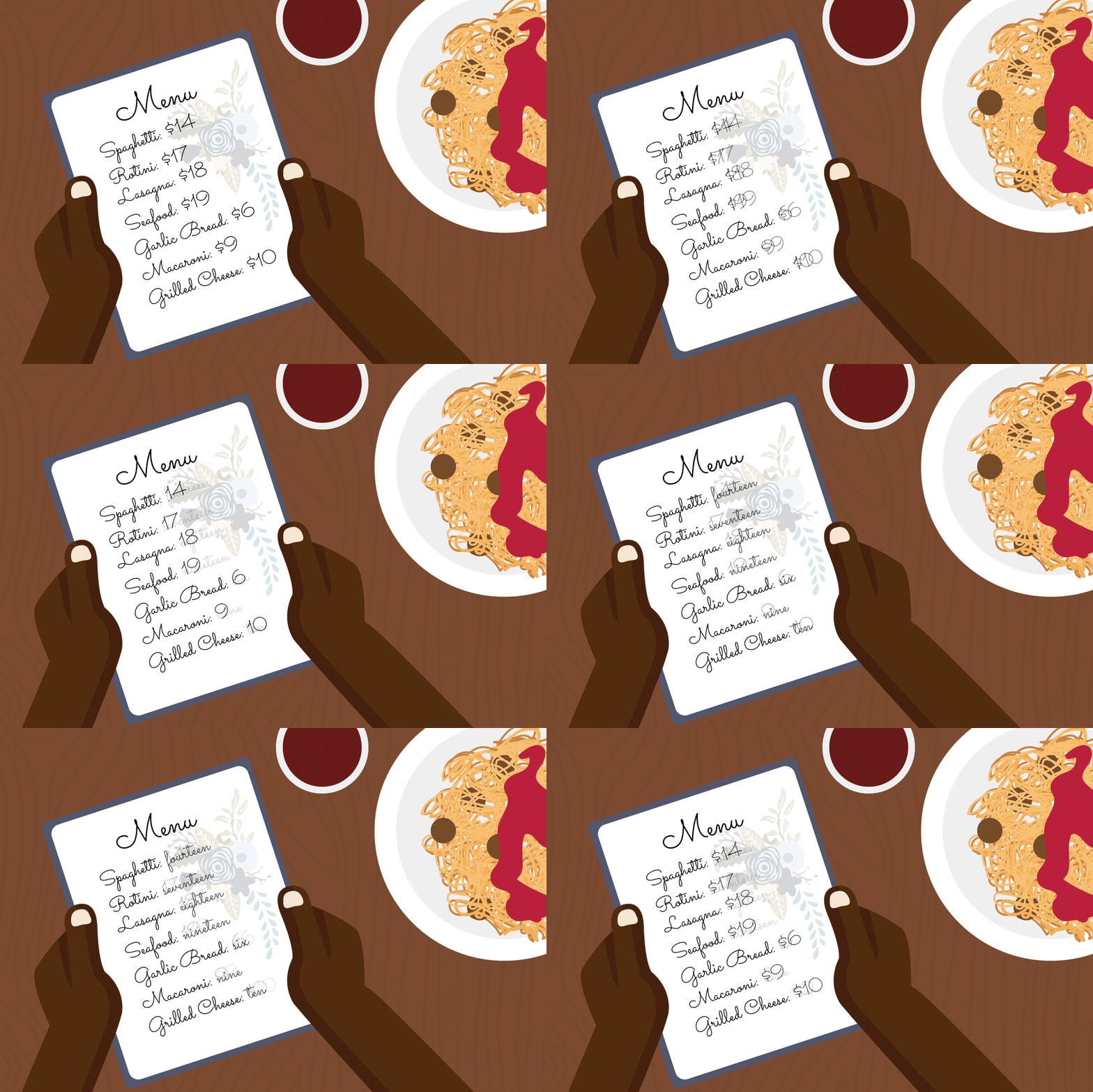
The researchers compared three ways of showing prices: numerals with dollar signs (for example, $20.00), numerals without dollar signs (20.00) and prices spelled out in words (twenty dollars).
The study discovered customers spent more when prices were shown as numerals without dollar signs, likely because the absence of a dollar cue made the cost feel less immediate.
Pumping Up “Grandma’s” Recipe to Boost Sales

A separate Cornell study clarified why eateries favor descriptive wording when labeling dishes. You guessed it — to increase spending.
This outcome was anticipated by the researchers, and their six-week study confirmed it. They altered the names of six dishes in a university dining hall.
For instance, plain “Chocolate Pudding” became “Satin Chocolate Pudding.” “Seafood Filet” turned into “Succulent Italian Seafood Filet.” And “Zucchini Cookies” was relabeled as “Grandma’s Zucchini Cookies.”
The revamped names produced a 27% boost in sales for those descriptively labeled plates. Diners perceived the descriptively named foods as better quality and greater value. They were also more inclined to say they would eat the item again within a fortnight.
What Difference Can a Penny Make?

Menu manipulations aren’t limited to flowery descriptions and disappearing dollar signs. They can also affect how specific items are priced. These tactics appear everywhere, from quick-service joints to upscale venues reserved for celebrations.
A 2001 paper by S. Naipaul and H.G. Parsa, “Menu-price Endings That Communicate Value and Quality,” showed that price endings can signal either value or prestige depending on the restaurant’s positioning.
The research revealed that customers at lower-priced establishments are likelier to feel they’re getting a deal when a price ends in nine.
Conversely, in higher-end restaurants, diners are more apt to perceive an item as superior if its price ends in zero.
That means patrons at budget eateries might skip a $7 option in favor of an $8.99 plate, while someone dining at a fancy restaurant could choose the $30 entrée rather than the $27.99 dish — assuming, of course, the menu leaves out dollar signs.
Savinly Readers Are Less Prone to Menu Manipulation
You don’t have to let your guard down every time you eat out — there’s good news for people who keep a close eye on their finances: the Cornell study on dollar signs found that these tactics were least successful on diners who were already budget-conscious.
“Tightwads and penny-pinchers” (or as we prefer to call them, “Savinly Readers”) who were already careful with money were less susceptible to overspending from the dollar-sign vanish.
The same applies to descriptive labels and pricing endings. Small adjustments may sway some customers toward a particular dish, but those who are frugal will only order the item if the price suits them.
Rebecca Langford is a staff writer at Savinly. She spends more on dining out each month than almost anything else.