
Hearing impairment affects roughly 30 million people in the U.S., according to the National Institute on Health.
Being deaf or having significant hearing loss can make spoken conversations over the phone with loved ones and acquaintances challenging, if not unfeasible.
Fortunately, individuals with hearing loss may access free or deeply discounted assistive devices and captioned phone services for their home or mobile phones via a program funded by the Federal Communications Commission (FCC).
Here’s what you should know.
What Is a Caption Phone?
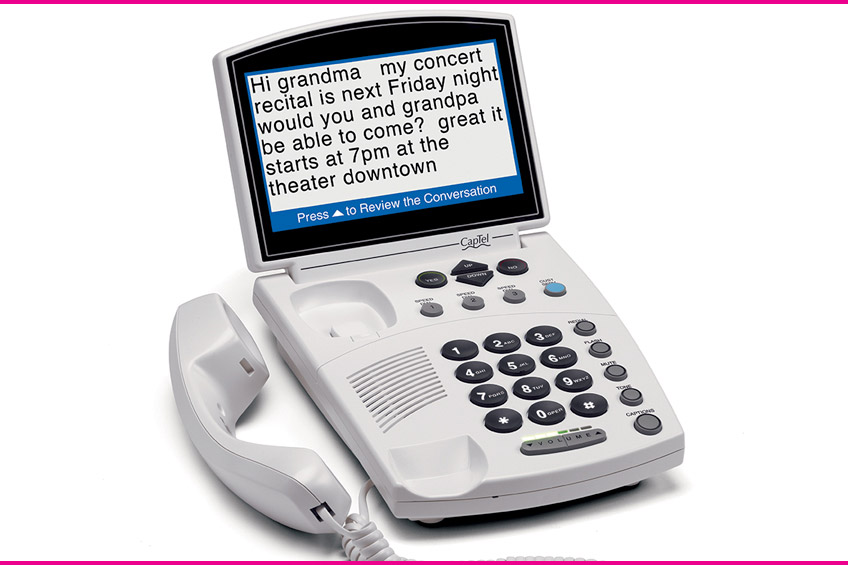
A caption phone converts live telephone conversations into readable text that displays on a large screen.
It’s essentially the phone equivalent of closed captions for TV.
You can usually keep your current phone number and line. If the caption service operates via internet protocol relay, a high-speed internet connection is required instead of a conventional landline to make and receive calls.
Many caption phones store a transcript of the call so you can review or erase it later. They often include captioned voicemail features and let you customize font size and color.
Otherwise, caption phones function like a typical telephone — you dial, answer and hang up as you normally would.
How Is the Caption Phone Free?
Caption phones are available at no charge through an FCC-funded initiative called the Intrastate Telecommunications Relay Services program.
This program operates in all 50 states, the District of Columbia, Puerto Rico and other U.S. territories. It covers local, long-distance and international calling.
Eligible applicants can receive a caption phone with free delivery and installation. The device typically comes with a warranty and complimentary technical support.
How to Get a Free Caption Phone
There are two primary paths to obtain a free phone if you are deaf or hard of hearing.
- Ask your hearing care professional for assistance.
- Enroll directly with a captioned telephone provider.
Each state manages its own program to help residents acquire a caption phone either free of charge or at a reduced cost.
To be eligible, you must demonstrate hearing loss that necessitates the use of a caption phone.
You may be required to have a medical practitioner or audiologist sign a certification stating you have hearing impairment and would benefit from the device.
Some state programs technically loan the equipment for a set period before transferring ownership. The device is provided at little or no cost.
Working With a Phone Provider
Caption phone companies can guide you through the enrollment process for a free device. Many offer free shipping, professional installation, setup and training at no cost.
Some of the larger providers include:
Research each provider to determine which service and handset best suit your needs.
Buying Your Own Caption Phone
You can also purchase caption phones through retailers like Amazon and Best Buy, and still access relay services from captioning companies for free.
Basic caption phone models typically cost around $75, while advanced units are pricier.
Caption Phone Apps
Having a free landline caption phone is helpful, but making your smartphone accessible is equally important.
CapTel, ClearCaptions and CaptionCall each offer mobile apps that provide caption services for cell phones. After enrolling with a provider for your home service, you can often use the same captioning capabilities on your mobile device.
Other mobile captioning apps include:
- InnoCaption (Apple and Android)
- Live Caption (Apple only)
- eyeHear (Apple only)
- Ava (Android only)
InnoCaption and eyeHear are free to download and use.
Because these four apps are independent of the caption phone companies, anyone can use them, even if they don’t qualify for a traditional home caption phone.
Each app has distinct advantages and limitations, so test a few to find the best fit for your particular hearing needs.
Other Help for People With Hearing Loss
Hearing impairment is more prevalent among older adults. Nearly 25% of people between 65 and 74 have disabling hearing loss, and that rate rises to about 50% for those 75 and older, per the National Institutes of Health.
Medicare provides some hearing-related benefits, but not all Medicare plans include coverage for hearing aids. Certain private Medicare Advantage plans may offer additional hearing benefits, such as funds toward hearing aids.
For mild to moderate hearing loss, over-the-counter hearing aids—introduced in late 2022—can be a cost-effective alternative to traditional, more expensive hearing devices.
Consulting with an audiologist or other medical professional is the best way to evaluate options and determine which assistive technologies will help you most.
Jordan Ellis is a Certified Educator in Personal Finance and a senior writer for Savinly. They cover topics including retirement, investing, taxes and life insurance.