On April 8, 2024, observers across the United States will have the chance to see a total solar eclipse.
Anyone located within the wide, 120-mile path stretching from Mexico to Maine will witness the complete eclipse. Those outside that corridor will only see a partial eclipse — which is still an exciting spectacle!
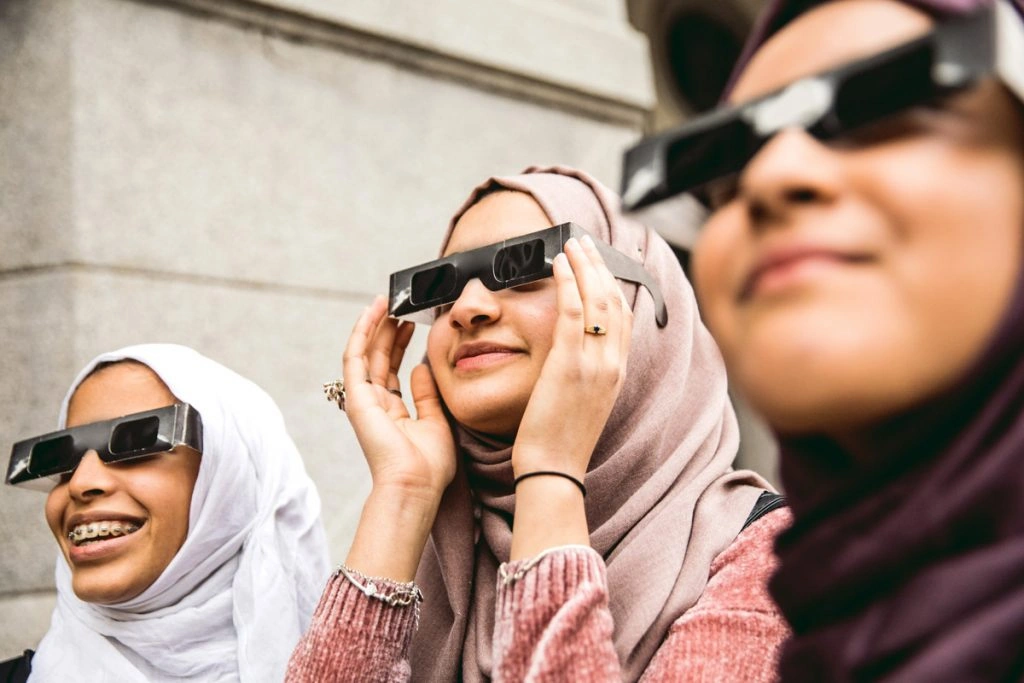
As crowds gather to take in this rare phenomenon (or perhaps for a repeat — the previous event occurred in 2017), it’s essential to remember that looking straight at the sun during an eclipse is dangerous.
If you intend to view it directly, you must use certified eclipse glasses, not standard sunglasses. I’ll let the experts at NASA cover eclipse safety in greater detail.
Where to Obtain Solar Eclipse Glasses
The occasion will inspire many vendors to hawk various items, from keepsakes to parking spots, and most importantly, eclipse glasses. Make sure you purchase certified eyewear from a trustworthy seller. For instance, Amazon lists certified eclipse glasses for as little as $5.99 for a pack of 10.
If you’d rather not spend money, free eclipse glasses are available in several places. In locations directly on the eclipse path, like New York, local libraries and community centers are distributing glasses at no cost. Some optometrists, aware of the risks an eclipse poses to eyesight, are also providing complimentary eclipse glasses at select clinics.
But if you can’t reach those distribution points or supplies run out, you can construct a simple pinhole projector with common household items.
A pinhole projector lets you view a projected, inverted image of the eclipse without looking directly at the sun. It’s especially useful for kids who want to join in but can’t reliably avoid staring at the sun.
Create a Homemade Pinhole Projector for the Eclipse

Building your own eclipse viewer is straightforward — which is ideal, because I avoid DIYs that take longer to assemble than the event I’m preparing for.
(At its peak, the total eclipse will last roughly 4 minutes and 9 seconds for observers positioned near the center of the path.)
Here’s how to construct a simple eclipse projector.
Materials
1 long cardboard box or 2 standard-sized boxes
Scissors
Duct tape
Utility knife (for cutting cardboard)
Aluminum foil
Pin or thumbtack
Sheet of white paper
Assemble Your DIY Solar Eclipse Viewer
- If you don’t have a long rectangular box, join two smaller boxes: cut the flaps off one end of each and tape the raw edges together to form a single long box. (A longer box produces a bigger projected image.)
- Cut a head-sized hole in the middle of the bottom of the box.
- Seal the flaps on one end with duct tape. Inside that end, tape the white paper — this will be your “viewing screen.”
- Seal the flaps on the opposite end. Near the top of that end, cut a small rectangular opening (about 2 inches by 4 inches).
- Cut a piece of aluminum foil slightly larger than the rectangle, keeping the foil flat and smooth.
- Tape the foil over the rectangular opening.
- Use a pin or tack to make a tiny hole in the center of the foil. Be careful not to tear the foil or enlarge the hole excessively.

To use the viewer, stand outside with the sun at your back. Position the pinhole end of the box behind you and the paper screen in front. Aim the pinhole toward the sun until you see the upside-down image of the eclipse projected onto the paper screen.
After your pinhole projector is set, watch this helpful video to learn the best viewing times for your location.
Important note: Gazing directly at a solar eclipse — even a partial one — can cause permanent eye damage. Never attempt to observe the eclipse without proper protective eyewear (certified eclipse glasses, not ordinary sunglasses) or an appropriate indirect viewing device like this pinhole projector. Always operate your projector with your back to the sun.
The FTC advises that if you plan to use eclipse glasses to look at the eclipse, verify that they are certified to meet international safety standards.
Only use eclipse viewing glasses that are approved, new, and free of scratches, creases, or defects. Here is an article outlining what to check for when selecting eclipse eyewear.
Grace Rivers is a former junior writer at Savinly.William Fewox contributed to this piece.