Chances are your thoughts range from energy-healing reiki to the horror-movie figure Pinhead.
As an acupuncturist myself, I’m glad more people are recognizing the practice as science-informed medicine rather than superstition.
Acupuncture has foundations in immunology and neuroscience and has grown in popularity over recent decades. (This 2016 Time piece reviews clinical trials and explains acupuncture’s physiological mechanisms.)
Still, myths about acupuncture and its cost keep many from viewing it as a viable health-care choice.
How Does Acupuncture Work?

Research indicates acupuncture can alleviate chronic pain, headaches and some side effects of cancer therapies, according to the National Institutes of Health.
Needles used in acupuncture trigger immune reactions that mobilize specific proteins and chemicals to where they’re needed to address the issue.
For example, with a sprained ankle, acupuncture can help lower inflammation, interrupt pain signaling to the brain and hasten recovery.
Results build over time, so based on how long the problem has existed, it generally takes a package of eight to 12 sessions to experience the full effect.
How Much Does Acupuncture Cost?
An initial appointment usually costs between $75 and $95, with follow-ups running $50 to $70, according to CostHelper, a consumer information resource. Considering you’ll need several treatments to notice change, it’s easy to understand why many don’t complete the full course required to resolve an issue.
In contrast, acupuncture in China is quite cheap, roughly $5 per session. It follows a high-volume, low-cost approach where treatment happens in clinics with many chairs and numerous people receiving care simultaneously.
That inspired some U.S. acupuncturists to ask, “Could we adopt that same setup to address America’s costly acupuncture?” That question birthed community acupuncture.
What is Community Acupuncture?

Community acupuncture returns to the fundamentals of how it’s done in China. This global movement removes cost as a barrier to care.
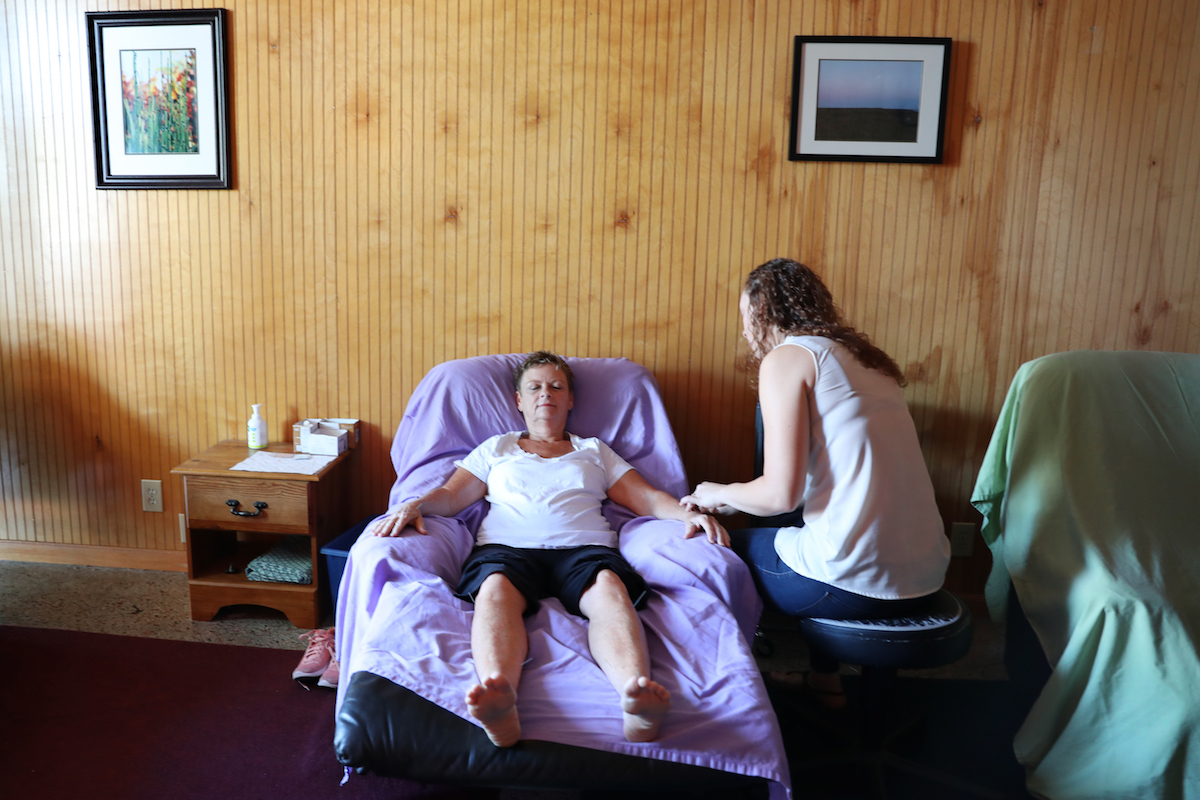
Sessions take place in reclining chairs within a communal area instead of private rooms, and clinics accommodate many patients. This setup brings the price down to about $15–$40 per session.
Even more distinctive than the low fee is that patients choose what to pay within the $15–$40 bracket — no income verification or contracts required.
The principle is to contribute what you can so you receive the number of sessions necessary.

The Oregon-based People’s Organization of Community Acupuncture (POCA) was established in 2002 to spread awareness of community acupuncture and support practitioners in opening their own clinics.
It’s the only group of its kind, and its latest project is an affordable acupuncture school addressing the inflated costs of acupuncture education.
Visit POCA’s website to locate a clinic near you or search “community acupuncture near me.” New clinics are launching regularly.
Your Turn: Have you tried acupuncture? What are your thoughts on the community acupuncture approach?
Alex Rivera is a licensed acupuncturist in Florida and a writing intern at Savinly. Alex reports on personal finance after paying off$53,000 in student loansfor their acupuncture education.