If you’re anything like me, you adore the aroma and flavor of fresh herbs but somehow manage to doom every plant that ends up in your care. Because of that, I tend to fall back on dried herbs or the occasional bunch of fresh herbs when preparing meals for my household.
However, dried herbs just don’t compare to fresh ones, and more often than not I can’t use an entire packet of freshly cut herbs before they go bad. Since I dislike waste and love cooking, I researched the best ways to cultivate herbs and which varieties are simplest to keep alive.
Plant Care Basics
Before you begin planting, think about where you’ll grow your herbs. The most effective method to keep them managed is to plant each herb in its own pot. This setup also makes it easy to move pots outdoors for some sun on pleasant days and bring them back inside overnight or when temperatures drop.
I consulted with Amy Enfield, a consumer horticulturist with Scotts Miracle-Gro, to gather practical advice for growing herbs indoors.
Pick the Appropriate Pot
While some containers have solid bottoms, for herbs you want pots with drainage holes so surplus water can drain away, Enfield advises.
Location, Location, Location

If you place your herbs in the darkest part of the kitchen and forget about them, they won’t thrive. “Indoor herb plants will require light, water, food and frequent trimming,” she says.
Instead, pick a window that faces south or southwest and receives at least six hours of sunlight. Set a reminder on your phone to check on them regularly so you can address their needs.
Avoid Overwatering
Too little water can kill a plant, but overwatering is equally damaging.
“When the top layer of soil looks dry, put your finger about an inch into the soil. If it feels moist you can wait; if it’s dry, it’s time to water,” suggests Enfield.
Check the soil more frequently during hot, dry weather. I personally struggle with this aspect of plant care, so I recommend positioning your herbs somewhere you’ll notice them easily and be reminded to inspect them. Alternatively, jot down a note or use a phone or computer reminder.
Trim and Fertilize
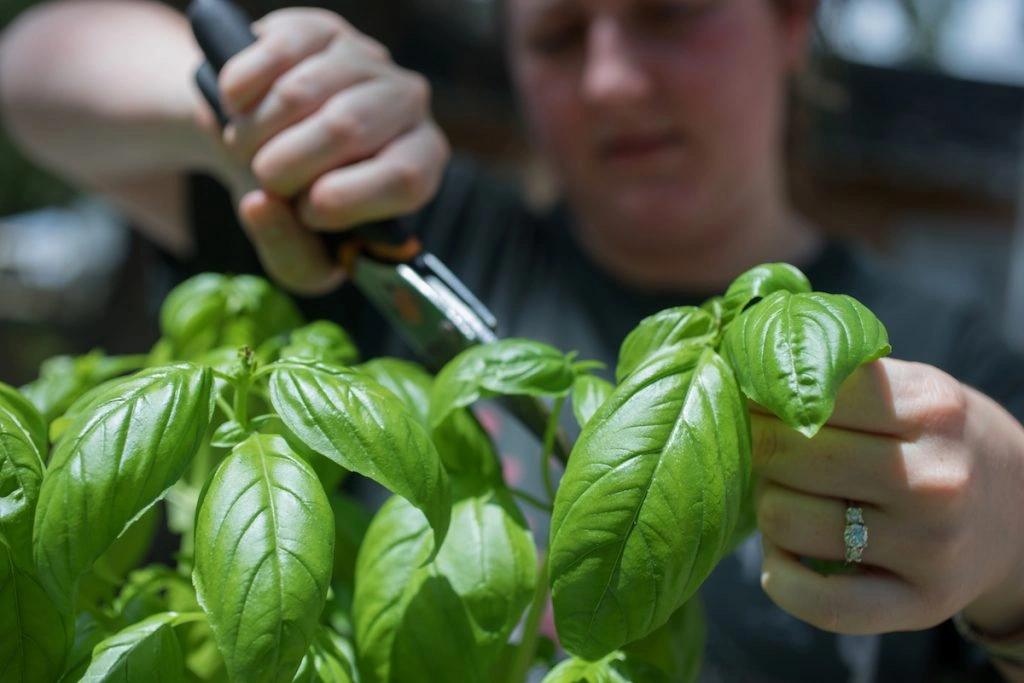
“Light, regular trimming every two to three weeks, whether you’re using the herbs or not, helps keep plants compact and encourages new leaf growth,” Enfield says. She suggests never cutting more than one-third of the plant at once and waiting until herbs reach about six inches tall before harvesting.
“Frequent trimming also prevents your herbs from flowering,” Enfield adds. That means more leaves available for cooking.
Herbs to Cultivate at Home
Some herbs are much easier to grow than others. Here are five straightforward herbs you can raise at home.
Basil

Stan Miklis, a farmer and trained horticulturist with four decades of herb-growing experience, works at Caliper Farm to Table. One of his top suggestions for home gardeners is basil.
“[Basil] is absolutely the best for Italian cooking and outdoor fragrance,” he says. “[It’s] simple to grow as loose seedlings readily produce new plants.”
Basil is commonly used in pasta sauces and on pizza, but it also makes a nice addition to salads or can be infused with cucumber or strawberry in water for a refreshing summer beverage.
Miklis also endorses Thai basil, which adds a fragrant, flavorful touch to your windowsill or garden.
“[Thai basil] is used to brew a calming tea called tulsi,” he notes. Growing this herb requires only soil and water. Miklis also points out that “a stem placed in a jar of water will grow roots,” making it easy to propagate and share new plants.
Cuban Oregano
Tatyana Rodriguez, a botanist and writer for Florence’s Flowers, recommends Cuban oregano as one of the simplest herbs to cultivate.
“Cuban oregano is a very resilient plant that prefers warmer climates,” she says. “It doesn’t need much water and favors full sun, though it will tolerate some shade.”
This is one herb that is quite forgiving with watering. “They often grow faster if the soil stays moist and will eventually form a shrub-like appearance,” Rodriguez explains. You can also propagate Cuban oregano easily from cuttings.
Rodriguez notes various health uses for Cuban oregano, including treating skin issues, aiding detoxification, helping fend off colds, reducing arthritis discomfort, easing stress and improving digestion.
Citronella
Another low-maintenance herb suggested by Miklis is citronella. If you live in an area where mosquitoes are common, you’ve probably heard of this plant since it’s a primary ingredient in many mosquito-repellent products.
“[Citronella] thrives outdoors when mosquito season arrives,” Miklis explains. “[It’s] great for outdoor spaces and easy to maintain even in lower light.”
Mint

Anyone familiar with gum flavors knows there are several kinds of mint, with spearmint and peppermint being the most common. Mint is used in many dishes and is especially delightful infused in water with lemon (or muddled into a mojito at the end of a long day).
When it comes to growing mint at home, even beginning gardeners should have success.
“All mint varieties grow so vigorously that they can become invasive,” Miklis warns. “I recommend planting each variety separately in raised containers.”
Lemongrass

Lemongrass is one of my preferred flavors, particularly in Thai cuisine. Miklis says lemongrass is another excellent choice for home growing.
“[Lemongrass] is an attractive, tall grass that emits an essential oil that helps repel mosquitoes,” he says. “[It’s] straightforward to grow in many soil types with plenty of water and bright light.”
Growing your own herbs saves money compared with buying them at the grocery store, and the flavor difference between fresh and dried or pre-cut herbs is unmistakable. Begin with these five easy varieties and expand your herb collection as your confidence grows and you explore indoor gardening.
Charlotte Reed enjoys experimenting in the kitchen, so having fresh herbs close at hand is perfect. Of the herbs listed, she favors mint, which she likes paired with lemon in chilled water.
For ideas on how growing plants at home can help your budget and savings, see also can gardening save money.