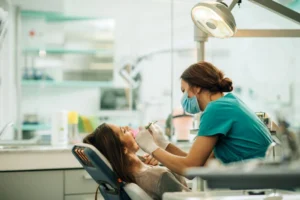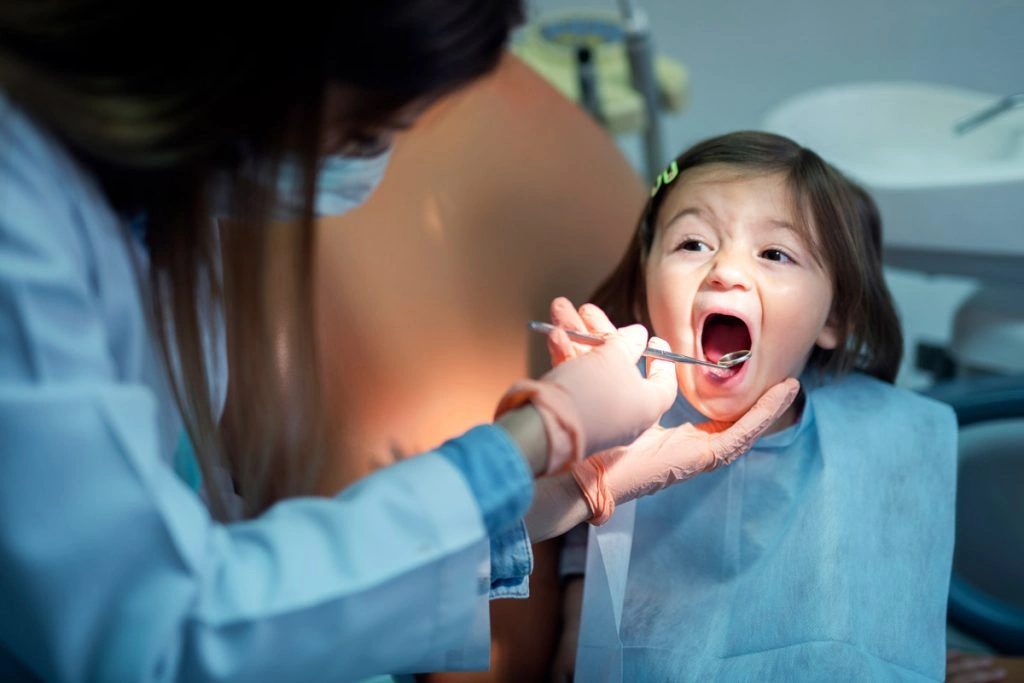
Going to the dentist can be intimidating.
Not because of the roar of the drill or that suction gizmo.
It’s usually the price tag.
The average U.S. resident spent $430 on dental services in 2020, per the American Dental Association.
It’s no shock that 37% of American adults said they skipped their annual dental visit, according to CDC statistics.
You might not have the means to cover a large out-of-pocket bill — yet you still want quality dental care for your children and yourself.
This article outlines budget-friendly dental care choices, from nonprofit programs for kids to discount plans and Medicaid options.
7 Budget-Friendly Dental Care Choices
1. Community Health Centers
Federally supported community health centers deliver reduced-cost or no-cost dental services for low-income individuals.
Many clinics use a sliding-scale fee system, while others provide flexible payment arrangements.
Expect long waitlists, so contact your local center as early as possible.
Find a nearby community health center using this locator.
2. Dental Schools
If paying cash is your only option, dental schools nearby can offer lower-cost care.
Dentists-in-training need clinical experience, and numerous dental schools provide affordable or complimentary procedures as part of their programs.
For example, the College of Dentistry at Ohio State University in Columbus regularly provides inexpensive dental services and occasionally hosts free-care events.
Call the dental school nearest you to ask about offerings. This directory of dental schools is a good place to begin.
3. Charitable Programs
Several nonprofit initiatives provide braces and other professional dental care for children.
Finding comparable charity assistance for adults is often tougher.
Assistance for Children
There are multiple subsidized or free dental programs aimed at children from low-income households.
These initiatives can help with major expenses like braces and routine needs like biannual checkups to preserve oral health.
Most programs require an application and may ask for some form of payment if accepted.
Smiles Change Lives
Smiles Change Lives provides orthodontic treatment for kids ages 7 and up. (Applicants aged 19–21 can apply, but provider placement is typically more difficult.) There’s a non-refundable $30 application charge and an out-of-pocket cost of $650 for the braces.
Check financial eligibility for Smiles Change Lives with this eligibility tool.
Applicants must submit a short personal essay explaining why braces are needed and how they will affect the child’s life. Support letters are optional but recommended.
Donated Orthodontic Services
The American Association of Orthodontists lists Donated Orthodontic Services. Coverage is limited to specific states, and these providers focus on children without insurance or those who don’t qualify for other help.
There’s an application process and potential wait times. Household income must be at or below 200% of the federal poverty level to qualify.
If your child is accepted, there is a $200 administrative fee.
Smile for a Lifetime
The Smile for a Lifetime Foundation is a nonprofit offering orthodontic care for underserved youth ages 8–18. Fees include a $20 application charge and a $480 participation fee.
To be eligible, a child must meet several requirements, such as:
- Family income at or below 200% of the federal poverty level.
- Not currently wearing braces.
- Maintaining good dental hygiene.
- Enrolled in school with at least a C average.
- One letter of recommendation from a teacher or community leader.
Applications are available online in both English and Spanish.
Give Kids a Smile
Beginning in St. Louis in 2002, Give Kids a Smile became a national program under the American Dental Association in 2003.
The program connects volunteers and dental professionals to deliver care and education to underprivileged children.
National GKAS Day takes place on the first Friday of February each year. Services typically include screenings, oral health education and treatment.
Call the American Dental Association at 844-490-4527 to learn if a Give Kids A Smile event is happening near you.
Many GKAS events occur only once a year. Ask about the event date and which services will be provided.
Low-Cost Dental and Orthodontic Options for Adults
Plenty of low-income parents skip dental care for themselves so they can afford treatment for their children.
But adult oral health matters, too!
Help for adult dental and orthodontic needs is less common but available in some regions.
Dental Lifeline Network: Donated Dental Services
The Dental Lifeline Network runs a national Donated Dental Services program for low-income patients who are:
- Age 65 or older.
- Permanently disabled.
- In need of medically necessary dental care.
To qualify, you must lack other means to pay for or access dental treatment.
Donated care covers oral procedures, dentures, bridges, crowns and other restorative work. Eligibility and services differ by state.
Use this state program locator to learn about availability where you live.
Note: Due to long queues, some states and counties aren’t accepting new applicants, including areas in Texas, California and Nevada.

4. Clip Coupons and Seek Discounts
Want to cut dental costs? Hunt for discounts and coupons on platforms like Groupon and Valpak.
A quick search on Groupon for dental services in Houston turned up multiple X-ray, exam and cleaning deals priced between $25 and $50. One clinic even listed $700 toward implants for just $40!
If you don’t find a deal immediately, check back later — both sites refresh their coupon selections frequently.
5. Speak With Your Dentist
If you’ve lost your job or health coverage, discuss options with your dentist and the billing team.
Many dentists will lower fees, suggest a less costly treatment, offer installment plans or provide a sliding-scale option. Some even give discounts for paying cash instead of billing insurance.
Ask about referral discounts, or whether they’ll reduce the rate in exchange for a positive (and honest) online review.
If you need to pay at the time of service, consider a CareCredit card—it’s a credit card for medical and dental expenses that often includes 0% APR promotions depending on creditworthiness.
6. Discount Programs via DentalPlans
If free care isn’t accessible in your area or you don’t meet subsidy requirements, a discount dental plan can still trim costs.
For those seeking dental services without insurance, check DentalPlans.com.
DentalPlans doesn’t provide free care or insurance; instead, it connects you with discounted dental services.
For an annual membership fee typically between $80 and $200, members receive discounts ranging from about 10% to 60% on many dental procedures.
You’ll still pay out of pocket, but ideally at a lower rate than without the plan.
7. Government-Funded Insurance Options
Several public insurance programs offer affordable dental care for children and, in some cases, adults.
Medicaid serves eligible low-income adults and children, while Medicare covers adults 65 and older and certain disabled individuals.
You can also find savings by buying a dental plan through the Health Insurance Marketplace or the VA Dental Insurance Program.
Affordable Care Act Marketplace
The ACA Marketplace must offer dental coverage for children, and many states include adult dental options as well.
Those earning between 100% and 400% of the federal poverty level may qualify for a tax credit to help pay for Marketplace dental plans at HealthCare.gov.
In 2022, that income range is roughly $13,590 to $54,360 for an individual or $27,750 to $111,000 for a family of four.
A tax credit could save you hundreds annually on dental insurance premiums, but it’s only available if you purchase coverage through the federal HealthCare.gov Marketplace.
For help choosing a Marketplace dental plan, see this guide from MouthHealthy.org, an American Dental Association resource.
Medicaid and CHIP
If you meet state Medicaid income qualifications, you may receive free or low-cost dental services for certain procedures.
States must provide dental benefits to children in Medicaid and the Children’s Health Insurance Program (CHIP).
Dental coverage for adults on Medicaid is not guaranteed. While most states cover some emergency dental care, only 36 states plus Washington, D.C., offer limited or comprehensive adult dental benefits, according to the National Academy for State Health Policy.
Even when adult dental coverage exists, it may be minimal. Of the 36 states with routine adult dental care, just 23 have annual caps of $1,000 or more.
Find contact information for your state Medicaid office here.
Veterans Affairs
U.S. military veterans might qualify for dental benefits through the Department of Veterans Affairs (VA).
The VA delivers dental services at more than 200 clinics nationwide. In 2021, over 500,000 veterans received dental care through the VA.
Not all veterans are eligible for full VA dental benefits. Review the eligibility criteria.
If you believe you qualify, you can apply online. After processing, you’ll learn which benefits you can access.
Even if you don’t qualify for full VA dental coverage, enrolled veterans may be able to purchase dental insurance at a reduced rate via the VA Dental Insurance Program.
Medicare
Medicare is the federal insurance program for those 65 and older and for certain younger individuals with long-term disabilities.
Original Medicare (Parts A and B) does not cover routine dental care.
However, many Medicare Advantage plans — run by private insurers — include some dental benefits.
Most Medicare Advantage plans with dental coverage will pay for exams, cleanings and X-rays.
But coverage for more extensive treatments like root canals, implants and dentures may come with significant copays depending on the specific plan.
Use the Medicare Plan Finder to compare Medicare Advantage plans that include dental care in your area. Enrollment is limited to specific periods, including Medicare open enrollment from Oct. 15 to Dec. 7.
Erin Wallace is a Certified Educator in Personal Finance and a senior writer for Savinly. Former editor Dana Miranda contributed.