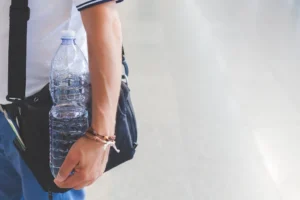
Staying properly hydrated is essential for our bodies and minds. Lack of fluids can impair cognitive and physical performance. Snagging an occasional bottled water at a gas station is a small convenience compared with fainting on a long hike or while playing volleyball in 93-degree heat.
But routinely purchasing single-serve bottled water can become expensive.
A 12-ounce still water bottle can run from about $0.99 at a supermarket to $2.00 or more at a convenience store. Buying a 12-pack of a store-brand water is generally cheaper — roughly $3.80, or just over 30 cents per bottle.
And that’s for plain water. Premium bottled waters with added minerals, flavoring or carbonation cost substantially more.
Bottled Water: Why Keep Tossing Money Away?
Americans clearly take hydration seriously. We consume water as if it were part of the daily grind.
Indeed, the average American drinks about 46 gallons of bottled water per person each year.
That amounts to a huge number of plastic containers, and they’re quite damaging to the environment. There are also health worries about single-use plastics because they’re made withphthalates, and research is growing on how those substances might impact people.
For now, though, let’s focus on how this habit affects your budget.
Reusable Bottle Alternatives
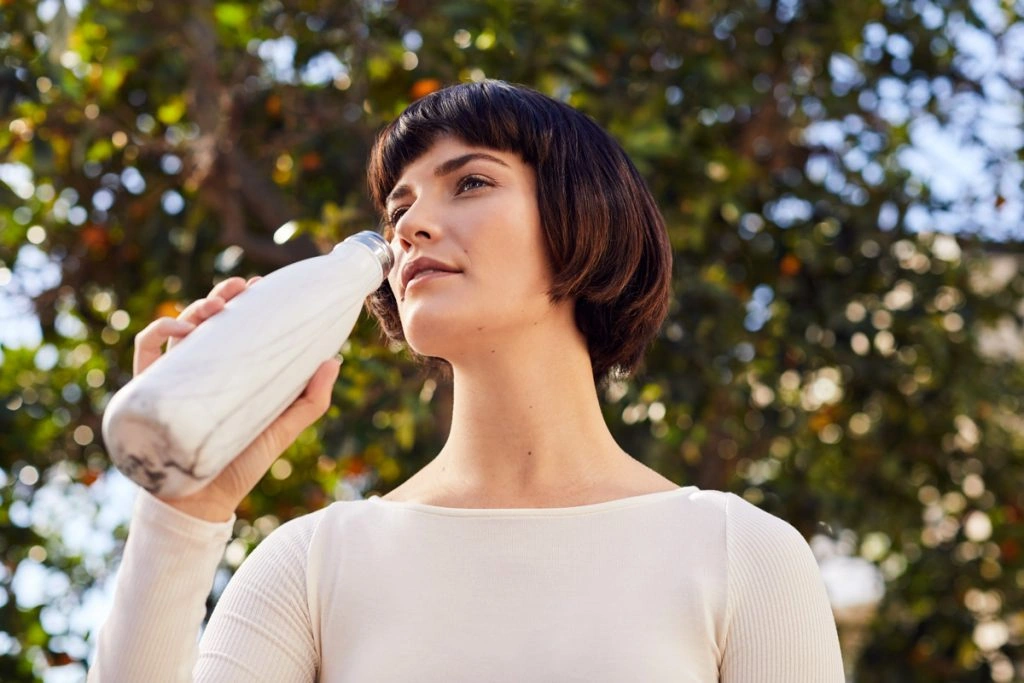
The straightforward fix for disposable bottles is to switch to refillable bottles you can top up yourself. Keep one at home, one at work and one in your car.
With over 100,000,000 plastic bottles used globally every day, opting for a reusable container benefits your finances, health and the planet.
Which features matter when selecting a reusable bottle depends on your routine and budget. Most options are metal, glass or plastic, but there are also combinations like metal with bamboo or ceramic. It’s crucial to clean your reusable bottle frequently to prevent mildew or mold growth.
Before you buy, consider your drinking habits so you pick a bottle you’ll actually use. Do you prefer a built-in straw? Will you clip it to a bike or backpack, so a handle or loop would help? If you use ice often, you might want a wide-mouth opening. If refills are easy, a smaller size is fine; if water is scarce while you’re out, a larger bottle is better.
Here are the common reusable bottle types.
Glass
Glass bottles are ideal if you want your beverage to remain free from other tastes or chemical leaching. There are shatter-resistant glass bottles sold for reuse (though these can be harder to recycle because of different manufacturing). Glass bottles usually include a protective sleeve.
They come in insulated and non-insulated versions. Insulated glass bottles are a bit heavier but help preserve a pure flavor.
Metal
Metal bottles are typically made from stainless steel or aluminum — both lightweight and considered safe. Metal containers are generally long-lasting, and stainless steel tends to be tougher than aluminum.
Aluminum is lighter but can sometimes cause a metallic taste to leach into drinks. Stainless steel may also impart a slight metallic note initially, but regular washing minimizes that. Confirm the interior lining (if any) is plastic and that the plastic is BPA-free.
Plastic
Plastic is the most common and usually the most affordable reusable bottle material. They come in many shapes and sizes, and some fold or compress for easy storage in a glove box, drawer or backpack. Plastic bottles often weigh least, even when insulated. Make sure your plastic bottle is BPA-free (check the recycling code on the bottom). Avoid bottles with recycling codes 3 or 7, and look for a BPA-free label.
What Will a Reusable Bottle Cost You?
Prices for reusable bottles vary widely.
Expensive but Long-Lasting
You can spend up to $99 on a bottle. If you pay that much, it’s reasonable to expect built-in purification and cleaning tech. That makes a $45 bottle look modest by comparison. These premium options are often aimed at outdoors enthusiasts who may need to filter water on trails.
Mid-Range with Handy Extras
Mid-priced bottles are not the cheapest, but they often include features you might appreciate. Extras can include a storage compartment for snacks, a fruit infuser, or even a Bluetooth speaker.
Refillable bottles in this category are ideal for people willing to spend a little extra for conveniences that aren’t essential but make staying hydrated more enjoyable. You’ll often find a great pick in the $12–$25 range.
Basic and Budget-Friendly
If you skip the extras, you can buy reusable bottles for just a few dollars. Discount stores like TJ Maxx often stock a variety of bottles, and dollar stores sometimes sell reusable bottles for under $5.
With the surge in popularity of premium stainless steel bottles, you might get lucky at thrift stores if someone donates theirs. That’s a smart way to find name-brand bottles at reduced prices.
Free Options
We’re fans of freebies. Reusable bottles are often handed out at events; take one if you can. Repurposed glass jars (thoroughly cleaned) can work in a pinch (though it looks odd with the old sauce label still on). You can also rinse and reuse a takeaway coffee cup for a short time.
Using an emptied single-use bottled water container repeatedly isn’t a great idea. Those bottles can start to degrade chemically after multiple uses.
Tap Water vs. Filtered Water
Some people carry water bottles for hydration at work or while out. Others buy bottled water to drink at home because they avoid tap water.
There’s no evidence that bottled water is inherently safer or healthier than tap water (unless a boil-water advisory is active). Bottled water is regulated for safety, though taste isn’t guaranteed. In some regions tap water has a noticeable flavor, or old pipes can impart a metallic taste.
Individuals can also be sensitive to water hardness. If you live where water is hard — meaning it contains higher mineral content — and you use a water softener, you might still prefer a filter to enhance taste. Hard water contains more minerals picked up from the ground; soft water has fewer minerals like calcium and magnesium and often more sodium.
Fortunately, there are methods to filter tap water before filling your reusable bottle.
Tap Water Filtration Choices
Time for some number-crunching. For each filtration option, we evaluated:
- The equipment cost amortized over a month;
- The daily cost to consume 64 ounces of water per day, which serves as a baseline for our math;
- The price of tap water. This can vary, but the average American household uses about 100 gallons per person per day, andthe typical monthly water bill is around $73. Using those figures, a gallon of tap water costs roughly $0.006.
We also calculated how many $1 bottled waters you would need to skip to recoup the investment for each filtration method.
Bottled water comes in many sizes and prices. To find a reasonable midpoint between bulk-priced flats and pricey single-serve bottles, our model used a 12-ounce bottle priced at $1, which equals about $5.31 per day.
Pitcher Water Filters
Pitcher filters are simple to operate: pour tap water into the pitcher, it passes through a filter in the lid, and you refill as necessary.
Cost of equipment: $20 for apitcher unit, and $18.25 for six months’ supply ofreplacement cartridges (each lasts about two months).
Cost per day: $0.76
How many $1 bottles to break even? 23
Countertop Water Filters
Countertop filters sit beside your sink and treat tap water, dispensing filtered water directly from the unit.
Cost of equipment: $65 for thesystem, and $38 for athree-pack of replacement filtersthat each last about three months.
Cost per day: $1.80
How many $0.99 bottles to break even? 88
Faucet Water Filters
Faucet filters attach to the kitchen tap to automatically filter water as it runs.
Cost of equipment: About $20 (and up) for thefaucet unit, which typically bundles six months of filters.
Cost per day: $0.67
How many $0.99 bottles to break even? 20
Refillable 5-Gallon Jugs
Many supermarkets, big-box stores and home improvement centers sell refillable five-gallon jugs. Bring the empty container back, refill at a kiosk, and bring it home.
Cost of equipment: $15 per jug and roughly $8 to refill (local pricing at Publix), plus $9 for a hand pump (and travel expenses).
Cost per day: $0.53
How many $0.99 bottles to break even? 32
Water Delivery Service
You can also arrange for five-gallon jugs to be delivered to your home. The supplier replaces empties when they’re swapped out.
Cost of equipment: A monthly average for 15 gallons of filtered water delivered with a dispenser is about $45, according to Fixr.
Cost per day: $1.23
How many $0.99 bottles to break even? 17
Also worth mentioning: reverse osmosis systems and whole-house filtration can provide consistently good-tasting water, but they typically carry substantial installation costs unless you’re handy with DIY.
Alexandra Pierce is a former staff writer at Savinly. Contributor JoEllen Schilke helped with this piece.