A few months back, a companion and I spent three weeks touring Ireland, Northern Ireland and Scotland.
The entire journey was self-directed, and we managed to explore much of the region on a tight budget. But before we exchanged dollars for euros and pounds, we bought a few practical items at home that made the trip easier and more comfortable.
Here are the wisest purchases to make prior to an extended overseas adventure.
Portable Power Bank and Extra-Long Charging Cords
When you’re discovering a new place,your smartphone quickly becomes indispensable. We relied on our phones for getting around (you can save by downloading offline maps in Google Maps instead of renting a navigation unit), for checking restaurant and pub reviews when we had Wi-Fi, and to stay in touch with friends, family and pets back home.
To avoid losing battery, we bought a portable charger (often called a power bank). This nifty gadget is compact and lightweight yet can provide multiple full charges during the day. Whenever we had downtime — while driving, in a hostel, even occasionally at a pub — we topped up our phones. This Anker model is affordable and can deliver nearly four full charges depending on your phone.
Most nights, my travel partner and I stayed in hostels (this is the most economical way to visit major European cities), so our beds were often far from outlets. Even in some B&Bs, electrical sockets were scarce. Having 10-foot charging cables solved that problem. This five-pack, which included a 10-foot cable, worked perfectly during my travels.
Total Cost: $45.98
Country-Specific Adapters
Your phone charger and other gadgets won’t do you any good unless you bring the correct adapter. Check what kind of outlets are used in the countries you’ll visit. You can also buy universal adapters that should cover most destinations.
Fortunately, Ireland, Northern Ireland and Scotland all use the same plug style, so I only needed to buy one inexpensive adapter.
Total Cost: $12.89
Neck Cushion with Eye Mask
Before heading to Europe, the longest flight I’d taken was four hours to Mexico — a morning flight I was too excited to sleep on. My trip from Columbus, Ohio, to Dublin, Ireland, however, was overnight and about six hours. I managed a few hours of rest thanks to the quality neck pillow I bought.
Even better? The pillow came with a sleep mask that blocked out incoming light. That was helpful on the plane (especially since we crossed time zones and it was bright at our destination), and even handier in hostels — for when roommates kept lights on late or returned tipsy in the night with flashlights. (Again, I strongly recommend hostels for their affordability, though they have their quirks.)
Total cost: $19.95
TSA-Approved Padlocks
We shared dorms in most hostels, so it was important to secure our bags in the lockers provided. Those lockers could fit my oversized duffel but didn’t come with locks.
I recommend buying two TSA-approved padlocks — one for your hostel locker and another to secure your daypack when you’re out and about. In many big cities, protecting yourself from pickpockets is wise. Having a lock on my bag offered extra peace of mind, especially after one too many Guinnesses at the pub.
Total Cost: $11.99
Proper Footwear and Waterproofing Spray
Much of our itinerary included hikes, particularly in the Scottish Highlands, and even city days involved far more walking than usual. If you don’t already own comfortable walking or hiking shoes, splurge on a good pair. If you’ll be in hostels, bring flip-flops for shared showers — you can often score an inexpensive pair at a store like Old Navy.
Because I hike frequently at home and own an embarrassing number of flip-flops, I opted to buy a waterproofing spray for my shoes. The waterproofer is a simple aerosol that applies a protective barrier to keep moisture out, though you’ll need to reapply it during the trip. Surprisingly, it only rained a few times, but on those wet days the spray proved invaluable.
Total Cost: $8.00
Packing Organizers
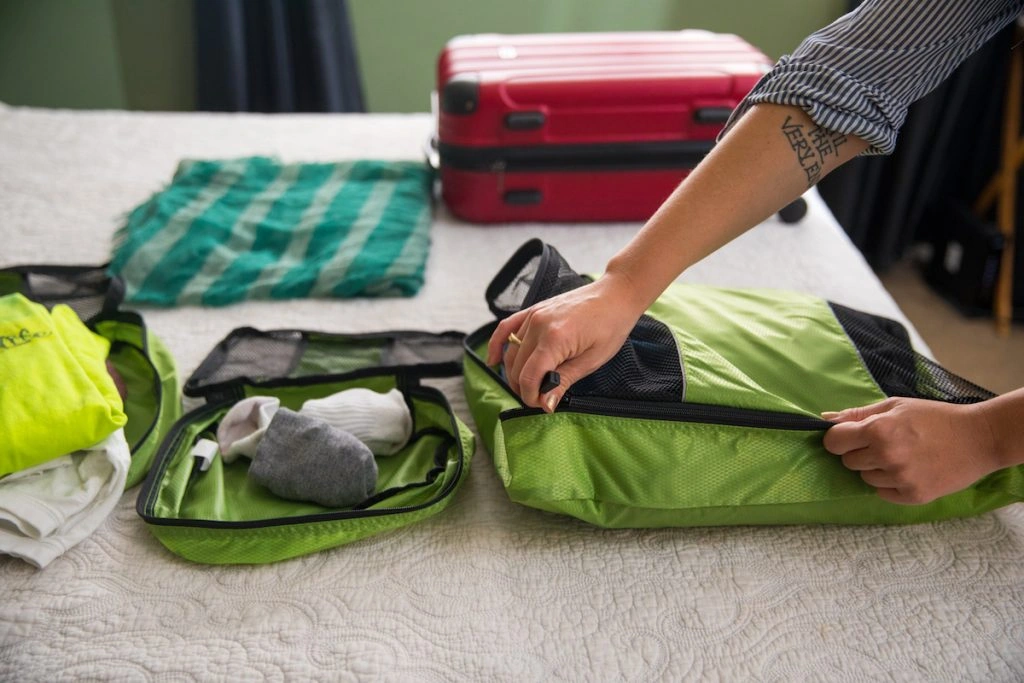
Staying neat while living from a single bag for three weeks can be tricky. Packing cubes simplify the process. These fabric organizers come in various sizes so you can separate and arrange your clothing within your bag.
I used one cube for casual shirts, sweatshirts and shorts (rolling clothes saves space and reduces wrinkles); another for pants and nicer shirts; a cube for underwear and socks; and one for dirty laundry. This made it easy to locate items (even in the dark) and packed everything neatly.
Total Cost: $25.98
Quick-Drying Microfiber Towel
If you plan to stay in hostels, remember most do not include towels (or they rent them out). That means you’ll want to bring your own towel — and it should dry fast so you can pack it away quickly. I showered at night and used a fast-drying microfiber towel that I hung on my bed and packed up in the morning. It was always dry by the next use.
Total Cost: $14.99
Purchases I Regret
I didn’t get everything right when buying gear before the trip. Here are a couple of items I wish I hadn’t bothered to purchase.
Extra Duffel
Several friends warned me I’d regret bringing rolling luggage to Europe because of stairs and cobblestones. So I bought a duffel instead, but it mostly sat in the rental car trunk or in hostel lockers — essentially an unnecessary purchase.
I can see the usefulness of a wheeled duffel or a proper hiking pack — I did once carry the 45-pound bag about a mile through Dublin because of a navigation mistake, and I truly wished it had wheels — but if you already own luggage that fits your items, youprobablydon’t need to buy a new bagjust for a trip overseas.
You should pack a small daypack for outings — whether hiking, strolling the city or visiting a site. It lets you bring essentials while leaving larger items safely stored.
Paper Road Maps
Call me old-school, but I was proud of the road atlases I bought and annotated with our planned routes before the flight.
Then I never used them.
We relied on Google Maps’ offline feature. If our phones had died (which shouldn’t have been an issue thanks to the power bank), roads were signposted well enough that we could have gotten to a shop to buy a map if necessary.
If foreign travel is on your calendar, spend money on quality gear now. You’ll generally pay a premium for necessities once you arrive (my companion dropped £40 on a scarf on a cold day in Edinburgh). Those upfront investments pay dividends — and make your trip far less stressful and more enjoyable.
Also consider scouting for cheap but handy items like travel accessories always buy at dollar tree before you leave — small savings on basics can add up and free funds for experiences abroad.