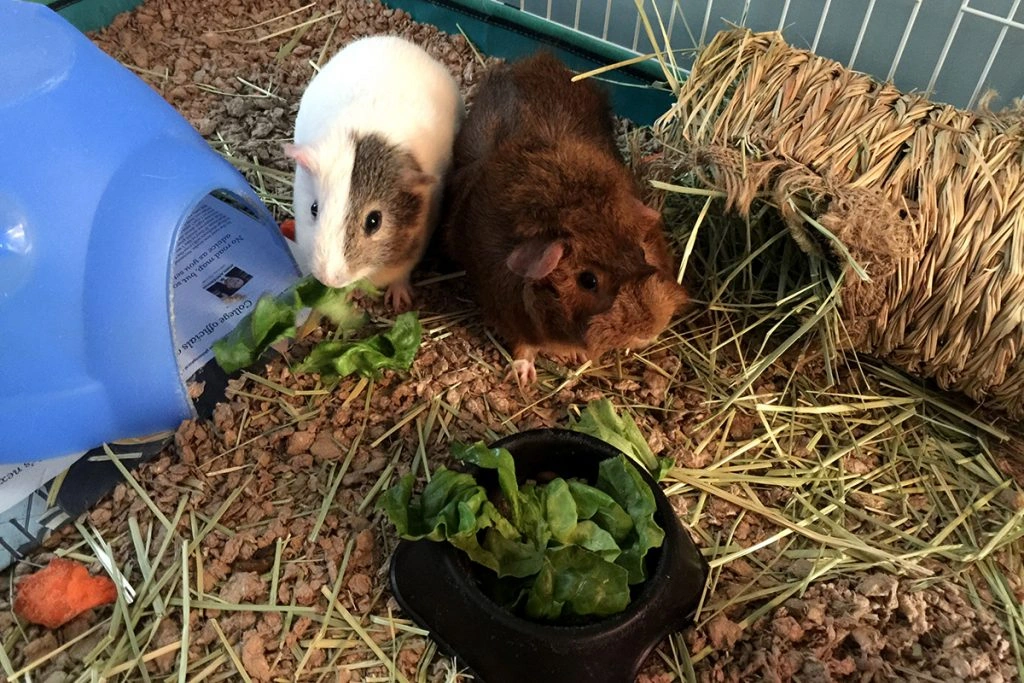
I’ve cared for two guinea pigs, Cocoa and Sugar, for nearly five years, and they’ve been delightful companions. They’re easygoing, low-maintenance and absolutely adorable.
But like any pet, guinea pigs come with expenses. Through trial and error I discovered what’s essential to purchase and what can be skipped.
Habitat
The first item you’ll need after adopting a guinea pig is a proper enclosure. Not every small-animal cage is suitable for guinea pigs. Guinea pigs shouldn’t live in wire-bottom cages like some rabbits do. They require solid flooring to protect their delicate feet.
I found most pet-store cages to be overpriced and undersized. The Humane Society of the United States suggests housing up to two guinea pigs in a cage that’s at least 7.5 square feet. Many marketed guinea-pig cages are considerably smaller than that.
I opted for an uncovered MidWest guinea pig cage I bought on Amazon for about $35. It was both cheaper than the pet-store options and spacious enough for my pair to have their own spots and exercise. (Male guinea pigs especially appreciate extra space to avoid squabbles.)
Many owners choose to make their own cage. Materials are available at most hardware and office-supply stores, letting you build a custom enclosure affordably. Alexandria’s Animals on YouTube offers a guide on how to build a C & C (cubes and corrugated plastic) cage.
Bedding
Bedding is where I spend most of my guinea-pig budget because we clean the cage at least once a week.
The simplest bedding choice is natural paper bedding, sold at pet stores, big-box retailers and some supermarkets.
I discovered Amazon to be the best place for bedding bargains. I search for guinea-pig bedding and compare price per liter. Typically a 60L bag of paper bedding costs around $15; sometimes it’s on sale near $13. One bag usually lasts almost a week in our household.
The key is not to be brand-loyal. I’ve even bought confetti-colored paper bedding because it was the cheapest option.
A cost-saving long-term alternative is fleece. Plenty of owners use fleece liners since they’re reusable and many guinea pigs find them cozy.
You must use the appropriate type of fleece, which lets urine wick through to an absorbent layer underneath. Seek out 100% polyester anti-pill fleece. Prep the fleece by washing and drying it three to five times in hot water with detergent, avoiding fabric softener and dryer sheets. Repeated washing removes the protective finish and allows liquids to pass through.
After prepping, place the fleece in the cage over an absorbent base such as paper bedding, puppy pads or layers of newspaper. Jessica’s Nerd Life has a video that demonstrates how to ready fleece for guinea pig cages.
I’ll be frank: I tried fleece and it didn’t work for me. I didn’t want to sweep up hay and droppings daily. You need at least two prepared fleeces — one in use and one in the wash — and despite my efforts the odor control wasn’t satisfactory. I returned to paper bedding.
You might consider newspaper as a cheap bedding alternative, but I don’t advise it. Newspaper soaks up urine and can leave your piggy in a soggy, smelly environment within a day.
Also, avoid pine or cedar shavings for guinea pig bedding. Although still sold in stores, the oils and resins can harm small animals. The aromatic compounds in pine and cedar can irritate a guinea pig’s skin, eyes and respiratory system.
Food
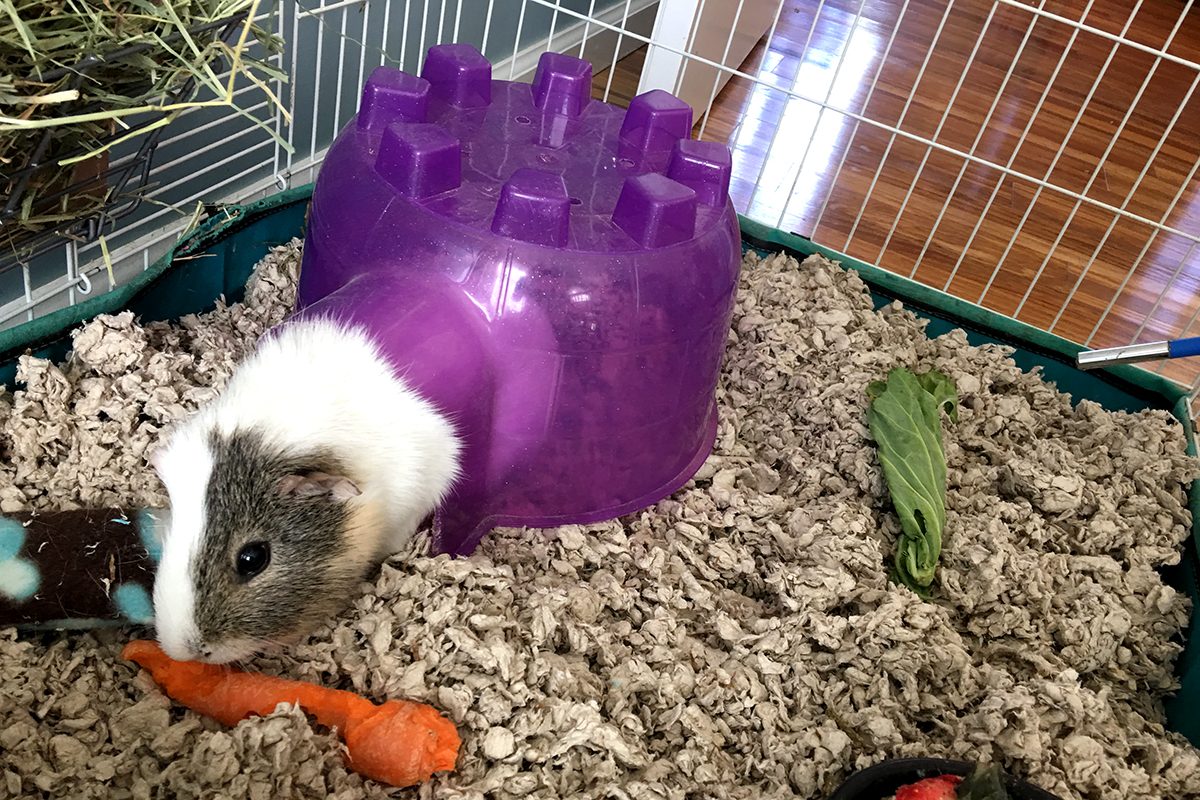
Hay is essential for guinea pigs, with Timothy hay being the preferred choice. Besides offering nutrition, hay encourages chewing that keeps their teeth from overgrowing. Like rabbits, guinea pigs’ teeth continually grow and must be worn down with tough forage.
Pelleted food is also necessary, ideally made from Timothy hay. Pellets based on alfalfa are higher in calcium and can increase the risk of bladder stones.
I buy pellets and Timothy hay on Amazon. Since I don’t stick to one brand, I choose the most economical options. Usually I pick up a five-pound bag of Kaytee pellets for about $6, which lasts several months.
Don’t be tempted by pellet mixes with colorful extras — those sugary or non-nutritive bits are unnecessary. VetBabble compares them to adding candy to healthy food.
Guinea pigs also need fresh fruits and vegetables because they can’t synthesize vitamin C. I offer carrots, kale and the occasional strawberry as treats, along with small pieces of apple now and then.
The good news is they’re not overly finicky. Check your grocery store’s produce clearance for discounted fruits and veggies. My store has a shelf of slightly bruised or spotted produce sold for about a third of the usual price. My pigs don’t mind carrots that are a little browned. (I avoid feeding anything rotten.)
Chews
As noted earlier, guinea pigs need objects to gnaw on to maintain proper tooth length. Retail stores sell wooden chews and hay blocks, but those items can be pricey and unnecessary.
Guinea pigs will happily chew cardboard, which is likely abundant if you get regular deliveries. I reuse boxes from online orders to build cage “extensions,” and the pigs enjoy nibbling the flaps.
You can also offer a paper towel or toilet-paper tube to chew — stuff a bit of lettuce or other veggies inside to create an engaging treat toy.
What Not to Buy
Many products marketed for guinea pigs are needless expenses. Here are items you can confidently skip.
Litter. Guinea pigs are difficult to litter train, so it’s usually a waste of money.
Toys. Guinea pigs don’t tend to play with manufactured toys. Cardboard boxes and tubes provide plenty of entertainment. You can fashion tunnels and mazes from cardboard for exercise and enrichment.
Clear exercise balls. Guinea pigs aren’t hamsters and won’t enjoy rolling around in a large clear sphere. They typically just sit bewildered.
Fancy houses. While guinea pigs like to have something covering them, they don’t require elaborate dwellings. A simple plastic igloo or a cardboard box is perfectly fine.
Pillows. Cute videos of guinea pigs lounging on tiny pillows might tempt you to buy some, and I bought a couple from Etsy myself. My pigs ignore them completely.
Finally, if you’re trying to save on monthly bills, these small choices — choosing affordable bedding, buying hay and pellets in bulk, reusing cardboard and skipping gimmicks — add up to meaningful savings without compromising your pets’ wellbeing.
By focusing on the essentials and avoiding overpriced extras, you can give your guinea pigs a healthy, comfortable life while keeping costs manageable.