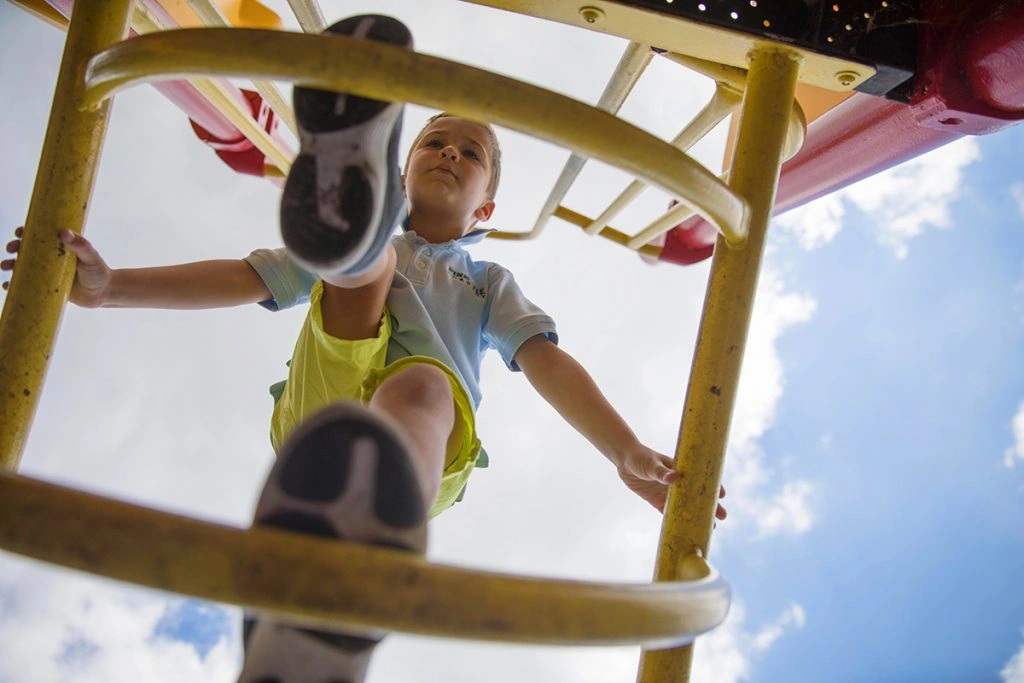
Spending on amusement-park admission or a movie ticket only to have your child demand to leave 10 minutes in is frustrating.
Kids with autism or sensory processing differences often find common entertainment options overwhelming. April is National Autism Awareness Month, and thankfully, kid-friendly venues are increasingly offering inclusive, sensory-considerate experiences designed for children with special needs.
“Providing chances where the surroundings are controlled… that will be ideal for a child who is overly sensitive to sensory input,” said Mary Kate Yaukey, a first- and second-grade teacher in Palo Alto, California, who supports children on the autism spectrum and those with sensory-processing challenges.
“When a child is having sensory overload, it can present in various ways, but frequently it shows up as meltdowns or explosive behavior,” she added.
Below is a list of locations that offer play or entertainment tailored to children with sensory sensitivities. This list isn’t exhaustive. For additional options, Autism Speaks maintains a calendar of autism-friendly events.
Amusement Parks
Sesame Place, the Sesame Street-themed park in Langhorne, Pennsylvania, was recently named a Certified Autism Center, reportedly the first theme park to earn that recognition.
Park staff — which reopens for the season on April 28 — have completed specialized training to better assist children with special needs. Sesame Place offers noise-cancelling headphones and quiet rooms along with other supports for guests with sensory-processing differences.
Other theme parks are adding sensory-friendly options as well.
Splash Lagoon, an indoor water park in Erie, Pennsylvania, will host a Sensory Day on May 25. The event will feature reduced noise levels, a quiet room for families needing a break, limited ticket sales to control crowds and extra staff available to help.
Arcades
Chuck E. Cheese’s organizes Sensory Sensitive Sundays. Participating locations open two hours early on the first Sunday of each month so children with autism and related needs can enjoy the arcade with dimmer lighting, quieter noise levels, fewer crowds and limited mascot appearances.
Dave and Buster’s doesn’t run a formal sensory program nationwide, but some venues reserve quieter blocks of time. A CBS-46 affiliate in Atlanta reported that Dave and Buster’s in Myrtle Beach, South Carolina, welcomed 30 families with autistic children for a three-hour session on April 4, turning off overhead music and offering private rooms for those needing a break from stimulation.
Children’s Museums
Numerous children’s museums carve out time specifically for kids with sensory-processing challenges.
The Children’s Museum of Atlanta runs Sensory Friendly Saturdays on the first Saturday each month — and throughout every Saturday in April. The museum opens an hour earlier, adjusts lighting and sound and limits attendance.
Great Explorations Children’s Museum in St. Petersburg, Florida, hosts a program called Great Connections. On the second Sunday of each month from 10 a.m. to noon, the museum welcomes children with special needs, adapting the lights and sound and offering a quiet space for families.
WOW! Children’s Museum in Lafayette, Colorado, provides low-sensory play sessions for autistic children and those with sensory-processing disorders. Upcoming sessions include May 6 from 8 a.m. to 10 a.m. and July 15 from 8 a.m. to 10 a.m.
Movies
Several movie chains offer sensory-friendly screenings where lights are kept slightly on and sound levels are reduced, and moviegoers are allowed to move and make noise as needed.
AMC Theatres hosts sensory-friendly showings every second and fourth Saturday for children and on Tuesday nights for older audiences.
Regal Cinemas calls their sensory showings “My Way Matinees.” Check this directory of participating theaters for dates and schedule details.
NCG Cinema lists upcoming sensory-friendly screenings including May 5 (“Avengers: Infinity War”) and June 22 (“Incredibles 2”).
Playgrounds and Play Centers
Magical Bridge Playgrounds in Northern California provide free outdoor play spaces designed to include children of all abilities, including those with special needs and disabilities.
Not every child with sensory processing differences seeks a low-stimulation space. Yaukey noted Magical Bridge Playgrounds can be ideal for kids who thrive with more sensory input.
Local playgrounds might also suit children on the autism spectrum. Jennifer McCarthy, Savinly’s video director, brings her 5-year-old autistic son, Raef, to Heritage Harbour Playground in Bradenton, Florida. She says he enjoys spinning a toy steering wheel and playing with tic-tac-toe panels there. When they need a breather, they can stroll around the lake.
Certain indoor play centers also welcome children with sensory needs.
Roo’s World of Discovery in Kirkland, Washington, frequently schedules low-sensory hours when parents can book calmer play sessions with smaller crowds and reduced stress. Current slots are Monday, Wednesday, Thursday and Friday from noon to 2 p.m.
Some facilities maintain an inclusive approach all the time. McCarthy says she often visits Morgan’s Place, a multisensory center in Melbourne, Florida, that caters to special-needs children throughout its operating hours.
Nicole Dow is a staff writer at Savinly.