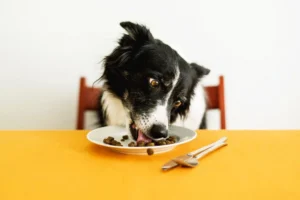
If there’s one thing dog owners will tell you about their pets, it’s that they adore eating. Unless trained otherwise, most canines will beg at the dinner table for scraps or sprint from the other side of the house the moment a cheese wrapper crinkles.
This appetite also means that many dogs tend to gobble their meals as quickly as possible. In households with multiple dogs, this impulse is often amplified as each pup races to ensure another doesn’t get the food first.
Sadly for our meal-obsessed companions, eating too fast can be extremely hazardous. Much like people who wolf down their food, dogs are at risk of choking or gagging when they swallow too rapidly. More critically, dogscan experience gastric dilatation and volvulus (GDV), commonly referred to as canine bloat.
As Pets.WebMD.com explains, bloat can happen when a dog’s stomach fills with food or gas and expands. Eventually the stomach may inflate so much—like a balloon—that it can tear, impede blood flow and make breathing difficult. The stomach might also twist, trapping blood and potentially sending the dog into shock.
This is a life-or-death, time-critical emergency for dogs. If you suspect your dog is suffering from bloat right now, contact your veterinarian immediately. Here are typical signs of canine bloat to be aware of.
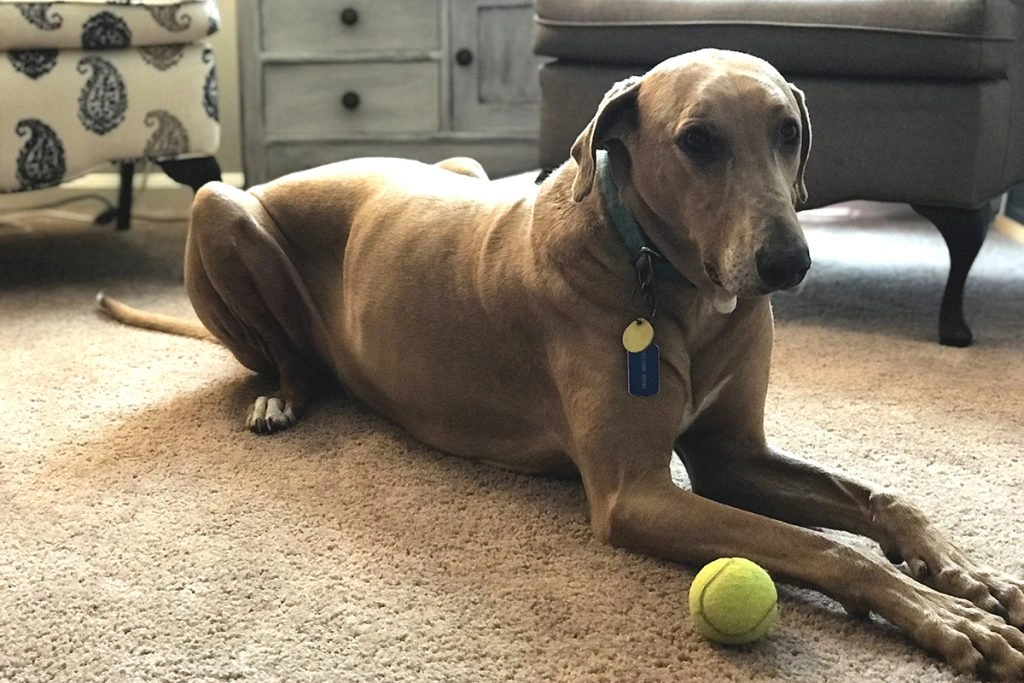
While any dog can develop bloat, it’s more common in males and generally affects larger breeds such as Great Danes, Boxers, Weimaraners, German Shepherds and similar types. As the caretaker of a Great Dane and a Weimaraner/Greyhound mix, I don’t take the risk lightly.
So what leads to canine bloat? Broadly speaking, overeating and eating too quickly are the primary offenders, and vigorous activity soon after a meal is also thought to potentially contribute.
The best approach as a dog caregiver is to offer smaller meals throughout the day and make sure your dog eats more slowly.
Several commercially available items can help reduce a dog’s eating speed for as little as $10. A quick search on Amazon turns up many choices; however, I’ve often found that many slow feeders are too small for the very large dogs who face the highest risk of bloat. Although I’ve enjoyed using interactive feeders like this Busy Buddy dispenser and this food puzzle toy, I discovered I can easily repurpose items I already have at home to create slow-feeding solutions for free!
DIY Dog Slow Feeder Alternatives
Below are several do-it-yourself ideas for slowing a dog that eats too quickly that I’ve used with my two pups.
Feed Dogs Separately
The first tactic I already mentioned, but it made such a noticeable change in how quickly Clyde, my Great Dane, eats that it’s worth repeating: feed your dogs one at a time.
Now that Clyde eats after Greyson (my Weimaraner/Greyhound mix), he’s learned he doesn’t have to race through his meal because Greyson has already eaten and won’t be stealing from his bowl.
Smaller Meals Spread Through the Day

Another straightforward strategy is to divide meals into smaller portions served throughout the day. Many of the methods below work particularly well with smaller quantities of kibble. Additionally, consuming a large amount in one sitting can heighten the risk of bloat.
A dog as large as Clyde should receive about 8 to 12 cups of food daily, depending on the brand and formulation. I can’t picture giving him all of that in a single meal. Instead, I split his 8 cups into two feedings and have considered moving to three.
Muffin Trays
You can effortlessly recreate the $10–$20 slow feeders sold in stores with that old muffin pan hiding in the back of your cupboard. Simply evenly portion your dog’s meal into each muffin cup and place a tennis ball over each one. Your dog will need to nudge the tennis balls off each cup to access the food.
To vary the challenge, you can turn the muffin tin upside down and fill the small gaps between the inverted cups with food so your dog must use his tongue or paws to work the food out.
Tennis Balls

An even simpler use for those tennis balls—especially if you don’t want slobber on your favorite baking pan—is to drop one or two tennis balls into your dog’s bowl with the food. The balls make eating trickier and slow the dog down.
That said, the muffin tin option gives more mental stimulation than this quick fix. But if you’re pressed for time, this is an easy way to enforce slower eating.
Frozen Bowl Treats
When Greyson had separation anxiety, my vet recommended this homemade toy, which I now use to promote leisurely eating. Take an empty dog bowl and spread a very thin layer ofpeanut butteron the bottom, then add the kibble so it’s distributed evenly over the peanut butter. Press the food into the peanut butter until it sticks, and place the bowl in the freezer.
At mealtime, remove the bowl. Your dog will have to lick and work at the frozen food for quite a while to free the pieces, and he’ll enjoy the peanut-butter reward at the bottom. Just be sure to offer plenty of water.
A note about the separation anxiety use: This trick was excellent for occupying Greyson when I left home. He’d get a small frozen treat that kept him busy for around 15 minutes and helped reduce his distress when I walked out the door.
Hide-and-Seek Feeding
Dogs love a food-based scavenger hunt. Clyde is trained to wait on the first floor until I give the signal; then he’ll come find me hidden on the second floor. But as much as Clyde adores me, he adores food more, so playing hide-and-seek for meals is a blast for him.
Restrict your dog to one room, then hide portions of her meal in suitable spots in another room (behind the couch, on the coffee table, on a lower stair) and let her locate and eat them. On pleasant days, you can do this outdoors—just ensure all food gets retrieved so you don’t invite ants.
One warning: if your dog gets overly hyper while doing this, don’t repeat the activity. Excessive exertion after eating can raise the chance of bloat. Simply moving to the next location to eat is fine, but if she’s bouncing off the walls, that’s not recommended.
Use Tricks as a Feeding Method

This homemade approach also doubles as obedience practice. Have your dog earn each bite by performing sits, paw shakes, downs, stays, rolls or any tricks you two know. It’s a great chance to teach new behaviors, too.
Slow feeders bought online aren’t very expensive, but I prefer to get inventive with items around the house to slow down my two mutts. It creates more bonding time with my boys and saves me the $20 every few months I’d spend replacing a slow feeder they’d inevitably destroy.