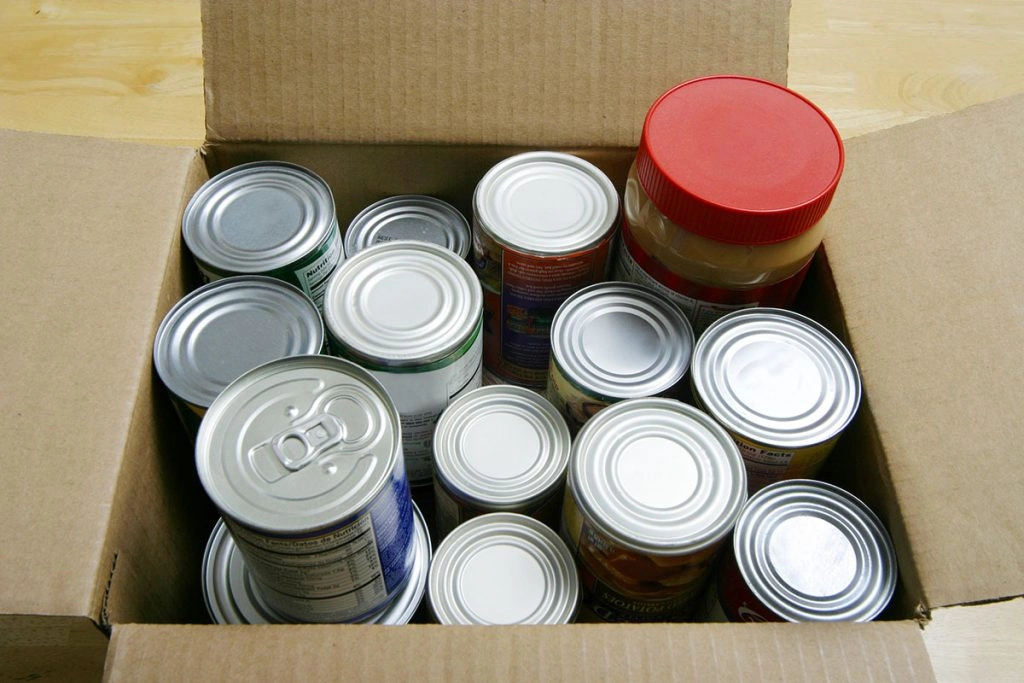
Do you feel prompted to veer off your routine to grab a few cans of lima beans or a jar of peanut butter? Or will you dig through your cupboards for a stray can of chickpeas an old roommate left behind?
Or have you ever thought about contributing straight-up cash to that deserving organization instead?
Food drives are well-intentioned, but they might not be the most effective way to get nourishment to people who need it.
Sorry, but Food Drives Are Inefficient
In 2016, roughly 15.6 million households in the U.S. experienced food insecurity, meaning they don’t always have enough food to adequately feed everyone living there. Meanwhile, an astounding amount of edible food is discarded in the U.S. each year.
What can an ordinary person do to help? Organizing or giving to a food drive appears to be a sensible choice — after all, it’s a small tangible action you can see. It’s right there! The stacks of food are right there, and they’re headed to places that feed people in need. And if you’re a careful shopper, you may have used coupons or found a bargain on those cans and boxes.
So why do we keep seeing headlines like these?
Food bank says to donate money instead of food
For the love of God, stop donating canned goods to the food bank
Can the Cans: Why food drives are a terrible idea
It’s because food drives mean well, but they aren’t the most efficient method of feeding the hungry.
An assortment of donated items requires effort to transport, sort and distribute, and food banks often lack sufficient staff or have trouble keeping volunteers.
On top of that, canned and shelf-stable foods aren’t always the healthiest options. Feeding America notes that recipients most commonly request milk, and fresh fruits and vegetables. Those items don’t travel well in a donation box that might sit in your apartment lobby for weeks.
In a televised interview, the director of one Iowa food bank explained that her organization can frequently acquire food for half the price you’d pay at the grocery store or less.
Genevieve Ruitort, chief development officer of Los Angeles’ Westside Food Bank, verified that food banks often purchase food more cheaply. “We buy food at a wholesale level, and we collaborate with farmers so we can take the dollar you might spend on a single can of beans, and convert it into exponentially more food,” she said during a segment on “Adam Ruins Everything.” The TruTV program exposes false beliefs about how the world — including canned food drives — operates.
There are worse choices than running or giving to a food drive. You could toss your cans into the closest body of water, for instance.
But the most meaningful contribution you can make toward easing America’s food insecurity is donating money — even a modest amount.
Alex Martin is a senior writer and producer at Savinly.