My spouse and I had a “buy one, get one free” voucher for lunch at a Mexican eatery. When we sat down, I realized it wasn’t truly BOGO — it was “buy one, get the second half off.”
The voucher also required purchasing two soft drinks to redeem it — and we normally drink water — plus it was only valid during the off-season, which didn’t start for another month.
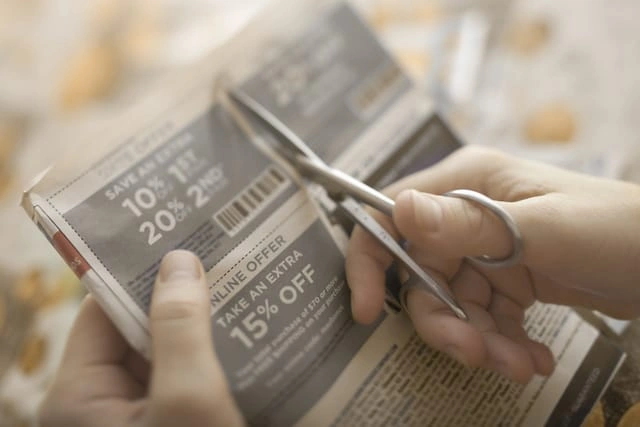
I could have pressed for coupon fairness, since I’d clipped it from a paper the day before.
Instead I did a quick bit of math, tossed the coupon and saved at least $10 by simply sharing an order of fajitas (they were tasty and plenty filling).
I don’t usually miss the fine-print details, and hopefully you don’t either.
But there are lots of ways to go wrong when using coupons to cut costs. Whether you’re trying to reduce grocery bills, dining expenses, household purchases or anything else, steer clear of the couponing errors below!
1. Buying Items You Don’t Really Need
Who hasn’t been lured into buying something merely because it’s on sale?
Of course, that often leads to spending more money, not less.
It’s fine to use a coupon to test a new product, but avoid purchasing items that will sit unused. Also skip purchases that have no practical use (see the next mistake for an example).
2. Letting Coupons Dictate an Unhealthy Diet
A downside of “extreme couponing” is being tempted to buy products solely because they’re discounted.
A habit of grabbing whatever is the “best deal” can be dangerous because, as research shows, many supermarket coupons favor unhealthy items.
Potential future medical costs could outweigh the savings you score now. Throw away junk-food coupons.
3. Misreading BOGO Offers
Many BOGO deals aren’t literally “buy one, get one free.” They often mean 50% off the second item.
That’s effectively a 25% discount overall — and waiting for a sale might yield better savings.
BOGO deals can also coax you into buying two units when you only need one. Additional conditions — like needing to buy drinks at a restaurant — can add to the expense.
Read the small print!
4. Applying Coupons to Large Sizes
You might grab the largest tube of toothpaste or biggest can of soup assuming the coupon saves the same regardless of size.
But, as outlined in our coupon strategy guidance, you frequently get a better unit price by using coupons on the smallest qualifying sizes.
5. Picking More Expensive Brands
It’s easy to feel like you’re scoring a great deal when you hold a high-value coupon.
After all, a $0.50 coupon on a $2 box of crackers is a full 25% off.
But if the store brand costs $1.25 and tastes identical, you’re spending an extra $0.25.
Coupons can coax you into buying pricier brands that remain costlier even after the discount. Do the arithmetic.
6. Buying More Than You Can Use
Coupons can also encourage buying more than necessary.
First, a coupon may require purchasing multiple units when you don’t need that many.
Second, if you stock up on perishables because of coupon deals, you could waste food if you can’t consume it in time.
Purchase only quantities you can reasonably finish before they spoil.
7. Choosing the Wrong Size or Variety
You reach the checkout and the cashier says your coupon isn’t valid for the small juice size, or it only applies to certain soup flavors. Do you return the item or buy it anyway?
Again — read the fine print to avoid this. See the next tip to handle it at the register.
8. Not Monitoring the Register
Some cashiers won’t alert you when a coupon fails — and you might not realize until later.
To prevent this, watch the register closely while your items are scanned. Also place couponed items on the belt last so you can easily spot and remove them if the coupons don’t work.
9. Overlooking Expiration Dates
This is likely the most common coupon error.
Inspect coupons carefully. Toss them once they expire so you don’t accidentally try to use them.
10. Using a Coupon at the Wrong Retailer
Many stores issue coupons for national brands that are only valid at that specific retailer.
Keep those separate from manufacturer coupons that can be used anywhere.
11. Being Disorganized
If you lack organization, you’ll show up at checkout with expired coupons.
Worse, you may pay full price for items while valid coupons are hidden somewhere. Set up a straightforward coupon system that suits you.
12. Missing Opportunities to Stack Savings
You usually can’t use two manufacturer coupons on the same product, but don’t miss other ways to “stack” discounts.
Often you can pair a store coupon and a manufacturer coupon on one item, or use a coupon during a sale.
You can also combine discounted gift cards with coupons for big savings. I paired a sale, a coupon and an Amex Offer to cut a recent cat food purchase nearly in half.
13. Not Signing Up for Loyalty Programs
You’ll miss special pricing on many items if you don’t have a store loyalty card. You may also forfeit extra coupons.
For example, when you enter a CVS store and scan your ExtraCare card at the kiosk by the door, it often prints several coupons.
Store loyalty members frequently receive coupons and offers via email — so enroll!
14. Forgetting to Search for Online Coupons
It’s tempting to find the lowest online price and checkout immediately. Big mistake!
Open a new tab before completing your purchase and hunt for online promo codes. You might save an extra 10% or more by entering the correct code at checkout.
Also consider resources like one moms couponing tips for grocery shopping for practical couponing advice and grocery-saving strategies.
15. Spending Excessive Time Couponing
If you love couponing, the time you invest may feel worthwhile.
But if couponing is just a means to save cash, don’t pour endless hours into hunting deals and sorting coupons.
Keep it streamlined and practical, or your time could be worth less than minimum wage after factoring in your savings effort.
Your Turn: Have you fallen for any of these couponing traps? Would you add any others to the list?
Alex Mercer is the author of “101 Clever Ways to Make Money” and runs EveryWayToMakeMoney.com. He’s worked various odd jobs — from bike messenger to mystery shopper to carnival worker — and among the many ways he’s earned income, writing remains his favorite.