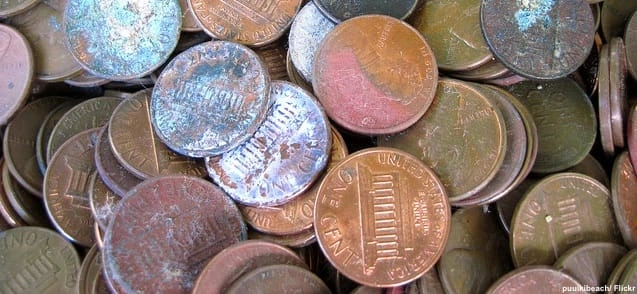
Let me introduce you to a different sort of penny hoarder. These collectors might never have seen this blog (they’d be welcome, of course), but they share a common trait: they recognize the worth of those small copper discs we fondly call pennies.
There’s one thing that likely distinguishes them from the typical saver; they actually purchase and amass pennies…
Why Are Some Americans Stockpiling Pennies?
Chances are you know the classic practice of literal penny collecting. First, locate an old or uncommon minting of a penny. Then sell it to coin enthusiasts willing to pay a premium. But there’s a different motive behind the modern penny stash.
In recent years, copper prices have surged. Just last January, copper hit a high of $3.649 per pound. With roughly 146 pennies per pound, the copper content in a single penny is worth about 2.5 cents.
That’s attractive! Buy a penny for one cent and sell its copper for around 2.5 cents? How often do you find a deliberately undervalued asset that’s so easy to acquire?
Not Every Penny Is the Same
The “copper standard” pennies are those minted in 1982 and earlier. Pennies from that period are composed of 95% copper.
Newer pennies are manufactured using a zinc core with a copper plating to reduce production costs and metal value.
One Major Caveat
If earning money from pennies sounds too good to be true, there is a catch. It’s illegal to melt down currency and sell it for scrap. You also can’t take large amounts of pennies out of the country. It’s unlawful to leave the U.S. with more than $5 in pennies. Many penny hoarders are simply stockpiling coins in hopes laws will shift and they’ll be able to cash in on their reserves.
Eliminating the penny isn’t a fringe idea. The Canadian government recently did away with the one-cent coin, citing production costs. Proposals to retire the penny have appeared in the U.S. as well. In 2006, Congress considered ending the penny. If the penny were removed from circulation, penny hoarders could legally sell the coins as scrap metal.
You Can Profit from Selling Pennies Today
The good news for those entrepreneurial about penny hoarding is you don’t necessarily have to wait for lawmakers to act to make money from pennies.
As with any market, some players tolerate higher risk. These investors are accumulating pennies now hoping regulations will change and yield a significant payoff. But they still need coins, and getting rolls from banks typically yields many pennies from 1983 onward. That gap has spawned penny entrepreneurs who collect and sell pre-1983 pennies to hoarders. Here’s the process:
- They gather pennies from banks, retailers and their own change jars
- Sort through the collection for pennies dated 1982 or earlier
- They sell these older pennies in bulk on marketplaces like eBay to buyers aiming to hoard for potential legal changes
Pennies can move in bulk for about 2 cents apiece on platforms like eBay (watch out for seller fees) and on dedicated penny-hoarding communities (yes, those exist). After postage and fees, sellers can see about $0.76 profit for every $1.00 of pennies they move.
For anyone curious about related coin-or-change topics, check out resources like loose change at tsa, join the penny hoarder community, or read about why Americans still writing checks in certain contexts.
Best of luck, Savinly readers! (both types…)