When you hunt for methods to trim your electricity costs, you’ll encounter plenty of products promising massive savings.
But there’s a caveat: Many of those figures include broader benefits such as public health improvements, societal gains and environmental advantages. Those headline savings aren’t necessarily the reductions you’ll seeon your monthly statement.
I work in energy efficiency, handling oversight, audits, savings estimates and cost-benefit work daily. Although this guidance is independent of my job, I’ve found that experts often disagree about the exact savings you can expect at home.
For instance, in study after study, residential programmable thermostats frequently fall short of their touted savings. That’s partly because many people were already operating manual thermostats in energy-conscious ways — and partly because a lot of users don’t know how to use programmable thermostats correctly.
So what practical, low- or no-cost steps can you take to actually lower your electric bill? Below is a beginner-friendly list of easy actions that can make a noticeable dent in your expenses.
1. Call Your Utility
Ask, and you’ll often get a helpful surprise.
This might sound odd, but in many places it’s the simplest and most powerful first move.
Most U.S. utility companies must run “Energy Efficiency” or “Energy Smart” initiatives funded in part by customer bills. Call and ask about your utility’s programs, how to participate and what steps you need to take to benefit.
For example, certain states offer direct load control programs, where you allow the utility to cycle off your air conditioner, water heater or other appliances for short intervals during peak demand. Most people don’t perceive any change in comfort; I certainly don’t.
In exchange you receive a bill credit, which can vary widely — from about $147 a year in some Florida Duke and FPL programs to around $5 per month with Idaho Power. Plus, you avoid paying for the electricity you didn’t use during those brief curtailments.
2. Unplug Energy Vampires
This is one of the easiest ways to save money almost immediately.
Just being plugged in when idle costs real money: your DVR alone can cost $43.46 annually, or $3.62 monthly, according to the Department of Energy. Chargers draw around 0.26 watts when not in use, and 2.24 watts plugged into a fully charged phone. Devices like an Xbox and a TV each use roughly 0.15 kWh per hour, Duke Energy estimates.
What should you do?
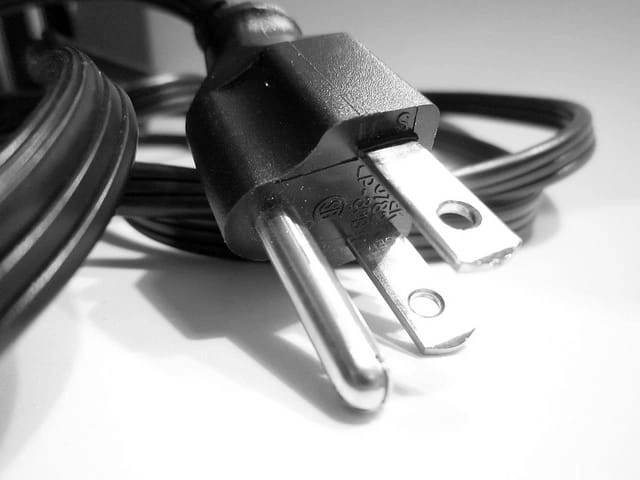
Unplug chargers when they’re not powering a device and detach them from fully charged phones. Leaving a charger in the outlet while you’re away for nine hours can cost roughly 10 cents a day. In the typical household with 25 gadgets — including Kindles, iPads, rechargeable flashlights, cell phones, laptops and MP3 players — that adds up to around $2.50 a day or $935 a year for energy you didn’t need (plus applicable taxes).
If you keep a DVR, you likely know its usage pattern. You don’t need an expensive smart-home setup. Use a simple timer (like the one for holiday lights) and set it to power the DVR an hour before you usually start watching; that’s plenty of warm-up time.
Even people at home won’t watch TV while unconscious, so there are definite windows when you can turn the DVR off. If you have two units, you’ve just shaved about $87 off your yearly bill.
3. Replace Light Bulbs — Eventually
The common advice is to swap to the most efficient bulb available immediately. But you don’t have to rush.
The reality is many early LED bulbs sold in recent years underperformed, overstated their benefits, were pricey and came with long cautionary labels. Claims like “lasts 20 years” are often based on three hours of daily use, which isn’t realistic for many households.
Ask your utility for guidance. See if they provide home audits, energy kits or discounted bulb programs.
In certain states, auditors will hand out freebies to boost efficiency, including bulbs to replace incandescents and halogens. You’ve already paid into these programs via your bill, so take advantage. If you must purchase bulbs, check whether the utility subsidizes efficient bulbs at local retailers.
Start with outdoor and yard fixtures. Many homes have post lamps and garage lights that come on at dusk and stay lit through the night — often the most-used bulbs and therefore the biggest energy drain.
A 100-watt incandescent running 10 hours nightly consumes 1 kWh. At the national average rate, that’s about 12 cents per night per bulb, or $44 annually. A comparable CFL uses 16 watts and costs roughly two cents per night or $7 a year.
Each outdoor incandescent you swap for a CFL saves roughly $37 a year, a bit over $3 per month. CFLs also last far longer than incandescents, so you save time and hassle changing bulbs.
Indoor lights are used less, CFLs’ warm-up can be annoying and per-bulb savings are smaller. They’re still worth replacing, but you may prefer LEDs for interior lighting.
LEDs or CFLs?
Most LEDs remain relatively costly today, but prices are dropping rapidly — in some cases halving in the past year — and soon they’ll be the best short-term deal versus incandescents. Walmart’s store-brand LEDs can sell for as little as $3 each. They might not be Energy Star rated yet, but 8.5 watts is a lot less than 60 watts.
Note many LED bases run hot. The fine print often warns not to use certain LEDs in enclosed fixtures. Heat shortens bulb life and can even cause odd behaviors like staying dimly lit after switching off. Paying $3–$15 for a bulb only to break it is the last thing you want.
For now, CFLs remain cheaper and deliver nearly the same energy savings as LEDs. A 60-watt equivalent CFL consumes about 13 watts; a comparable LED uses roughly 10 watts. If you can tolerate CFL warm-up and other quirks, they’re the cost-effective choice. Let CFLs burn out before swapping to LEDs. That also lets LED prices fall further.
If you dislike CFL warm-up or the look and cost of LEDs but still want to save, consider the newer, more efficient incandescent bulbs. Federal efficiency standards require new incandescents to be about 30% better than older models. Many “100-watt” bulbs today actually use about 72 watts.
They’re a solid pick for fixtures used infrequently or on quick on/off cycles, such as closets and powder rooms. CFLs don’t fare well with rapid switching, and an LED won’t save much if the light is on for only a minute or so.
Want to estimate your own savings? Check national electricity prices here and lumen/watt equivalents here. Use this formula to compute operating cost:
((Watts x hours per day) /1000) x price x 365 days
Using the earlier outdoor CFL example and average national rates, ((16 watts x 10 hours) /1000) x $0.12 x 365 = $7.01. Against a $44 annual cost for an incandescent outdoor bulb, that’s about $37 saved.
What These Changes Do to Your Electric Bill
Imagine you swapped 30 bulbs to CFLs or LEDs, unplugged chargers, put timers on two DVRs, and joined a $75-per-year load-control plan from your utility.
On average, you’d be saving around $1,500 a year in utility charges and taxes. That translates to roughly $118 per month in winter-average savings, and about $143 per month when factoring load-control credits in summer. That’s before counting any additional freebies or discounts your utility might offer. Best of all, most of these gains come without a major lifestyle shift or installing solar panels.
If you want other practical tips on cutting household energy costs, check out this guide on how to save money on heating bill, which complements these electric-saving strategies.
Your turn: Have you tried any of these approaches? What impact did they have on your electric bill?