Ever feel like clutter sneaks up on you, turning your cozy space into a chaotic mess without you even noticing? If you’re nodding your head, you’re definitely not alone. The good news is that transforming your home doesn’t need to happen all at once or feel overwhelming — that’s exactly where a thoughtful 30-day decluttering schedule comes in.
This isn’t some punishing, all-day marathon of tidying up. Instead, imagine tackling your home one small, manageable task at a time — about 15 to 30 minutes each day — and seeing your space get lighter, calmer, and more organized week by week. The best part? You don’t need to overhaul everything. Just a little focus, day by day, can make a huge difference.
Why Declutter In 30 Days?
Benefits You’ll Love
Why commit to a whole month of decluttering? Well, for starters, a less cluttered home often means a less cluttered mind. Research shows that messier environments can raise stress levels and make it harder to focus — so clearing out stubborn clutter isn’t just a physical win; it’s a mental one, too.
Plus, decluttering helps you rediscover what you actually value and use. No more wasting time hunting for lost items or buying duplicates. And once you get into a rhythm, tidying up becomes less of a chore and more of a way to keep control of your space and your day.
A Balanced View: What To Watch For
That said, decluttering isn’t always easy. Letting go of sentimental items can tug at your heartstrings, and life can get busy, meaning sometimes the schedule may feel like a lot. Burnout is real! The key is to adapt the plan to fit your lifestyle, taking breaks or extending the timeline as needed — nobody’s handing out trophies for rushing through.
Is This Schedule Right For You?
This plan shines if you’re:
- A busy person who needs bite-sized tasks that fit between errands, work, or family time.
- Starting fresh with minimalism or just wanting a peaceful, organized home without extremes.
- Looking for a clear guide to avoid overwhelm and maintain motivation throughout the month.
If that sounds like your vibe, you’re in good company.
How To Make This Schedule Work
Parging Your Space With Purpose
Thinking about decluttering can feel like climbing a mountain. But all mountains are climbed one step at a time, right? Start by setting up a donation zone — maybe a box or bag you leave in a hallway or spare room — and gather some trash bags. Having a spot just for “outgoing” items is like having a safety net; it makes the whole process smoother and less messy.
Daily Rules To Keep You On Track
Commit to about 15 to 30 minutes a day. Set a timer. Try to stick to the daily task without wandering off into a rabbit hole of “oh, I’ll just organize everything in this drawer while I’m here.” Scheduling bigger tasks on weekends when you have more time can help, too.
Flexible Pace: Tailor It Your Way
Sometimes life throws curveballs. That’s okay! You might want to try a 30-day declutter challenge style approach some days, or a minimalist method like removing five items daily. Moving tasks around or giving yourself a rest day means you’ll keep your sanity and likelihood to finish strong.
The 30-Day Decluttering Schedule: Week-By-Week Plan
Week 1 — Entryway & Living Spaces
Start where the clutter often greets you: the entryway and living room. These spaces set the mood for your whole home.
- Day 1: Clear shoes and coats — donate those no one wears
- Day 2: Tidy living room surfaces – coffee tables, shelves
- Day 3: Attack that junk drawer (you know the one)
- Day 4: Sort media — DVDs, games, and outdated tech
- Day 5: Organize electronics cables and remotes (label them for sanity)
- Day 6: Quick living room closet review — purge as needed
- Day 7: Donation drop-off day or rest — pat yourself on the back!
Week 2 — Kitchen & Dining Areas
The kitchen can be a treasure trove of clutter and expired chaos.
- Day 8: Pantry purge – toss expired foods
- Day 9: Fridge clean-out — expired condiments, mysterious leftovers
- Day 10: Organize plastic containers, match lids, recycle the mismatched
- Day 11: Sort utensils and gadgets — donate the extras
- Day 12: Clear countertops — keep only daily essentials
- Day 13: Deep clean kitchen cabinets
- Day 14: Rest + donation prep
Week 3 — Bedrooms & Closets
This is often where clutter really hides from sight.
- Day 15: Wardrobe edit — clothes you haven’t worn in a year
- Day 16: Shoes and accessories — keep, donate, toss
- Day 17: Bedside tables and nightstands
- Day 18: Linens and towels — freshen up or donate
- Day 19: Jewelry and watches — organize and declutter
- Day 20: Kid’s clothes — hand down or donate
- Day 21: Sentimental items — consider photos or a memory box instead of keeping everything
Week 4 — Bathrooms, Home Office & Storage
Wrap up by decluttering spots that tend to grow wild unnoticed.
- Day 22: Bathroom toiletries and medicines — toss expired or unused
- Day 23: Clean medicine cabinet and drawers
- Day 24: Sort paperwork and mail — recycle junk
- Day 25: Digital declutter — emails, files, photos (you can do this in pieces!)
- Day 26: Garage or basement — tackle a small zone
- Day 27: Outdoor/backyard clutter assessment
- Day 28–30: Final sweep — finish lingering tasks, prep donations and recycling
Simple Daily Questions To Guide You
Wondering what to do with that item you’re unsure about? Try these three questions:
| Question | Why It Helps |
|---|---|
| Have I used this in the past 12 months? | Items unused for a year are likely clutter |
| Does it serve a clear purpose or bring me joy? | Helps decide if it’s worth keeping |
| Do I have multiples that serve the same function? | Duplicates add unnecessary clutter |
Label your sorting boxes as Keep, Donate, Sell, Recycle, and Trash. It keeps your process clear and focused. When in doubt, a quick photo of sentimental items can keep the memory without the bulk.
Helpful Tools And Support
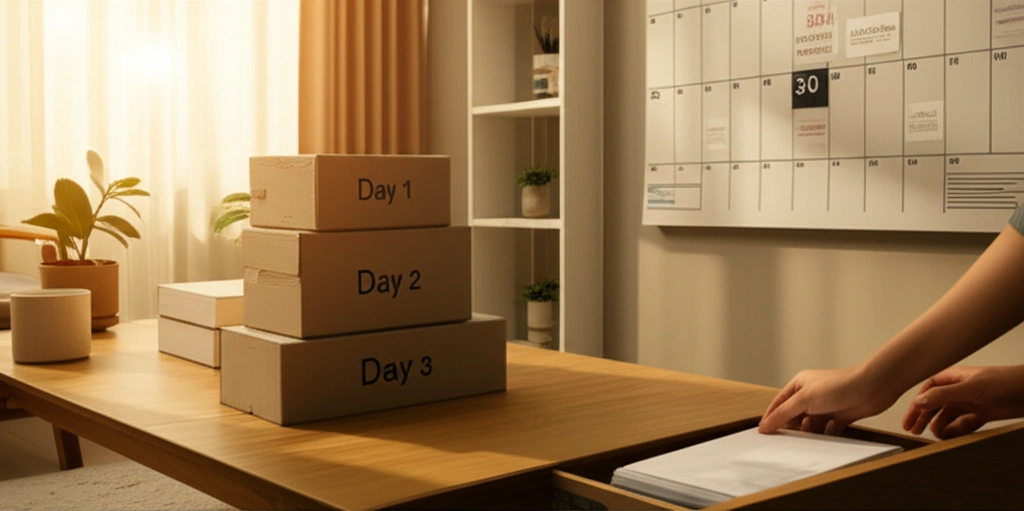
Having a simple checklist or printable calendar helps so much to keep the motivation flowing. Feel free to follow along with a 30-day declutter challenge printable to tick off each day’s task.
Products like storage bins, label makers, and sturdy donation bags are small investments that can make your decluttering journey smoother. No fancy gear required, just the right mindset and a bit of elbow grease.
Experts like Leslie Corona from Real Simple emphasize tailoring your schedule to your lifestyle to avoid burnout — you don’t have to be perfect; just consistent.
Real-Life Wins
I remember helping a friend who was overwhelmed by the “mess” under her kitchen sink. We broke it down into a 10-minute task and tossed expired cleaners and empty containers. That tiny win gave her a boost that carried through the week. By day 14, she was happily donating bags filled with items she hadn’t touched in years and feeling genuinely lighter in her space and mood.
If you live with roommates or kids, customize your plan. Maybe do joint sessions for common areas or assign smaller personal zones. You will probably find the process more fun and cooperative that way.
Keeping The Clutter Away
So, what happens on day 31? You don’t just lock the door and walk away, right? To maintain your less-cluttered lifestyle, build mini habits like a 10-minute weekly tidy or a quick monthly check-in with your donation box. The “one-in, one-out” approach (for every new item, one goes) is a game-changer to stop clutter from creeping back.
If you found this 30-day schedule helpful, you might also enjoy learning more on how to organize your home in 30 days. Together these ideas make keeping your home a joyful, ongoing project — not a dreaded ordeal.
Ready To Start?
Now, grab a box, set your timer, and take that first step. Remember, it’s not about perfection, but progress — each small decluttering task adds up to real change, room by room, day by day. What part of your home do you think you’ll tackle first? Feel free to come back and share how it’s going or ask for ideas — I’m rooting for you!