Purchasing a home is a costly undertaking. You may spend years building a down payment only to enjoy the privilege of paying a mortgage, property taxes and homeowners insurance every month. But the true cost can climb even higher — considerably higher — once you include upkeep and repairs a house will need over the years.
An effective way to trim expenses is to perform repairs around the house yourself. Some tasks are simpler than others, and there’s a learning curve for new handypersons. Still, the math is clear: You’ll pay less with DIY home repairs.
Indeed, the U.S. Census Bureau’s American Housing Survey shows homeowners can pocket substantial savings by handling renovations and repairs on their own. For instance:
- Bathroom renovations: $7,304 in average savings
- Kitchen remodels: $8,836 in average savings
- Fence installation: $2,443 in average savings
Those are major projects that call for significant skill. Still, you can save a lot by painting the bathroom yourself or learning to mend a dripping faucet.
When you perform home improvement tasks on your own, you’re not only cutting the expense of hiring a professional. You’re also enhancing your home’s value for future resale and, in the case of energy-efficient upgrades, reducing monthly utility bills.
So, when is DIY home repair a smart choice, and how much can you realistically save?
20 DIY Home Repair Skills Everyone Should Learn
- Caulking
- Patching drywall
- Painting
- Painting cabinets
- Fixing a running toilet
- Fixing a leaky faucet
- Unclogging a toilet
- Unclog a drain
- Unclogging a garbage disposal
- Fixing low water pressure
- Replacing a showerhead
- Fixing creaky floors
- Fixing squeaky doors
- Installing a light switch
- Install a light fixture
- Installing a ceiling fan
- Troubleshooting the dryer
- Replacing a sump pump
- Repairing window screens
- Unsticking windows
1. Caulking
Caulking is one of the simplest fixes you can do yourself and it can meaningfully affect your energy bills. The Department of Energy says it takes a couple of hours to seal air leaks in a home, and supplies usually run under $30 (even less if you already own a caulk gun).
Or you could hire someone, who may charge $250 to $400 to caulk a home, according to HomeAdvisor.
2. Patching Drywall
Drywall repair can range from filling a small hole where a picture once hung to fixing a larger tear from a moving mishap. Either way, it’s fairly straightforward to do yourself.
See this guide for patching drywall. It even includes a shopping list for a trip to the hardware store.
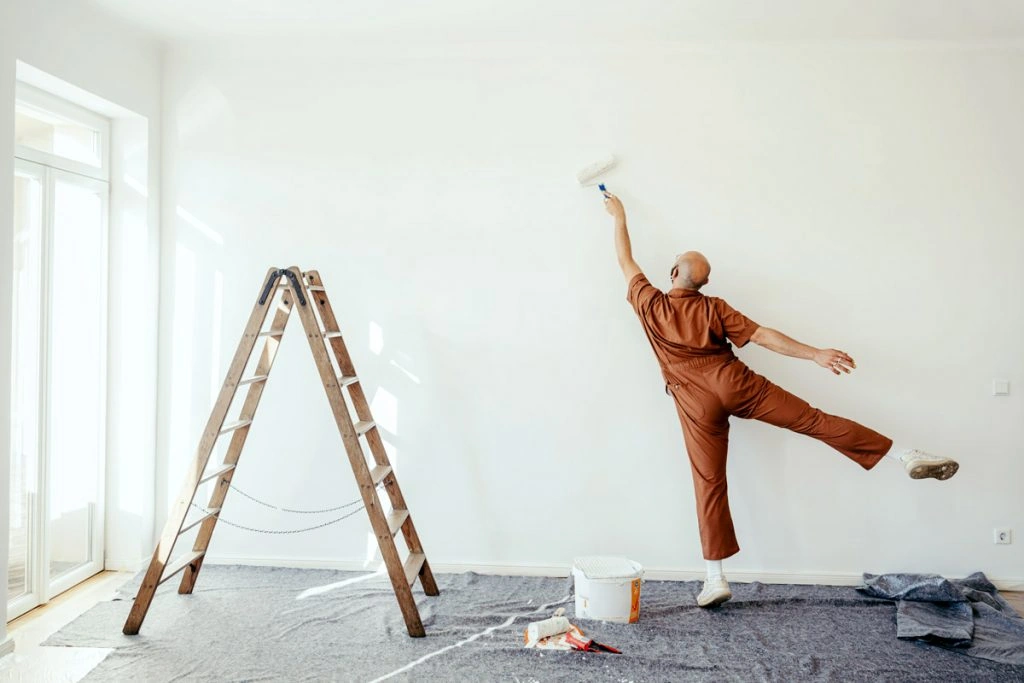
3. Painting
On average, homeowners pay pros about $2,000 to paint the inside of their house, according to Angi (previously Angie’s List). Costs rise for larger homes or if you want ceilings and trim done as well.
Painting can be time-consuming and physically demanding, but you’ll save a lot by doing it yourself. Tackle one room at a time — perhaps one weekend per room — until you’re finished.
4. Painting Cabinets
New cabinetry is typically the priciest part of a kitchen overhaul. The National Kitchen & Bath Association puts cabinets at roughly 28% of total remodel costs.
However, you can revive existing cabinets with fresh hardware and a coat of paint. Be aware: painting kitchen cabinets requires patience and time, but the results are often worth the effort.
5. Fixing a Running Toilet
Learning to fix a running toilet is basic homeowner knowledge; a quick YouTube search will show you how. Frequently, replacing a faulty flapper — under $10 at Lowe’s — will do the trick. Calling a plumber can cost $100 or more just for the service call.
Want extra bathroom savings? Install a low-flow toilet.
6. Fixing a Leaky Faucet
Dripping faucets have several potential causes, but many issues are resolved with a wrench, screwdriver, pliers and a small replacement part — often a $2 washer. Make sure you identify the root cause before starting the repair.
If the leak source is unclear, you might need a plumber, which could run $200 to $330 for service.
7. Unclogging a Toilet
We’ve all probably experienced a clogged toilet. A plunger is the best first tool, and if that doesn’t work, don’t rush to call a plumber.
A plumbing snake from a hardware store could solve the problem. Family Handyman has a helpful step-by-step article.

8. Unclogging a Drain
Toilets aren’t the only fixtures that get clogged. If a sink or tub is draining slowly, the same plunger trick (use a clean one!) may help.
If that fails, avoid chemical drain cleaners — despite marketing, plumbers warn they can corrode pipes over time. Try a drain snake instead. If the blockage isn’t too deep, you can probably handle it yourself.
9. Unclogging a Garbage Disposal
A different approach is required for a garbage disposal clog. This method calls for baking soda, vinegar, a plunger, pliers and a flashlight — tools most households already have.
Or you can pay a pro roughly $250 for repairs, per HomeAdvisor.
10. Fixing Low Water Pressure
Low water pressure in the shower is annoying and could signal a leaking pipe. If pipe replacement is required, hire a plumber.
But before booking a visit, try adjusting the pressure-reducing valve where the main water line enters the house. Often a simple clockwise turn will boost pressure.
11. Replacing a Shower Head
If you’reordering a modest bathroom upgrade with a new showerhead, you can probably install it yourself. Here’s a useful how-to video.
Installing it yourself can easily save $100 or more on plumbing fees, and a water-saving model will trim your water bills further.
12. Fixing Creaky Floors
Noisy floorboards may only need lubrication. Remedies differ depending on the underlying cause and flooring type, but This Old House offers an excellent walkthrough for a range of issues.
Though this work can be a bit more involved, attempting it yourself can be much cheaper. Professional floor repairs average $40 to $60 per square foot, according to HomeAdvisor.
13. Fixing Squeaky Doors
Doors can also produce irritating noises. You might instinctively reach for WD-40 to fix a squeaky hinge, but Bob Vila suggests against that. Instead, consider mayonnaise or steel wool.
14. Installing a Light Switch
Hiring an electrician to install a light switch can exceed $100, but you might complete the job yourself in under an hour with a screwdriver. Make sure you understand the type of switch involved. Dummies offers a clear guide covering different varieties.
15. Installing a Light Fixture
You can install a light fixture on your own, but only do so if you’re comfortable and have some experience working with home wiring.
Home Depot provides a video tutorial (and you can buy a fixture there too!). If you’re unsure, it’s safer to hire an electrician.

16. Installing a Ceiling Fan
If you’ve installed a light fixture successfully, you’re probably ready to install a ceiling fan. Ceiling fan installation is quite manageable provided you’re comfortable working with electrical components and using a ladder. It’s wise to have someone assist you during installation.
Doing it yourself can save as much as $250 in labor, according to HomeAdvisor.
17. Troubleshooting the Dryer
Major appliance repairs should generally be left to professionals, but if your dryer seems to be underperforming (clothes coming out damp), do some basic troubleshooting first.
Use a cleaning brush and vacuum to clear the venting system; that often restores efficiency.
In fact, you should clean the vent periodically even if the dryer seems fine. A clogged vent can pose a fire risk.
18. Replacing a Sump Pump
If a sump pump has worn out, a replacement can be found for under $100. With a screwdriver, a level, some PVC piping and an afternoon, you can swap it yourself. Here’s a practical guide.
19. Repairing Window Screens
A ripped window screen invites pests into your home. Small tears can be fixed with clear nail polish; larger damages might require specialty screen repair tape.
Whatever the damage, this is a repair you can usually handle on your own.
20. Unsticking Windows
If older windows are painted shut, score the paint around the frame with a utility knife to break the seal. Then use a hammer and putty knife (or a crowbar) to free the window.
This is important for safety — in a fire, it’s essential that windows open properly for escape.
How to Learn DIY Home Repair Basics
Picking up basic home repair skills can seem intimidating. If you don’t know how to handle a wrench, it’s tempting to call a plumber. But don’t underestimate your ability to learn. With some time and reliable resources, you can master many tasks.
Here are easy ways to build foundational DIY home improvement skills:
- Online: Throughout this guide we linked to useful resources for specific repairs. You can also search YouTube for tutorials from real tradespeople — plumbers, electricians and carpenters who demonstrate practical techniques.
- Classes and workshops: Home improvement stores frequently host free in-person workshops. Look into community centers and local colleges for affordable classes as well.
- Ask friends, family and neighbors: If someone you know is handy, ask them to show you the ropes. Offer to compensate them with a meal, a cold drink and some help on their next project.
- Volunteer: Hands-on experience with organizations like Habitat for Humanity teaches valuable skills while giving back to the community.
14 Tools Everyone Should Have for Basic DIY Home Repairs
Ready to begin tackling DIY home repairs? Here are essential tools every homeowner should own (or learn to use as you can afford them):
- Hammer
- Multibit screwdriver (or at minimum a flathead and Phillips)
- Nails and screws
- Cordless drill
- Tape measure
- Retractable utility knife
- Putty knife
- Paint brushes
- Pliers
- Ladder
- Stud finder
- Socket wrench set
- Utility lights
- Saws (a hacksaw is essential; consider a table saw as you take on advanced jobs)
As you work on projects, you’ll likely need specialized tools. You can often find these used for less. Over time your garage or shed will become well equipped for most repairs.
Which House Repairs Should You Leave to Professionals?
While DIY repair can be a great money-saver, some tasks are best handled by licensed professionals. Generally, anything beyond basic plumbing or electrical work is safer left to contractors. If a job requires an expensive tool you’ll rarely use, hiring a pro may be as economical — or even cheaper — than buying the equipment.
Mistakes on complex projects can lead to costlier corrections and may reduce your home’s efficiency. Other jobs can be dangerous for an inexperienced homeowner.
Use good judgment on each task, and don’t be embarrassed to call a professional when necessary. Their expertise helps ensure home improvements are completed correctly.