
Minor adjustments can yield major results.
Littlechanges, like spare coins, can make a noticeable impact, too.
No, trimming expenses doesn’t always require dramatic action,such as extreme couponing or abandoning modern conveniences. It can be far easier than that.
There’s no need to adopt all 353 suggestions at once. Bookmark this resource and come back when you need ideas. Turn it into a personal challenge.
Whether you’re a student, parent, wanderluster, foodie, fitness buff or an everyday person, use this compilation of 353 practical ways to cut costs — so money stops being a constant stress.
1. See if your auto insurance is overpriced

For many people, car insurance is one of those unavoidable bills we quietly accept. Like electricity or phone service, it’s just part of life.
A straightforward way to save: comparison-shop and review rates at least annually.If you comparison-shop for airfare, sneakers and laptops, why not do the same for auto insurance?
The Zebra, a web-based car insurance aggregator that shows “policies in black and white,” compares quotes from 204 carriers in under a minute.
When you’re ready to pick a policy, The Zebra can also call you to walk through options.
Don’t drive much?
Insurers don’t care: premiums can still be hefty.ButMetroMilecharges by the mile.You pay a base fee plus a few cents per mile. If you drive under roughly 30 miles daily or 5,000 miles annually, you might save about $500 per year.
It operates in California, Illinois, New Jersey, Oregon, Pennsylvania, Virginia and Washington.
2. Pay less shopping online (and score a $10 gift card)

If you buy online, don’t default to paying full price. With countless coupons, promo codes and cash-back offers available, you should be able to shave some off your bill.
Check your favorite retailer onEbates, a cash-back portal that rewards you for purchases.For instance, Ebates offers 10% cash-back at Walmart.
Plus, you’ll receive a complimentary $10 Walmart gift card for trying the service.
3. Get cash back on grocery runs

It sounds odd, butIbottareimburses you for snapping photos of your receipts.
Before shopping, search items in the Ibotta app. After checkout, photograph your receipt and scan the product barcodes. Bam — cash back.
Ibotta is free to install, and you’ll receive a $10 bonus after uploading your first receipt.
4. Snap a photo of your fridge

Remember Nielsen, the company known for TV ratings? It’s also interested in your kitchen inventory.
Join theNielsen Consumer Panel, use your phone or accept a free barcode scanner from Nielsen. Each shopping trip, scan UPCs and send the data.
Nielsen rewards you with points redeemable for electronics, jewelry, home goods or toys.
5. Raise — but don’t spike — your credit score
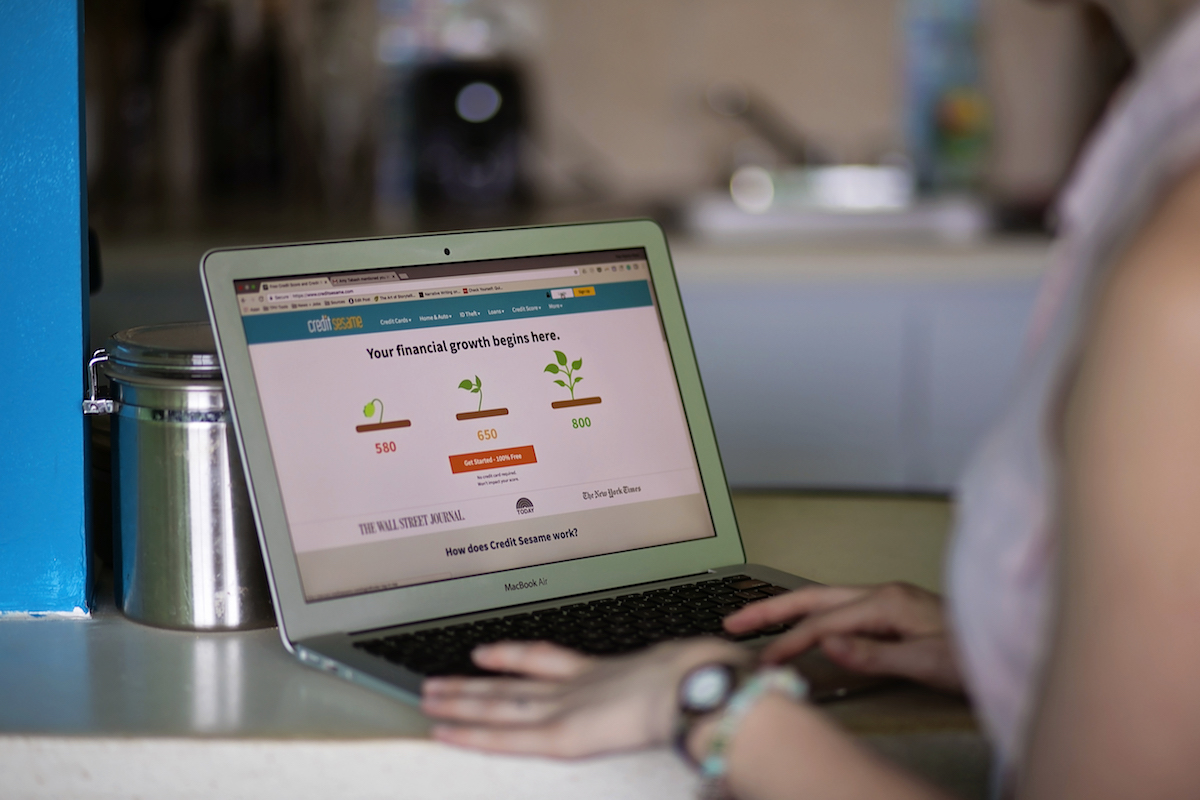
Improving your credit score can help you qualify for lower interest rates on debt.
Get a free credit snapshot atCredit Sesame.It shows outstanding debts and offers tailored tips to raise your score.
After boosting your score, consider refinancing to possibly lower interest payments.
6. Reduce credit card interest

Many people are saddled with credit card APRs north of 20%. If that’s you, consolidating or refinancing may help.
Try online lending platformUpstart, which finds loans without relying solely on traditional credit scores.It also considers your education and employment history when evaluating creditworthiness.
7. Use a bot to haggle your big bills

Negotiating recurring bills can save a lot, but who wants to wait on hold with a terse rep?
Enter a digital negotiator —Trim.Trim negotiates your internet, cable and phone bills for you.
It supports major providers like Comcast, Time Warner and Charter. Sign in with Facebook or email, upload a recent bill PDF and Trim works to reduce charges. Its fee is 25% of the savings it secures; the remainder is yours.
8. Convert spare change into meaningful savings (and earn $5)

Remember dropping coins into a jar and cashing them in? You can do that digitally now.
WithAcornsand its round-up feature, purchases are rounded to the nearest dollar. Once the change totals $5, it gets invested into your Acorns account. You also receive $5 for signing up.
One user, Jeremy Kolodziej, saved $1,000 over 20 months without actively thinking about it.
9. Boost savings with a wager

Saving is hard when money’s tight. Creative approaches can help increase both savings and motivation.
One option isHealthyWage.You bet on your weight-loss goals; if you meet them, you pocket winnings.
Marcie Hagner told us, “Money motivates me. I don’t want to hand over $500 for something I can control.”
She staked $500 and could win $862 if she reaches her target.
10. Think about refinancing debt

If credit card rates are crushing you, consolidation or refinancing could reduce interest.
Try consumer financial marketplaceFiona, which matches you with personal loan options quickly.
Fiona searches top lenders and can help you find offers in under a minute. With a credit score of 620 or higher, you may be able to borrow up to $100,000 with fixed rates starting near 4.99% and terms from 24 to 84 months.
11. Use a watchdog to track price drops

One handy tool we use isCapital One Shopping— a browser tool that earns you cash back on online purchases.Sign up for free and it will scan emails for receipts.
If it spots purchases from monitored retailers, it tracks prices and helps get refunds when items drop in cost.
Also, if guaranteed delivery is late,Capital One Shopping can assist with compensation.
Disclosure: Capital One pays us when you join via our links.
12. Stop buying scratch-off tickets

Instead of spending $1 or $20 on a paper scratcher at the gas station, try a free app calledLucktastic.
Each day Lucktastic releases digital scratchers with instant prizes from $1 to $10,000.The app is ad-supported, allowing high payouts while keeping the games free.
Bonus: no metallic foil stuck under your nails.
13. Park money into real estate investments

Hide cash and watch it appreciate.
If you want exposure to real estate without being a landlord, there are platforms that handle the heavy lifting for you.
You don’t need a fortune to start. Some services accept a minimum investment of just $500. Fundrise manages diversified portfolios for everyday investors.
With theFundrise Starter Portfolio, your contributions are allocated across two portfolios that back private real estate nationwide.
14. Find a new recipe and make money while you cook

InboxDollars pays you cash to watch online videos.
Our favorite category?Cooking tutorials — get dinner ideas and earn money.
Sponsored by brands that want views, these videos credit your InboxDollars account, which you can use to offset grocery costs.
15. Add $5 to your savings for a morale boost

We like PrizeRebel.
You won’t become wealthy, but PrizeRebel is a legit survey site. Earn points by completing surveys. Redeem 500 points for $5.
Points convert to cash or gift cards across 500+ retailers, including Amazon, PayPal, eBay and Walmart — plus niche options like Buffalo Wild Wings, Uber and Nike.
16. Take charge of retirement savings

Many people aren’t sure whether their 401(k) is on target for retirement.
It’s likely your 401(k) could perform better.Blooom, an SEC-registered advisor, can analyze and optimize your 401(k) so it gets back on track.
Start with a free 401(k) review. If you enroll, Blooom charges $10 per month to monitor and improve your plan. (Current readers can often get a trial month free with a promo code.)
17. Clear out your closets

Are closets stuffed with items you never touch?
You can sell most things onLetgo.The app makes listing simple: snap a photo and post in under 30 seconds. It’s free and removes much of the hassle of selling locally.
18. Drive around town and earn

Looking for flexible income and new faces? Try driving forLyft.
Ride-sharing demand keeps rising. To qualify you typically need to be 21+, have one year of driving experience, pass a background check and own a 2007-or-newer car.
We spoke with Paul Pruce, a full-time Lyft driver who nets $750 weekly.
He works on his schedule — days, nights or weekends. Many drivers also register with Uber to maximize rides.
Bonus: Lyft often offers a sign-on bonus (e.g., $300) with a promo code and ride requirements.
Typical qualifications:
- Be approved to drive within 30 days of starting your application.
- Complete 100 rides in your first 30 days as a driver.
Then the bonus is yours. Simple.
19. Rent out a spare room

Got an extra bedroom? List it onAirbnb.
If your space is appealing and you’re a good host, you could add hundreds or thousands to your savings.
Get creative: experienced hosts share lots of smart hosting tips.
20. Know that SBs = rewards (and get a $5 starter bonus)

Swagbucks is a reader favorite because it offers many ways to earn, beyond surveys.It awards random SB points just for being a member.
Sign up and you’ll usually get a $5 bonus and can earn 2,500 SB within your first 60 days to unlock more rewards.
21. Take five surveys for an easy $5

MyPoints rewards you with gift cards for answering surveys and polls — perfect while waiting in line or commuting.
Complete five surveys to earn a $5 welcome bonus.
22. Pay off a new phone faster

A working smartphone is essential these days.
Before buying new, see how much your old phone is worth via a buyback site. Decluttroften offers strong prices for electronics.
Bonus: use codeFREE5 to get an extra $5 on your order.
23. Let an app figure how much you can save

Income and expenses fluctuate, so it’s tricky to know what you can safely save.
Digitautomatically determines small, safe savings amounts based on your checking account activity.
Link your account and Digit’s algorithm moves modest sums into an FDIC-insured account. Bonus: many promotions grant an extra $5 for new users.
24. Get rewarded for saving

This app nearly does it all:MoneyLion, a free personal finance app.
MoneyLion rewards healthy financial habits and even pays you for logging in.Earn points by paying bills on time, linking accounts or using the app, then redeem for gift cards to Amazon, Apple and Walmart.
25. Earn about $36/year for shopping on Amazon

Love Amazon? Connect your account toShopTracker, a market-research app by Harris Poll.
You’ll earn $3 monthly for sharing purchase history — plus a $3 sign-up bonus.
26. Make an extra $30 this month

VIP Voice surveys are quick and yield points redeemable for cash or gift cards. Even if disqualified, you often earn partial points. Log in several times weekly and you can easily pocket extra money.
27. Play games and earn interest better than banks

If you enjoy casual games and want savings motivation,Long Gamecombines both.
As you save and complete goals, you earn in-app currency to play mini-games for cash prizes — slots, scratch-offs, spin wheels.
Link your bank and you’ll receive starter points to play while you build savings.
28. Spin the cashout wheel

Survey Junkie’s interface encourages frequent surveying and quickly rewards points. Reach 1,000 points (about $10) to redeem PayPal or gift cards.
Tip: Finish profile surveys to easily rack up an initial ~200 points.
29. Monetize your smartphone habit

Since you’re already scrolling, earn while you do it.
TryAppKarma, a rewards app that pays cash or gift cards to try games and watch videos.
30. Sell old electronics

Have an old phone, laptop or tablet collecting dust? Trade it in for cash.
Sites likeGazellesimplify trade-ins.Enter device details, get an estimate and receive a free shipping box for qualifying items.
31. Power down for an hour

In 2017 Tanya Williams, a stay-at-home mom, earned $1,700 by turning off power for a few hours weekly.
She usedOhmConnect.
OhmConnect rewards you for saving energy during designated “OhmHours,” selling that conserved electricity back to the grid and splitting proceeds with users.
33. Reverse ceiling fans in winter

Ceiling fans are great in summer. Flip their direction in winter to push warm air down.
Generally, set fans counter-clockwise for summer and clockwise for winter. If unsure, numerous YouTube tutorials cover reversing fan direction.
34. Don’t miss cheaper cable and internet options
Chances are you pay for subscriptions you forget about.
Truebill helps identify and cancel unwanted subscriptions. Reportedly, the average Truebill user has $270 in monthly subscriptions; some are forgotten charges.
Truebill can also help lower cable and internet bills and pursue refunds for outages. It’s free to submit a bill; Truebill keeps 40% of first-year savings.
35. Perform your own energy audit
You can hire a professional for an in-home energy audit — some utilities offer these free (though they may upsell products).
Or do a DIY audit with simple measures to improve efficiency.
36. Displace tank water to save
Not literally a brick in the toilet bowl.
Place an object in the toilet tank to displace water.This reduces water per flush and trims your water bill.
If unsure, buy a Tank Bank, a small weighted bag that displaces about 0.8 gallons per flush. A $10 three-pack could save roughly $35 a year.
37. Cut the cord
Cutting cable is a classic money-saving move.
Consider streaming services instead of a cable package. Do the math — sometimes several streaming subscriptions can equal cable’s cost, so verify savings before cutting loose.
38. Set a regular filter reminder
A clogged HVAC filter forces systems to work harder.Set a reminder to change filters every three months (or more often if you have pets/allergies).
39. Clean condenser coils
When did you last clean your refrigerator’s condenser coils?
They disperse heat from the compressor. Sears Home Services’ Chris Granger recommendscleaning coilstwice yearly with a vacuum and coil brush.
40. Install an occupancy sensor
The U.S. Department of Energy estimates you can save up to30% on wasted electricity with motion-activated switches.
Sensors cost about $14 on Amazon. They shut off lights in empty rooms and reactivate when movement’s detected.
41. Lower water heater temperature
Check your water heater — it’s often set to 140°F by default.
Reducing it to 120°F keeps water hot enough and saves energy, as long as you maintain sanitary standards.
42. Know your bulbs
Lighting accounts for about 5% of household energy. Switching to efficient bulbs can save about $75 per year.
Options include CFLs and LEDs; they cost more up front but pay for themselves over time.
43. Trim around your AC unit
Air conditioning needs airflow. If shrubs crowd your unit, it works harder.
Keep at least one foot of clearance around the unit, trimming plants and removing debris.
44. Wash laundry in cold water
Hot cycles cost more and can shrink clothes. Unless heavily soiled, use cold water to save money and protect fabrics.
45. Toss a tennis ball in the dryer
If you don’t have space for an outdoor line, add a clean tennis ball or two to the dryer. They keep loads separated so clothes dry faster.
Also, always clean the lint trap to speed drying and reduce fire risk.
46. Optimize your smart thermostat
Smart thermostats can save up to 10% on heating/cooling — about $173 a year — if used correctly.
Learn best practices to get the most from your device.
47. Run chores off-peak
Some utilities offer lower rates for off-peak usage. For example, doing laundry outside high-demand hours can lower your bill.
48. Keep junk mail for promos
Those flyers might include promotional offers from your cable or internet provider.
Call with the promotion in hand and use it to negotiate better service pricing.
49. Tweet your utility provider
Have a spare Twitter account? Use it to message utility companies about discounts. Some customers have had luck finding promos via social channels.

50. Embrace budgets
Budgets feel restrictive, but they’re powerful.
Try the50/20/30 method: 50% essentials (rent, utilities, groceries), 20% financial goals (savings, debt), 30% fun and flexible spending.
51. Compare finances anonymously
Curious how your income and spending stack up? UseStatus Moneyto compare anonymously with similar people and spot areas to cut back.