
As if finding a life partner weren’t challenging enough, fraudsters have invaded social networks and dating platforms to steal your money and crush your hopes. So how can you steer clear of romance scams?
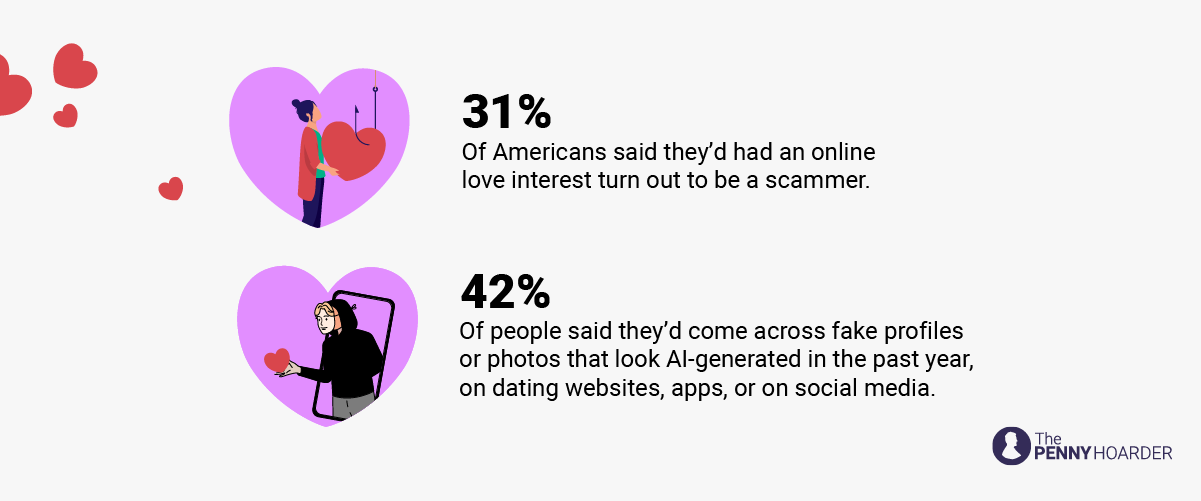
“In our recent Modern Love analysis … about one-third of Americans (31%) reported that an online romantic interest turned out to be a scammer, and 42% said they’d seen fake profiles or AI-like photos in the past year on dating sites, apps, or social media,” says Steve Grobman, CTO at cybersecurity firm McAfee.
Being aware of the dangers is the first line of defense. Below we outline key facts and offer practical tips to protect both your heart and your finances.
Want to Boost Your Savings?
Keeping an eye out for scams is a smart way to protect your money. But are there additional steps you can take? We’ve gathered some recommendations. Take a look at a few of our top strategies to trim spending and get your budget back on track.
Romance Scam Statistics
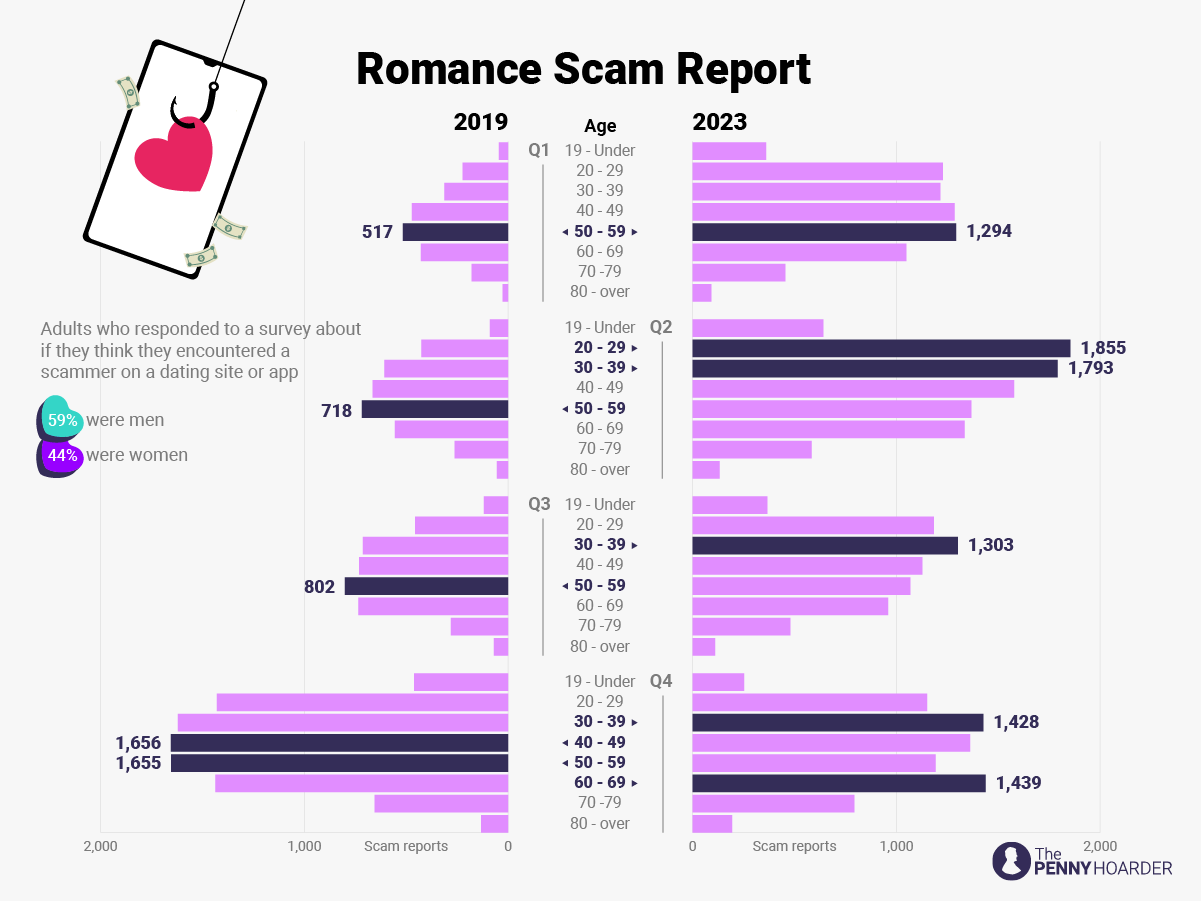
Many people assume scams mainly target older adults. While those aged 60 to 69 often suffer larger monetary losses from fraud, romance scammers have increasingly targeted younger demographics.
According to the Federal Trade Commission, love scams changed noticeably after the pandemic. In the first three quarters of 2019, people aged 50 to 59 reported the highest number of romance scams, with the 40- to 49-year-olds nearly matching them in the fourth quarter. By 2023, those in their 20s and 30s reported the most incidents in the second and third quarters, respectively. Younger age brackets have topped reports in at least two quarters each year since 2019.
Victims come from all genders. A 2022 Statista poll found more men than women — 59% versus 44% — said they’d encountered scammers on dating apps.
Romance scammers don’t show mercy — they’re after cash or sensitive data, which can drain accounts and damage your credit.
How Romance Scams Operate
Romance scams aren’t limited to dating apps; social media is a common hunting ground too.
Although stories differ, most online romance scams follow a familiar script. A scammer initiates contact and builds rapport. You form a connection. Eventually, your new admirer claims to need assistance and shares a persuasive tale designed to coax you into sending money or banking details. Before you know it, you’ve been conned.
“Every fraudster starts with a simple scheme, then personalizes it,” explains John Wilson, senior fellow of threat research at Fortra. “They exploit publicly available information from social sites, public records and even discarded documents. Anything can be faked to appear authentic, from websites and emails to caller IDs.”
Red Flags of Romance Scams
You don’t have to give up on finding someone special to avoid fraud. With a bit of caution, you can recognize a fake and protect yourself. Watch for these warning signs that someone might be a scammer.
1. Requests for Money
Love can’t be purchased, and nobody should be asking you to empty your accounts. Even after in-person meetings, be suspicious of anyone requesting financial help. Remember, scammers are often very persuasive.
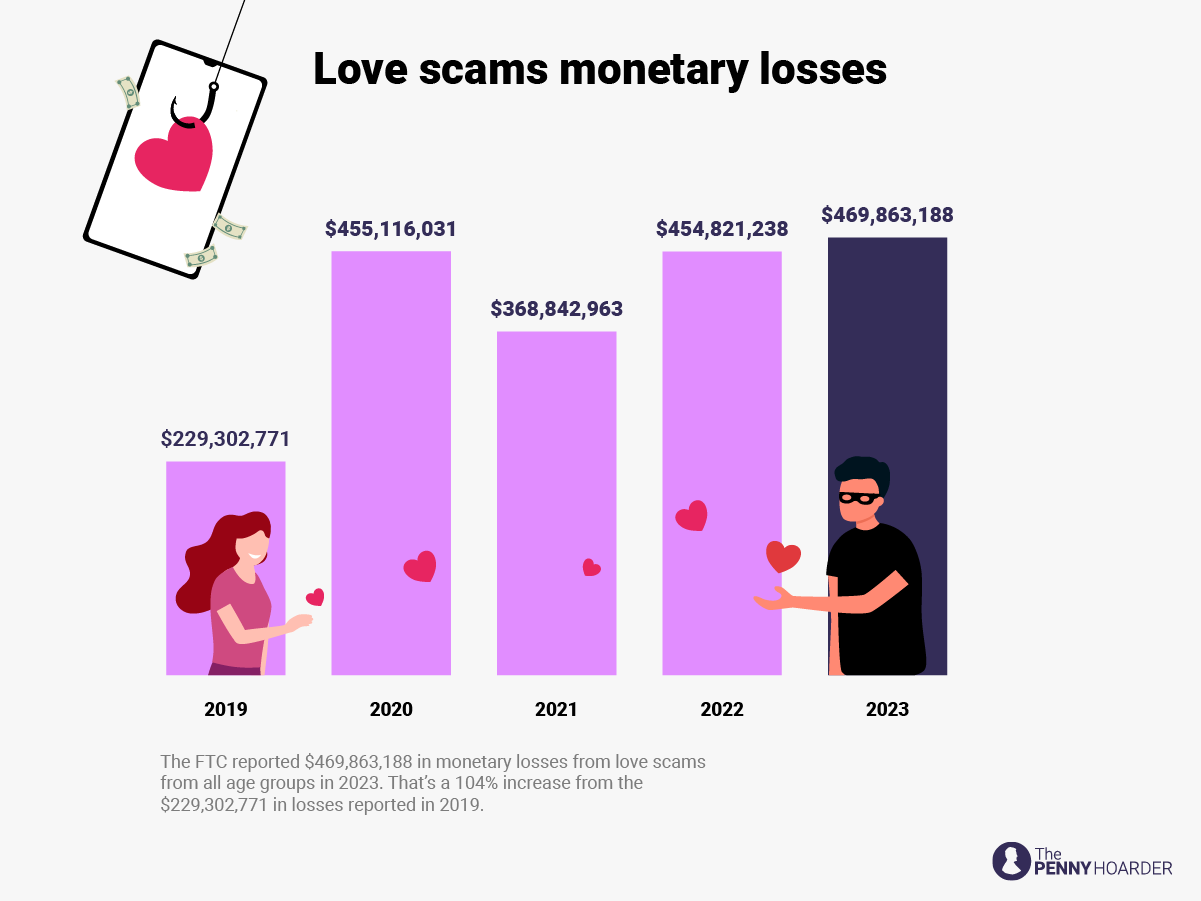
The FTC documented $469,863,188 in losses from romance scams across all ages in 2023 — a 104% jump from the $229,302,771 reported in 2019.
“Scammers frequently play on emotions when asking for cash or gift cards, often inventing scenarios like saving a small business or covering overdue medical costs for themselves or relatives,” notes Christopher Schnieper, senior director of fraud and identity at LexisNexis Risk Solutions.
2. Requests for Personal Details
Scammers are motivated by money. With enough personal information, they can access bank accounts, forge IDs such as passports or driver’s licenses, take out loans in your name, and more.
If someone probes for your mother’s maiden name, banking details, passwords or requests copies of your passport or driver’s license, there’s a strong chance identity theft is their goal.
3. They Push to Move Platforms
Another warning sign is a rush to change communication channels. It may indicate they fear being reported and losing access. As Wilson explains, apps like WhatsApp or Google Chat can benefit scammers: they enable group coordination and around-the-clock responses.
Dating-site cons can morph into investment scams too. By moving conversations to encrypted apps, fraudsters may persuade victims to invest in a phony crypto scheme, says Rebecca Alter, trust & safety architect at Sift.
“Once satisfied with the amount ‘invested,’ the scammer takes the money and vanishes,” Alter explains. “Some even fabricate websites and images to convince victims their investments are growing, prompting them to send even more funds.”
Ways to Prevent Romance Scams
If you’re searching for love online, here are precautions to help you avoid romance scams along the way.
1. Safeguard Your Privacy
Scammers research their targets. If you frequently share personal details on public profiles, your oversharing on social media could make you easier to exploit. Dr. Zulfikar Ramzan, chief scientist and EVP of product and development at Aura, suggests using a distinct profile photo for each platform.
“Using identical photos across apps makes it simpler for someone to run a reverse image search and uncover your personal details,” Ramzan says.
2. Ask for Live Video
A quick way to confirm someone’s identity and avoid romance scams is to request a live video call. Photos and taped videos can be doctored, but an impromptu video chat is much harder to fake. If the person resists meeting in person or even doing a short video call, that’s a red flag.
“Even if someone agrees to live video or sends a recorded clip, deepfakes can look very convincing, so stay cautious,” Schnieper warns.
3. Vet Your Romantic Matches
If you become interested in someone, do a thorough online search. Start with their full name if you have it, and run a reverse image search on their photo. Roger Grimes, data-driven defense evangelist at KnowBe4, notes this process has grown more difficult.
“Previously scammers often stole photos from innocent people’s social media accounts,” Grimes says. “Now many images are AI-created. Still, frequently the same AI-generated image is recycled against multiple victims.”
4. Report It
If you discover you’re the target of a romance scam, it’s crucial to report it promptly. Law enforcement and platforms can’t stop scammers if they aren’t informed.
Here are actions you can take to attempt to recover lost funds.
Jordan Ellis is a freelance finance journalist with over a decade of experience. Their work has appeared on several prominent personal finance sites, including Money Under 30, GoBankingRates, Retirable, Sapling and Sifter.