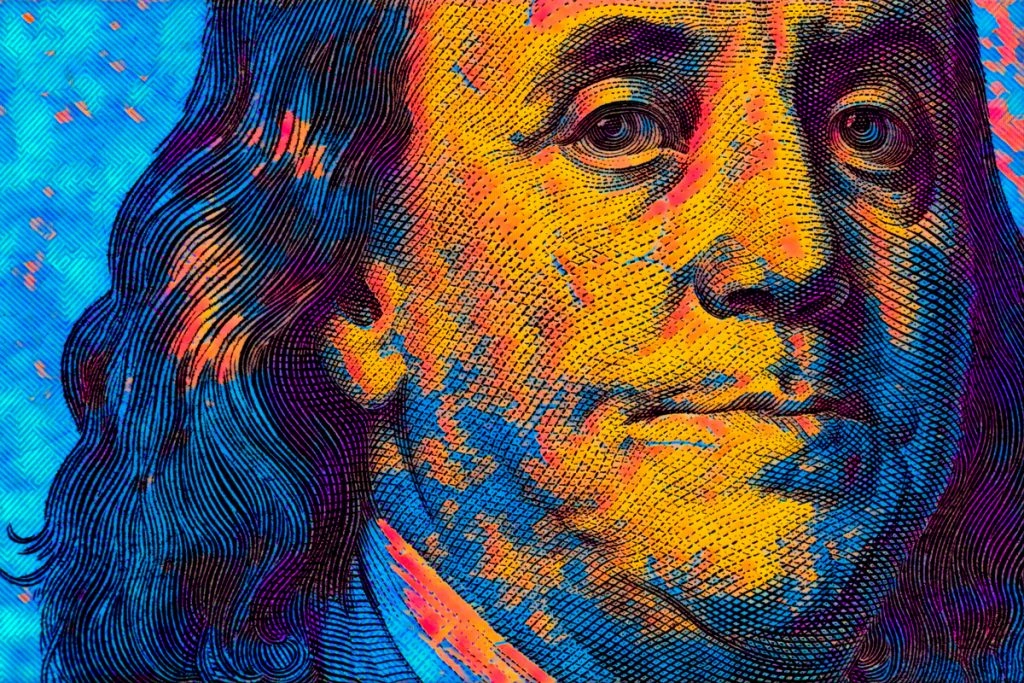
American history produced a broad cast of memorable figures. Among the Founding Fathers, none are quite as amusing, quotable and sharp-witted as Benjamin Franklin. His life exemplifies an early version of the American Dream: he rose from modest beginnings to become one of the wealthiest men in the nation he helped form. Much of the money guidance inspired by Franklin still holds value today.
He had a way with words few could rival. And when it came to money matters, he was no novice. He launched his first enterprise, publishing the Pennsylvania Gazette in 1728 at age 23, followed by Poor Richard’s Almanack in 1732. Both became among the top sellers in the colonies, making Franklin exceedingly prosperous.
Benjamin Franklin–Inspired Money Lessons Worth Following
His counsel not only helped steer the 13 colonies toward revolution; it can also reshape how you earn and conserve money.
“By failing to prepare, you are preparing to fail.”
A little extra planning never hurts. Setting money aside for emergencies or unexpected situations is always wise. Plenty of budgeting methods exist to reinforce this habit. General budgeting plans are easy to find online, and sources like this one from Savinly can help you begin building an emergency fund should you ever need one. To borrow another Franklin axiom, an ounce of prevention is worth a pound of cure.
“If you would know the value of money, try to borrow some.”
The adage “neither a borrower nor a lender be” comes from the only English writer more quoted in America than Franklin — William Shakespeare. The guidance is ideal, of course, but sadly it may be too late for many of us. About half of Americans carried credit card debt as of November 2023.
It’s easy to slip into a credit card debt trap. People often forget that charging items to a card is still spending money — it’s simply borrowed from somewhere else. Nothing clarifies the worth of money like owing a lot of it. If you’re stuck in debt, you can begin chipping away at it effectively right now.
“Our necessities never equal our wants.”
We all have indulgences and temptations. Franklin appreciated this better than most. When he first worked in Philadelphia, he eschewed luxuries and lived frugally during his early career. When he launched the Pennsylvania Gazette, he took very modest lodgings and often subsisted on little more than bread and water.
By maintaining this austerity, he accumulated wealth and sidestepped what many today call lifestyle inflation. Although he later enjoyed greater comfort, he retained many thrifty habits. That restraint helped shape the quirky image we remember him by today.
“A penny saved is a penny earned.”
A phrase beloved by Savinly, this is perhaps one of the most recognized pieces of Franklin-inspired financial advice. Interestingly, the wording most of us use isn’t exactly how Franklin put it. The common version is catchy, but in the 1737 edition of Poor Richard’s Almanack he actually wrote “a penny saved is two pence clear.”
However phrased, the takeaway is clear. Even tiny savings grow over time. You might need to be inventive, but you can save in almost every part of life. Franklin grasped this and helped many save through one of his notable inventions, the Franklin Stove. The stove was far more efficient at heating homes and helped families in the 18th and 19th centuries reduce fuel expenses.
“Remember that time is money.”
Ah — the catchphrase of caricatured avaricious businessmen. It’s often used in media to portray someone impatient who scorns wasted time. Yet it carries a sensible lesson for those not intent on living like Ebenezer Scrooge.
Time is a resource we all share. Each day offers only so many hours to accomplish our aims. Time management is a vital skill for everyone, especially freelancers and entrepreneurs. Franklin knew this well, having started as a freelance writer. He penned pieces for his brother’s paper under a pen name before establishing his own printing shop.
“Beware of little expenses. A small leak can sink a great ship.”
Consider this a counterpart or flip side to the penny-saved notion. Minor issues can balloon into major problems, and small expenditures accumulate. Since his schedule wasn’t overly crowded with the roles of scientist, author, publisher, diplomat and philosopher, Franklin also served as Colonial Postmaster General from 1753 to 1774, where he applied this maxim.
He meticulously adjusted postal rates by accounting for every cost, even fitting primitive odometers on mail carriages to measure delivery time precisely. Franklin ran a spotless operation, making the mail swift, efficient and profitable. He ultimately laid the groundwork for the modern U.S. postal service.
While none of us need to attach an odometer to a carriage to audit our spending, numerous tools exist to help monitor expenses that might slip by unnoticed. In an era with subscription services for everything from streaming to fitness, it’s more important than ever to track where your money goes.
“He that waits upon fortune is never sure of dinner.”
Many people harbor grand ambitions. Goals propel us, but some become lost in dreaming. While lofty, seemingly fanciful dreams can inspire, there are practical ways to take steps toward them.
Breaking goals into smaller milestones is one method to steadily advance. Several of Franklin’s early plans didn’t pan out. He initially wanted to sail, but his father forbade it. His brother thwarted his first attempts at writing. Still, he reached financial independence after relocating to Philadelphia.
“He does not possess wealth that allows it to possess him.”
Franklin emphasized balance in life, and that included the chase for riches. He illustrated this through a tale about deciding whether to publish a piece he believed was defamatory.
“To determine whether I should publish it or not, I went home in the evening, purchased a twopenny loaf at the baker’s, and with water from the pump made my supper; I then wrapped myself up in my great-coat, and laid down on the floor and slept till morning, when, on another loaf and a mug of water, I made my breakfast. From this regimen I feel no inconvenience whatever. Finding I can live in this manner, I have formed a determination never to prostitute my press to the purposes of corruption, and abuse of this kind, for the sake of gaining a more comfortable subsistence.”
Beyond the lesson of not trading principles for profit, it’s worth noting that obsession with wealth above all else can encourage risky behavior. Steering clear of get-rich-quick schemes and scams is a practical way to protect yourself.
Benjamin Franklin–inspired money counsel has sparked numerous American success stories over the years. His guidance, much like his broader contributions to the nation’s history, has endured the test of time.
Michael Harrow has worked as a freelance writer since 2017, and his pieces have appeared in literary outlets such as The Aquarian, The Navigator and The Historian. He has also self-published several novels.