Today? All you need to do is provide a saliva sample.
So it’s no surprise that more people are exploring their roots using DNA services like AncestryDNA and 23andMe.
But with so many choices, how can you tell which service will deliver the details you want? Which one is the simplest to use? Which one is the quickest?
To help you decide, I submitted my spit to three different providers. Keep reading to find out which DNA test gives you the most value for your money.

Which DNA Test Gives You the Best Value?
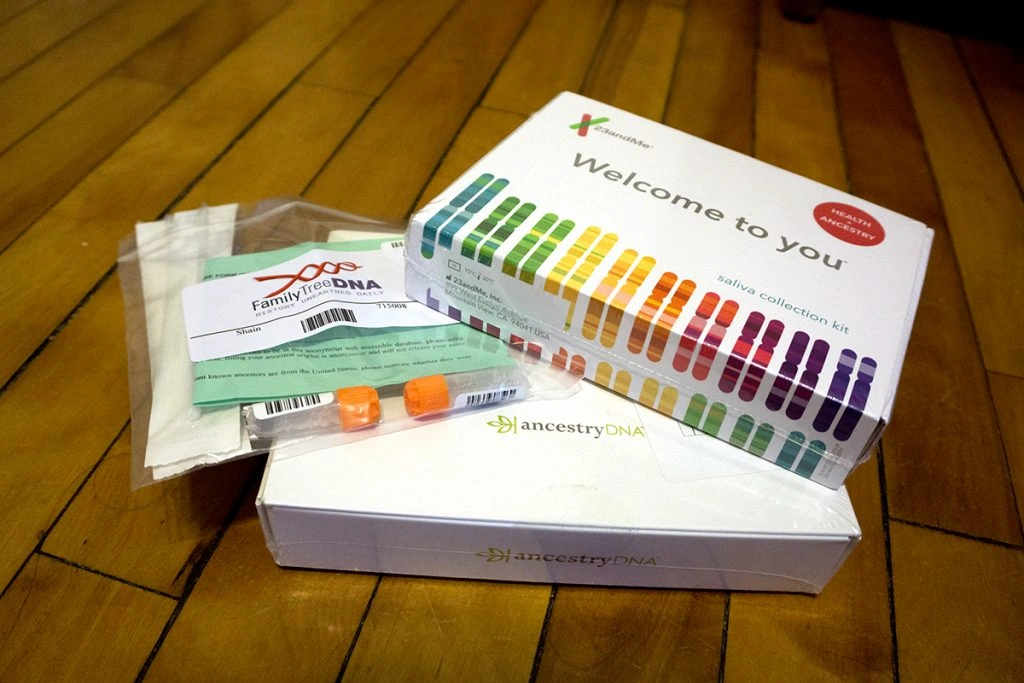
I ordered three DNA kits: Family Tree DNA, AncestryDNA and 23andMe.
The process was essentially identical for each: I bought online, received the kit by mail and then sent it back in the provided prepaid envelope. All further notifications — that my sample had been received, that my results were ready — arrived by email.
Physically, AncestryDNA and 23andMe were fairly alike: polished packaging and a spit-into-a-tube method. Family Tree DNA felt more old-school; it used mouth swabs and the tubes were a bit tricky to seal.
Below is a closer look at each DNA kit.
1. Family Tree DNA
Cost: $89 (often discounted to $69)
Includes: Ethnicity estimates, ancient ancestry, relative matching
Processing time: Five weeks
Before I even logged in to view my Family Tree DNA results, a woman named Linda emailed asking if we were related. That was mildly jarring, and overall my experience with this company was the least positive.
If you’re deeply invested in genealogy, it could suit you, but the platform returned roughly 7,000 potential matches. With few effective filters, it became overwhelming very quickly.
The ethnicity breakdown resembled the other services, though it offered slightly less granularity. Since that was my primary interest, I found it somewhat disappointing.
One distinct element of Family Tree DNA is its “ancient origins” feature. It was mildly fascinating, though not enough to elevate it to the level of the competitors; I’m not sure how important it is to know I’m 33% farmer and 10% bronze-age invader.
Like the others, it also listed the most common surnames that share DNA with me: Cohen, Miller and Friedman. So, any lingering doubt about my Jewish heritage is gone…
2. AncestryDNA
Cost: $99 (commonly marked down to $79)
Includes: Ethnicity estimates and cousin matching
Processing time: Six weeks
I found AncestryDNA’s website and platform the most intuitive and user-friendly.
I appreciated that instead of merely labeling a result “European Jewish,” it provided historical context about the area and its people. It also identified a “genetic community” where my family likely lived for several centuries.
Its matching feature was far more manageable than Family Tree DNA’s. Rather than thousands of hits, I received 478 possible cousins. Of those, only three were flagged as third cousins with “very high” confidence. That’s something I could actually work with!
Overall, Ancestry did a better job interpreting the results — explaining why someone might be a relative and how confident the algorithm is in that assessment.
Because, to be honest, most people don’t have any idea what a centimorgan means.
3. 23andMe
Cost: $99 for ancestry / $199 for ancestry plus health (occasionally discounted by about $20)
Includes: Ethnicity estimates, relative matching, health-related reports
Processing time: Seven weeks
On genealogy, 23andMe compared closely with AncestryDNA. Its family matching and organization beat Family Tree DNA, though it wasn’t quite as polished as AncestryDNA.
What sets 23andMe apart are its health reports. Here are the four categories you’ll get:
- Carrier status: Whether you carry genes for inherited conditions like Tay-Sachs or sickle cell anemia
- Genetic health risk: Your predisposition to conditions such as Parkinson’s or late-onset Alzheimer’s
- Traits: Likely preferences or physical characteristics, like a sweet-tooth or a widow’s peak
- Wellness: Insights on things like lactose intolerance or sleep depth
Fortunately, I didn’t receive any troubling health flags, so I can’t truly judge the value of those reports. It wasn’t exactly revelatory that I move a lot in my sleep or that my earlobes are detached.
And even if the test had flagged a risk, I’m not sure how actionable that information would be. It could create unnecessary worry about something that may not be preventable.
So think carefully before spending nearly $200 on the health add-on — do you want those results? How would they influence your choices?
OK, Just Tell Me Which One to Buy
Alright, alright! As noted, each test has advantages and drawbacks.
If you don’t want to weigh the options yourself, here’s what I’d recommend to a friend:
- If budget isn’t a concern and you want insight into carrier status or genetic disease risks: 23andMe
- If you want to save money or mainly want to explore your ethnic roots and find relatives: AncestryDNA
How to Cut the Cost on Any DNA Kit
Ready to order? Hold on a second.
Here are ways to save regardless of which kit you choose.
- Wait for a holiday sale: These companies often discount their kits for various holidays, so avoid buying at full price. If there’s no sale now, subscribe to the site’s newsletter to get notified when one happens.
- Purchase it as a gift: Hesitant to spend the money on yourself? Buy it as a present for a sibling and you’ll accomplish two things at once. (Credit to my partner for this tip.)
- Look for promo codes: A quick web search turned up a coupon that waived shipping on my Ancestry order.
- Check Groupon: I bought my Family Tree DNA kit on Groupon and saved about 30%.
- Use a cash-back portal: Shopping through a service like Ebates earned me 7% back on Ancestry.
Alright — now that I’ve done my part, you can find me falling down a genealogy rabbit hole, stalking all my newfound possible second-, third- and fourth-cousins.
Maybe you’ll be next!