Some people routinely spend about 40 minutes each day just getting to and from work. Others become real road warriors, spending up to three hours daily traveling between an office and home. Meanwhile, some commuters hop on a train or bus and pay far less money but often invest more time to reach their destination.
With all that movement, what is the actual cost of commuting?
The Cost of Commuting
So how much does commuting cost? The expense of getting to work depends largely on your mode of travel. Distance matters, of course, but some options are significantly more cost-effective than others. For instance, driving yourself typically costs more than riding public transit (when it’s available and practical). However, as you’ve probably noticed, the cheapest monetary option frequently demands more time — assuming your city even offers efficient, reliable transit service.
In the U.S., city layouts often make cars the quickest way to get between many points. Taking a bus might be less expensive, yet it could only get you near your destination and take twice or three times as long. So, the least expensive choice in dollars often proves the most costly in minutes.
You can work out a straightforward dollar-to-time comparison for your commute. Here’s an easy way to think about it:
- What is your hourly pay?
- How long is your commute?
Multiply your hourly wage by commute time to discover how many work hours are needed to offset commuting expenses. This makes it simple to compare transport options and see which is the most economical for you.
Driving Yourself
Driving is the dominant commuting mode in the U.S. According to Census data, over three-quarters of Americans drive to work, and nearly 70% drive alone. That’s an expensive way to travel: the IRS standard rate for vehicle operating costs was 65.5 cents per mile.
The standard mileage deduction averages out yearly driving expenses without including tolls or parking. It covers things like fuel, maintenance, repairs, registration, fees, taxes, insurance, upgrades, loan or lease payments, tolls, wear and tear and vehicle age. Costs you can actively control most easily include fuel, routine maintenance, repairs, fees and financing payments.
To simplify calculations, you can use a commute cost calculator such as this one.
A 2022 AAA study outlines average driving expenses, though it focuses on new-car ownership and represents a national average; it doesn’t factor in the value of your time. Costs will vary by state and even by locality.
Your Driving Costs
| Type of Cost Monthly | Average Cost |
|---|---|
| Gas | $179.90 |
| Insurance | $132.33 |
| Maintenance | $96.80 |
| Tolls | $50 |
| Auto Loan | $54.80 |
| Registration | $10 |
| Taxes | $40 |
| Total | $563.83 |

Taking Public Transportation
For many Americans, using public transit to get to work isn’t realistic. Only about 2.5% of Americans commute by public transportation, based on the latest census figures. So what does this option cost?
It largely depends on where you live and how you value your time. For example, RTD Denver charges $200 per month for a regional pass.
The Bureau of Transportation Statistics offers fare data for various public transit types like Amtrak, buses, and commuter rail, though bus fare data hasn’t been updated since 2002.
Census data from 2019 shows that most transit riders use buses, with subway riders following. However, that report doesn’t include average costs.
Your best option is to research fares, routes and schedules for transit options in your region.
Public transit can be inconsistent, sometimes slow and limited in the U.S., and whether it offers a cheaper commute depends on your personal situation.
Carpooling
About 8% of Americans carpool to work, according to Census figures. But what’s the price of riding together?
Costs vary greatly depending on the vehicle, the group, and your route. Suppose you and coworkers live near each other and alternate driving. If carsharing halves your fuel, maintenance and toll expenses, other fixed costs remain the same, though you gain the perk of not driving every day.
In theory, carpooling with two others should cut your per-person costs to roughly a third. In practice, many vehicle expenses are fixed, so the substantial daily savings tend to come mainly from reduced fuel usage. Therefore, carpooling can still be relatively costly compared with some alternatives.
Bicycling
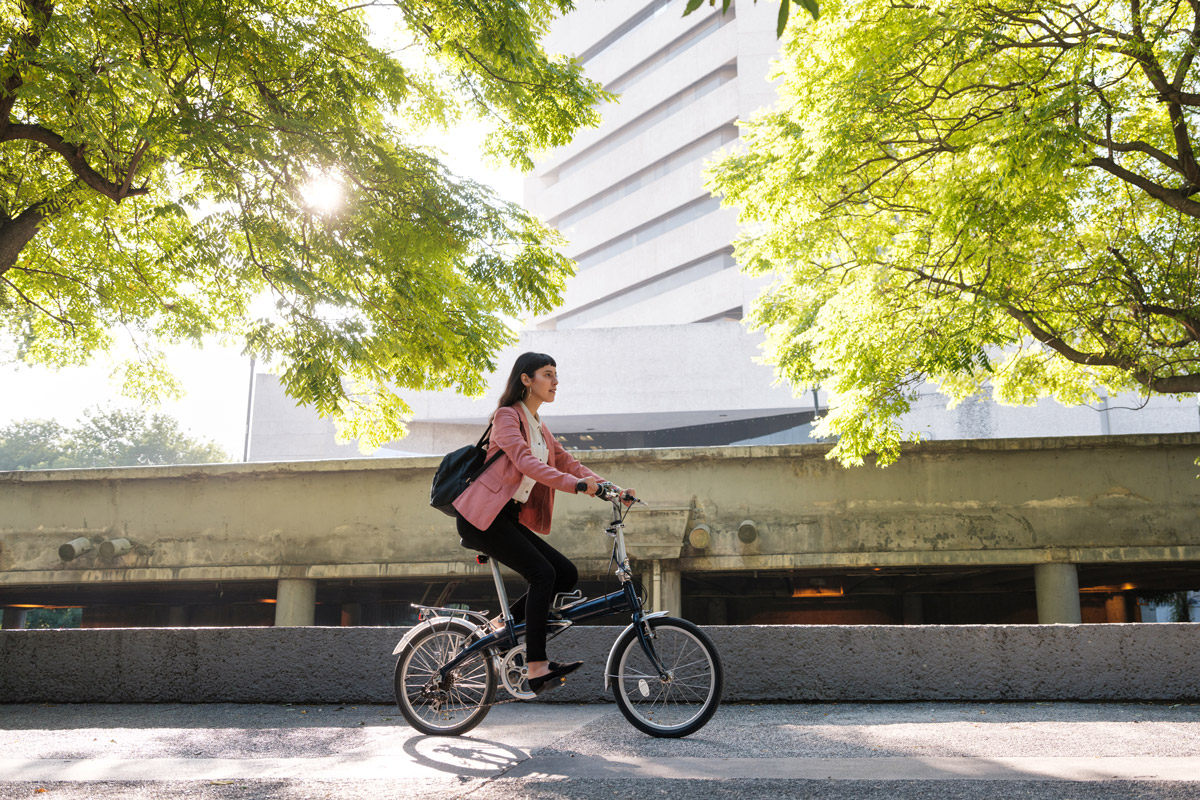
Only about 0.5% of Americans cycle to work. The main problems with biking as a commute method are safety and lack of infrastructure. And let’s be honest: biking can leave you sweaty, so you’ll need time and facilities to freshen up before work.
For this scenario, imagine a safe bike path route that takes about three hours of cycling daily. That’s excellent exercise but likely too much time for most. You’ll also need to account for the bike’s cost, though bike upkeep is far cheaper than car maintenance, and you won’t pay for gas, insurance, tolls or registration most of the time.
Assume you buy a solid bike for $1,000 and spend about $20 a month on upkeep. With three hours a day of cycling five days a week, the first-year monthly cost would be roughly $175. Over time, monthly costs could decrease.
Back in 2011 dollars, Mister Money Mustache estimated biking expenses at about $0.10 per mile. Adjusting for inflation brings that to roughly $0.15 per mile today — still about $0.50 less per mile than driving solo. At 40 miles of daily riding, that’s about $150 a month, a substantial saving compared to solo driving plus plenty of exercise.
Realistically, most people only bike if their job is within a couple miles or a 15–20 minute ride. In that case the monthly commute cost plunges — perhaps around $7.50 per month assuming $0.15 per mile and a four-mile daily round trip, with the added benefit of better fitness and fewer long-term health costs.
Walking
Walking is the ideal commute for many: almost free apart from time. If you want to quantify walking’s cost beyond time, you might include footwear and extra food, but that broadens the definition of commuting expenses.
Compared to driving, nearly every cost disappears when you walk, except for the time you spend getting there. Counting health insurance or registering shoes as commute costs seems odd, so for practical purposes walking is virtually no-cost.
More people walk to work than you might expect: about 2% of Americans do so, per the U.S. Census. A brisk walker can cover a mile in roughly 20 minutes, limiting commuting range to a few miles. What you give up in commuting farther, you gain in having the simplest and cheapest way to travel to work — short of instant teleportation.